The Path of Awakening Through Soham Sadhana (A Practical and Experiential Guide to Inner Freedom) part 1
The Greatest Miracle: Living in Peace
People often say that walking on water is a miracle. To them, miracles mean supernatural feats, magic, or defying physical laws. But in truth, a far greater miracle exists—to live peacefully on this Earth. Walking peacefully, living calmly, and remaining undisturbed amid chaos is the highest achievement of human life. To attain such inner peace, as exemplified by Gautama Buddha, requires immense inner strength, patience, and wisdom. In today’s world, humans possess everything—comforts, technologies, and knowledge—yet peace is missing. The absence of peace reveals the absence of inner power.
Anger Takes, Patience Gives
A profound truth emerges when we observe human behavior:
Anger comes alone, but it takes away all goodness.
Patience also comes alone, but it gives all goodness.
This single insight explains the difference between vice and virtue. Vice robs us—of clarity, goodness, and control. Virtue enriches us—granting wisdom, stability, and strength. Anger awakens instantly when someone speaks harshly. At that moment, our “inner enemy” rises, and peace collapses. Patience, however, is born of wisdom. Those who possess true knowledge are naturally patient, while ego-driven minds lack endurance. The greatest test of a human being is not meditation, worship, or chanting—it is how one responds when anger arises.
Why Rituals Alone Are Not Enough
Practicing yoga, chanting God’s name, visiting temples, and performing aarti are valuable—but without inner transformation, they remain incomplete. Knowledge that does not dissolve ego is ineffective. The contrast between Rama and Ravana illustrates this truth. Ravana was highly knowledgeable, yet his ego destroyed him. Rama’s greatness lay in humility and surrender. Without wisdom, spirituality becomes superficial.
Knowing the Self: The Doorway to Joy
The day a person realizes that knowing everything except oneself is futile, the doors of joy open. Everything external—status, travel, possessions, achievements—is temporary. Only self-knowledge is permanent. Miracles are not meant to be awaited. Expecting miracles is itself ignorance. Instead, karma and right action must be embraced with faith in the Supreme. Blessings that promise wealth or success are meaningless if they do not lead to awakening. Knowledge remains only with those who are deserving—those who cultivate love, humility, and readiness.
Nachiketa: The Ideal Seeker
The story of Nachiketa reveals the pinnacle of spiritual maturity. At a young age, he rejected pleasures, boons, and heavenly rewards, choosing instead truth and self-realization. True knowledge holds only when there is infinite love for the Supreme. Without love, no vision is possible.
Soham Sadhana and Vedantic Wisdom
“Soham” is a profound Vedantic mantra:
So = That
Ham = I
Soham = I am That
This does not mean egoistic identification with God. It is a reminder that the essence of the soul and the Supreme are one. Statements like Aham Brahmasmi or Shivoham were never meant for pride or display. They exist to dissolve worldly attachments and false identities. Vedanta teaches Neti Neti—“not this, not this”—to strip away illusions until only the truth remains. Great teachers like Adi Shankaracharya composed vast scriptures so that humans might recognize their true nature.
Faith, Guru, and Inner Authority
True awakening does not depend on public approval. When inner realization dawns, even if the entire world denies you, your soul stands firm—like a lion who knows it is king. Even divine incarnations like Krishna and Rama accepted gurus. Knowledge flows through humility and guidance. God does not interfere in personal karma. Each soul must bear the results of its actions. The guru resides within, not outside.
Vasudhaiva Kutumbakam: One World, One Family
Sanatan Dharma embraces all beings—humans, animals, spirits, and even cosmic entities—under the principle of Vasudhaiva Kutumbakam. This philosophy fosters compassion, service, and universal welfare. True devotion leads not to separation, but to inclusion. Worship, devotion, and rituals exist to keep the mind peaceful and life harmonious—not to create superiority or conflict.
The Final Teaching: Be Light, Be Free
Spiritual knowledge is not meant to burden the mind. As Krishna taught Arjuna—do your duty and remain unattached. The higher power orchestrates outcomes. Do not drown in desires. Do not carry stress. Be an instrument. Satsang means becoming light, free from worry and tension. Awakening the soul naturally leads to peace, bliss, and service to the world.
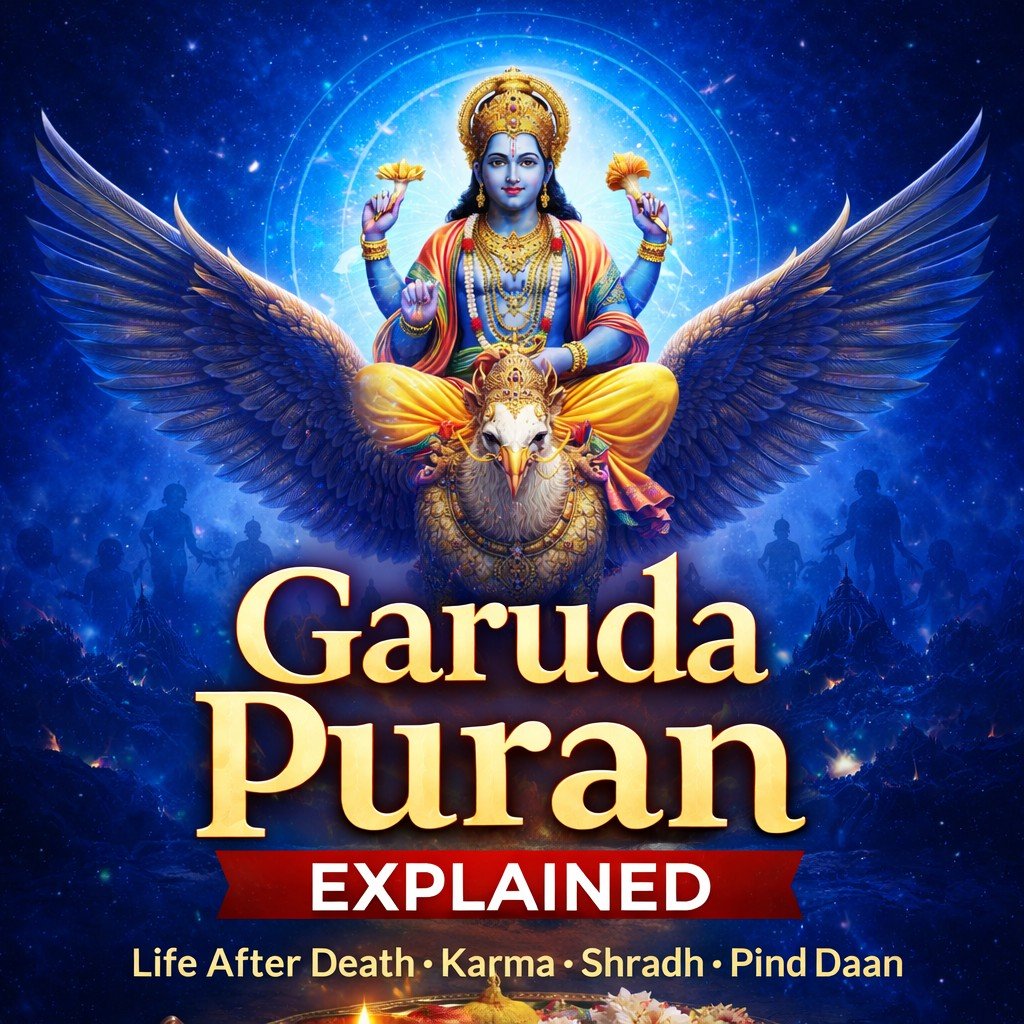

Explore the Garuda Purana’s deep wisdom on life after death, karma, Yamalok, Shradh, Pind Daan, ghosts, subtle body formation, and the path to liberation through knowledge and devotion.