
Episode 1487, Maitri Upanishad: The Journey from Kingship to Self-Realization Part 2
Maitri Upanishad: From King Brihadratha’s Renunciation to Self-Realization
Introduction
We have been discussing the autobiography-like spiritual journey of King Brihadratha as presented in the Maitri Upanishad. It is important to listen to the previous episode before studying this one, because the teachings are connected in a continuous sequence. Only then does the full depth of the knowledge become clear.
The Maitri Upanishad presents a gradual path of spiritual elevation:
Tapas (austerity) → Sattva (purity) → Stability of Mind → Self-Realization → Freedom from Worldly Bondage
This transformation does not happen instantly. It unfolds step by step.
Through tapas, one develops purity of nature.
Through purity, the mind becomes stable.
Through a stable mind, the Self is realized.
Through Self-realization, attachment to worldly existence naturally fades.
Tapas Purifies the Mind
According to the wisdom of the Maitri Upanishad, this process is highly practical. When one performs tapas, the mind becomes purified. When the mind becomes purified, Sattva Guna increases. When Sattva increases, the mind gradually becomes stable. When the mind becomes stable, the light of the Self begins to reflect within it. When the light of the Self is reflected, Self-awareness arises. And when Self-awareness dawns, the futility of worldly pursuits becomes self-evident.
This is a profound truth. When one experiences the Truth directly, many worldly activities begin to appear insignificant. One may find less attraction in social gatherings, external entertainment, and unnecessary engagements.
Instead:
Solitude becomes enjoyable.
Deep contemplation becomes attractive.
Knowledge becomes precious.
Yoga becomes meaningful.
Pure thoughts become delightful.
One naturally loses interest in hearing, speaking, and participating in impure or negative things.
This transformation occurs through the rise of Sattva.
Mind: The Cause of Bondage and Liberation
Bapuji often explains:
"The mind itself is bondage, and the mind itself is liberation."
The mind that constantly runs toward sense objects creates bondage.
The mind that rests in the Self becomes the gateway to liberation.
The Maitri Upanishad expresses the same truth through a beautiful analogy:
Just as fire becomes quiet when fuel is removed, the mind becomes peaceful when it returns to its source.
The objective is not to suppress the mind.
The objective is to dissolve the mind into its source.
That is Yoga.
That is Meditation. That is the path taught by the Maitri Upanishad. The mind must become established in the Self. One repeatedly practices the awareness:
I am not the body. I am the soul. I am a divine soul.I am a conscious soul.I am a supreme spiritual being.
As this realization deepens, the mind naturally merges back into its source.
The Ninth Section: The Wisdom of Sage Shakayanya
The ninth section reveals the deeper heart of the Maitri Upanishad. In the earlier chapters, King Brihadratha recognized the impermanence of worldly existence and developed detachment. Eventually, he approached Sage Shakayanya and requested Self-Knowledge. However, the true heart of the Upanishad begins after this encounter. The king’s questions were not merely personal questions. They represent the questions that arise in every sincere seeker:
Who am I?
Am I merely this body?
What remains after death?
Is liberation truly possible?
The entire purpose of Sage Shakayanya’s teaching is to answer these questions.
The Importance of Self-Welfare
Many people feel: "I did not achieve this." "I failed to obtain that."
However, spiritual wisdom asks:
Did these things exist in previous births?
If they were not obtained, did the soul remain incomplete?
Will the soul be destroyed if worldly achievements are absent?
The answer is no. This is our final birth only if Self-realization is attained. If something worldly is achieved, it is fine. If it is not achieved, it is also fine.
The real question is: Has the soul benefited? Every action should contain the seed of soul-welfare. Every action should contribute toward Self-upliftment. Only then will the fruits of action become spiritually beneficial. Such actions increase Sattva. They reduce Rajas. They gradually destroy Tamas. Ultimately, one rises beyond all three Gunas and becomes Trigunatit.
Mastery Requires Long Practice
Just as:
A doctor practices for decades before becoming a master.
A lawyer practices for years before becoming a senior advocate.
Similarly:
Spiritual knowledge requires long practice.
Yoga requires long practice.
The path requires long practice.
Only through sustained effort does mastery emerge.
Life brings:
Good experiences.
Difficult experiences.
Successes.
Failures.
Yet one principle remains:
Knowledge must never be abandoned.
Whatever happens:
The welfare of the soul must continue.
Bapuji’s mission must continue.
The welfare of the world must continue.
According to this teaching, the goal of Bapuji’s life contains the welfare of the entire world and all living beings.
Many divine souls are believed to be silently assisting this work, even if they are not visible through physical eyes.
The Fluctuation of the Three Gunas
Long spiritual practice reveals many inner states. Sometimes Sattva increases. Sometimes Rajas dominates.
Sometimes Tamas rises. At times one feels inspired. At times one feels like abandoning knowledge entirely.
At times the mind says: "I have achieved nothing in life."
But eventually one understands: This is only the mind. The atmosphere influences the mind. The Gunas influence the mind.
When Sattva dominates:
One wishes to donate everything.
One feels compassion and service.
When Rajas dominates:
One wants wealth, property, and status.
When Tamas dominates:
One may even wish to take from others.
These are simply different expressions of the Gunas.
The important question is: Who are you? How much faith do you have in yourself? How much faith do you have in your actions? True confidence arises from noble actions performed sincerely for the welfare of the world.
Honesty and Discipline
Honesty and discipline are essential on the spiritual path. Without them, long-term progress becomes difficult.
Many people remain in knowledge: Two months, Six months, One year, Five years etc Remaining steady for twenty years is rare. Even simple discipline matters. Small acts performed consistently build inner strength. The teaching emphasizes that spreading knowledge, sharing wisdom, helping others, and participating in service are forms of discipline. When Sattva increases, one naturally feels inspired to do such service.
Paramshanti and Inner Transformation
The teaching repeatedly emphasizes spreading vibrations of supreme peace (Paramshanti).
Knowledge should not remain confined to oneself. Books, teachings, newsletters, and spiritual wisdom should be shared with others. People are searching for truth but often cannot find it because the mind remains distracted by worldly busyness.
As Sattva increases:
Sharing knowledge becomes natural.
Service becomes joyful.
Spiritual responsibility becomes meaningful.
Sage Shakayanya: The Flame Without Smoke
The Maitri Upanishad describes Sage Shakayanya as appearing like a smokeless fire.
This symbolism is profound.
Fire represents knowledge.
Smoke represents ignorance.
A fire without smoke symbolizes perfectly pure wisdom. Sage Shakayanya is not merely a scholar. He is a direct experiencer of Truth. He embodies the very realization that King Brihadratha sought.
Bhutatma and Atma
One of the most important teachings of the Upanishad concerns the distinction between Bhutatma and Atma.
Most people identify themselves with:
The body, The senses, Thoughts, Desires, The mind.
This limited identity is called Bhutatma. Bhutatma is bound to the five elements, the senses, and mental activity. Behind it exists another reality:
The Atma.
The Atma:
Is never born.
Never dies.
Never changes.
Remains beyond all modifications.
Exists as the eternal witness.
This Atma is the true nature of every human being.
Mind Is Both Bondage and Liberation
The famous declaration states: "Man eva manushyanam karanam bandha mokshayoh." "The mind alone is the cause of bondage and liberation." When the mind flows toward worldly objects, it creates bondage. When the mind turns toward the Self, it becomes the instrument of liberation. The Upanishad reveals a profound psychological truth:
Suffering is not outside. The source of suffering is attachment within the mind.
Liberation is not outside. Liberation comes through changing the direction of the mind.
Where there is attachment, suffering arises.
Attachment to:
Family members.
Relationships.
Status.
Possessions.
Expectations.
All become sources of sorrow. Freedom emerges when the mind turns inward toward the Self. Sakshi Consciousness: The Central Teaching The central teaching of the Maitri Upanishad is Sakshi Bhava — Witness Consciousness.
Everything changes:
The body changes.
Thoughts change.
Emotions change.
Circumstances change.
Yet the observer remains unchanged. That unchanging observer is the Witness-Self. That Witness-Self is the essence of Self-Knowledge.
The Scientific Process of Self-Realization
The Upanishad presents Yoga in a systematic manner.
It describes six limbs:
Pranayama
Pratyahara
Dharana
Dhyana
Tarka
Samadhi
The purpose is not to obtain supernatural powers.
The purpose is to free the mind from restlessness and return it to the Self.
Pratyahara: Turning Awareness Inward
Ordinary consciousness constantly flows outward.
People react to:
News, Events, Opinions, External situations.
The seeker gradually reverses this tendency.
Instead of obsessing over external events, awareness turns inward toward:
Self-welfare, Soul-welfare, World-welfare.
Pratyahara does not mean abandoning the world. It means returning consciousness to its roots.
Dharana: Concentration
When the senses become quiet, the mind is fixed upon a single point. This is Dharana. Dharana gathers scattered mental energy. It marks the beginning of inner power.
Dhyana: Continuous Flow
When concentration becomes uninterrupted, meditation arises. Meditation is a continuous stream of remembrance. The seeker maintains awareness throughout daily life. Gradually, one experiences: "I am not my thoughts." The first glimpse of the Self becomes possible.
Tarka: Spiritual Discernment
The Maitri Upanishad uniquely includes Tarka as a limb of Yoga. This is not argument. It is discrimination.
The ability to distinguish:
Truth from falsehood.
Permanent from impermanent.
Real from unreal.
Without discrimination, even meditation remains incomplete.
The Dissolution of Mind
As practice deepens:
Thoughts become quieter, Desires lose strength, Ego loosens its grip.
For the first time, the seeker realizes: I am not the mind. The mind is only an instrument. The true Self exists far beyond it.
Samadhi
Samadhi is the final stage. It is not a miracle. It is rest in the Self.
In Samadhi:
The knower,
Knowledge,
And the known
merge into one reality. The observer and the observed become one. The seeker experiences a silence beyond words.
The Unity of the Individual and the Infinite
The conclusion of the Maitri Upanishad points toward non-dual realization. When impurities disappear and the light of the Self shines forth, one realizes: The true Self is not limited. It is not merely a part of Infinite Consciousness. It is a direct expression of that Infinite Consciousness.
This realization is not intellectual. It is experiential. And this experience opens the doorway to liberation.
The Message for the Modern Seeker
The Maitri Upanishad does not teach us to abandon the world. It teaches us to abandon ignorance.
The problem is not the world. The problem is mistaken identity. As long as we believe: "I am only the body." "I am only the mind." fear, sorrow, and dissatisfaction continue. The moment we recognize the Witness within, a new journey begins.
From the Throne of a King to the Throne of the Self
King Brihadratha’s story is not merely the story of a king. It is the story of every human being who has attained everything externally yet still feels incomplete within. The king abandoned the royal throne because he understood that the Truth he sought could never be found there.
Bapuji’s teaching echoes the same truth: What is within cannot be found outside. What exists in the Self cannot be found in the world. The one who realizes this truth, whether king or beggar, becomes established upon the throne of the Self.
The Relevance of the Maitri Upanishad Today
Modern humanity runs after:
Position.
Wealth.
Recognition.
Power.
Yet eventually the same question arises: "What is the essence of all this?" "How much is enough?" "How long will this last?" The Maitri Upanishad teaches: This question is not a sin. This question is the beginning of the spiritual journey.
In Bapuji’s words: The day the question "Who am I?" arises sincerely within the heart, the journey of the seeker truly begins. And when that journey begins, a guide like Sage Shakayanya inevitably appears.
Notes on Difficult concept
The following ideas were partially interpreted in harmony with Dasharathbhai Patel (Bapuji)'s broader Behad Gyan teachings:
Repeated references to "Paramshanti vibrations" indicate spreading supreme peace throughout humanity through thoughts, meditation, and spiritual service.
Mentions of subtle-world souls participating in world transformation align with Bapuji’s teachings that divine souls from higher subtle realms assist spiritual transformation even when they are not physically visible.
References to long-term discipline, sharing books, newsletters, and knowledge reflect Bapuji’s emphasis on Gyan Daan (the donation of spiritual knowledge) as one of the highest forms of service.
The statement that "intelligence alone cannot realize God" should be understood as meaning that intellectual brilliance without spiritual experience, purity, meditation, and inner transformation is insufficient for Self-realization.
The discussion of Chitta, Mind, Intellect, and Sanskaras refers to the purification of the inner instrument (Antahkarana) so that the light of the Self can shine unobstructed.
The repeated emphasis on Self-welfare and World-welfare reflects Bapuji’s Behad vision that true spirituality culminates in universal service, universal peace, and the upliftment of all souls.

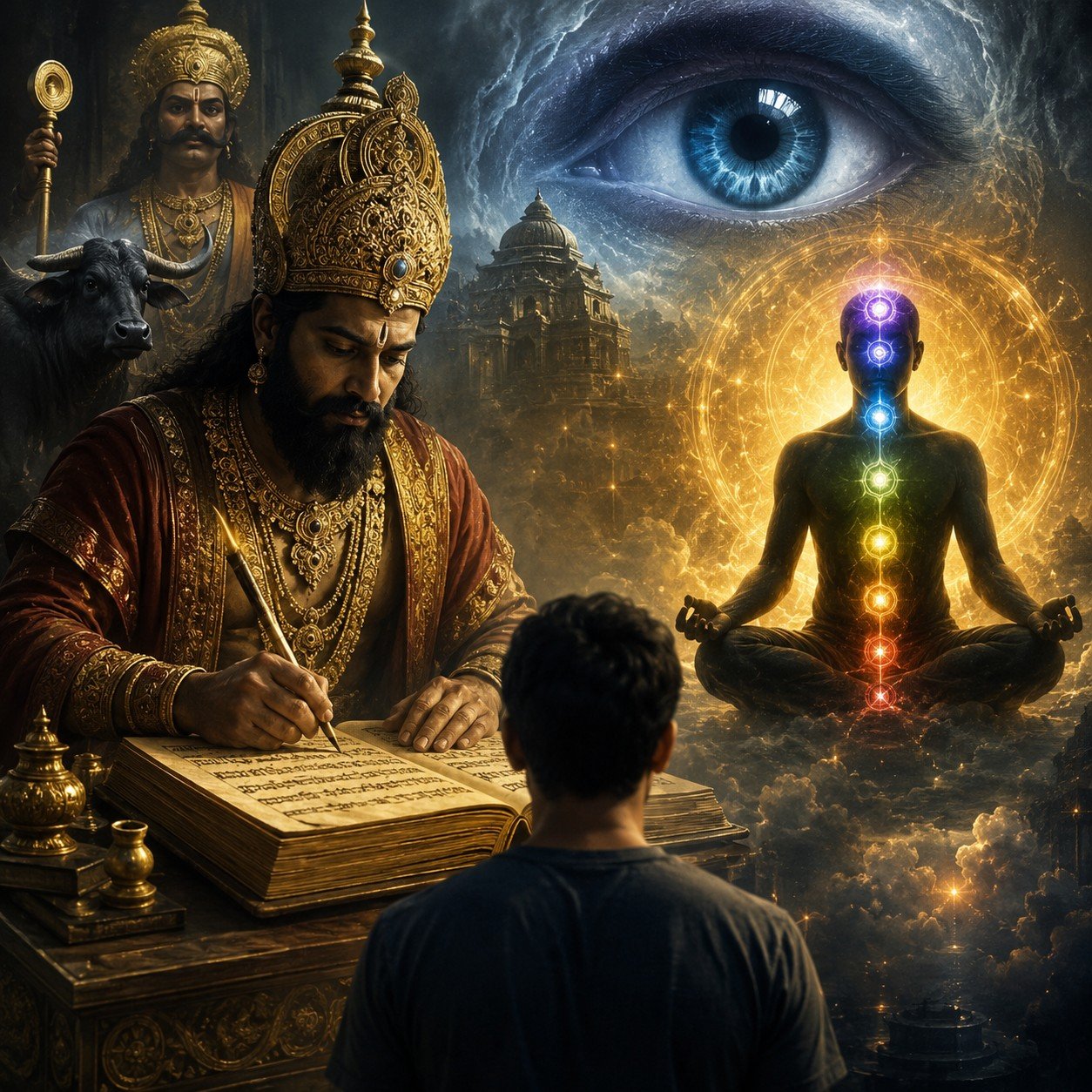

Discover the true meaning of Amrit Vela beyond the early morning hours. Learn the four types of Amrit Vela, the greatness of the Sadguru, Brahma Gyan, the symbolic meaning of Samudra Manthana, the power of the Divine Name, Guru-disciple wisdom, meditation, self-realization, and the path to Supreme Peace through Behad spiritual knowledge.