
2015, history of universe- how creation was created
The History of the Universe According to Bapuji: From Param Maha Shiva to the Creation of Souls, Time, Dimensions and the Invisible Universe
Introduction
How did the universe begin? Who created it? Where did souls come from? How were galaxies, solar systems, planets, and human beings formed? Did time always exist, or did it begin at some point? What lies beyond the visible universe observed by modern science?
According to Bapuji, these questions cannot be answered solely through physical science because the visible universe is only a tiny fraction of reality. Beyond the observable cosmos exist higher dimensions, invisible universes, celestial realms, supreme elements, creator souls, and spiritual forces that operate beyond the reach of ordinary instruments.
Bapuji explains that through meditation and divine vision he has witnessed aspects of creation that are not described in conventional science and are only partially reflected in religious scriptures. The history of the universe, according to this perspective, begins with Param Maha Shiva, the creator of our universe.
Why Understanding the History of the Universe Matters
According to Bapuji, understanding the history of the universe is not merely an intellectual exercise. It is directly connected with understanding:
The origin of souls.
The purpose of human life.
The structure of creation.
The law of karma.
The journey of consciousness.
The destiny of the soul.
The relationship between creation and the Supreme.
Without understanding where we came from, it becomes difficult to understand where we are going.
Different Levels of Cosmic Creation
Bapuji explains that creation exists at multiple levels. The creator of one solar system is Shiva. The creator of one galaxy is Maha Shiva. The creator of one universe is Param Maha Shiva. Beyond Param Maha Shiva exist creators of multiple universes and even greater realities. These higher levels belong to dimensions so vast that they cannot be understood through ordinary human thinking. For the purpose of understanding our universe, Bapuji focuses on Param Maha Shiva.
Param Maha Shiva Before Creation
Before creation existed, Param Maha Shiva existed in an abstract, eternal, and formless state. Within Param Maha Shiva existed a core of pure divine light possessing infinite power. This divine light was surrounded by a protective force called Maha Tatva. The relationship between divine light and Maha Tatva can be compared to the relationship between the Sun and its radiance. The core contains the supreme power, while the surrounding force protects and expresses that power.
At this stage there were: No galaxies- No solar systems- No planets- No time- No history- No geography.
Only the eternal existence of Param Maha Shiva.
The First Thought of Creation
According to Bapuji, the universe began when Param Maha Shiva willed creation. The moment this first thought emerged, time itself began. This is one of the most important teachings in the discourse. Time did not exist before creation. History did not exist before creation. Geography did not exist before creation.
The first thought of Param Maha Shiva initiated all three simultaneously: Time, History, Creation.
The journey of the universe began at that moment.
Creation of the First Souls
When Param Maha Shiva desired to create universes, souls emerged from Him. Initially two souls were created. The process continued and eventually twelve primordial souls came into existence. These twelve souls established the first spiritual space within creation. Bapuji compares this to marking the boundaries of a house before construction begins. The first souls established the cosmic field within which further creation could unfold. Once this foundation existed, multiplication began.
The process expanded rapidly:
2 became 4, 4 became 8, 8 became many more, Creation continued multiplying exponentially.
This marked the beginning of cosmic expansion.
Formation of the First Cosmic Space
The twelve original souls formed a spiritual field or space. According to Bapuji, space itself emerged through the actions of these primordial souls. Before the formation of this field, creation had no structure. The creation of space made further development possible. This was the first stage of cosmic organization.
Why Modern Science Sees Only a Tiny Fraction of Reality
A significant theme throughout Bapuji's explanation is that modern science studies only a very small portion of reality. According to him, the visible universe observed through telescopes represents only a minute part of the total universe. Scientists observe through instruments made of physical elements. Because the instruments themselves are physical, their ability to perceive higher realities remains limited.
Bapuji teaches that if instruments were constructed from higher spiritual elements, their power of observation would increase dramatically. The visible universe is therefore compared to a drop in an ocean. Everything observed by science belongs to only a tiny portion of a much greater creation.
Creation of Paramdham
As creation expanded, the number of souls increased.
The sequence described by Bapuji includes: 12 souls >24 souls> 108 souls> 16,000 souls > 9 lakh souls.
These souls existed in Paramdham, the Supreme Abode. At this stage: Souls were incorporeal, Souls were formless, Souls were made entirely of divine light, Souls existed as pure power.
Bapuji refers to these highly elevated beings as Param Param Param Atmas. They existed in complete purity and perfection.
The Sixteenth Celestial Dimension
The earliest stage of creation existed within what Bapuji calls the Sixteenth Degree Dimension. This level represents the highest stage of cosmic existence within our universe. Characteristics of this dimension include: Complete purity. Complete wisdom. Complete spiritual power. Absence of defects. Incorporeal existence.
Souls existed as spiritual seeds. The state is described as Nirvikari and Sampoorn, meaning free from corruption and spiritually complete. These souls are referred to as Maha Shiva forms created directly by Param Maha Shiva.
How Divine Elements Were Created
As souls created additional souls, energy flowed from one soul to another. This transfer of divine energy gradually produced the atmosphere of higher realms. Bapuji explains that the environment of Paramdham emerged through this process. Initially Param Maha Tatva formed. As creation expanded further, Param Akash Tatva, the Supreme Ether Element, emerged. The higher worlds therefore developed naturally from the diffusion of divine energy during the creation process. The elements themselves arose from the creative activity of souls.
Evolution from 16,000 Souls to 9 Lakh Souls
When approximately 16,000 souls existed, the environment consisted primarily of Param Maha Tatva. As creation expanded toward nine lakh souls, the atmosphere evolved further. Param Akash Tatva became established. This marked the beginning of increasingly structured spiritual realms. The expansion of souls simultaneously expanded the elemental environment surrounding them.
The Beginning of Form
In the Sixteenth Degree Dimension souls existed like seeds. As they descended toward the Fifteenth Degree Dimension, they began developing form. This process is compared to the germination of a seed. The original incorporeal existence gradually became subtle and shaped. This transformation marked the beginning of Aakari creation. The transition from Nirakari (formless) to Aakari (subtle form) represents a major stage in cosmic evolution.
The Origin of Time and Geography
According to Bapuji, time and geography emerged simultaneously with creation. The moment Param Maha Shiva generated the first creative thought:
Time began.
History began.
Geography began.
The universe entered a dynamic process of evolution. The development of dimensions, elements, souls, and worlds became possible because time had started flowing. Without creation there is no history. Without history there is no time. All three are interconnected.
Descent from the Sixteenth to the Fourteenth Dimension
As souls continued descending, their forms became increasingly defined. The incorporeal seed state gradually transformed into subtle bodies. The soul accumulated additional layers. Initially only Maha Tatva surrounded the soul. Later Param Akash Tatva formed another layer. As these layers accumulated, individual form became more pronounced. This process continued throughout multiple dimensions. The higher dimensions remained composed of increasingly refined spiritual elements.
Creation of Maha Shiva
According to Bapuji, Param Maha Shiva created Maha Shiva. The structure of Maha Shiva mirrors the structure of the creator. At the center exists divine light. Around that light exists Maha Tatva. The soul therefore contains both essence and protective force. At this stage creation remained entirely spiritual. The worlds that existed were composed of supreme elements rather than physical matter.
From 9 Lakh Souls to 2 Crore Souls
As creation continued expanding, the number of souls increased from nine lakh to approximately two crore. This stage corresponds to the descent from the highest dimensions toward lower celestial levels. The environment became increasingly complex. Souls acquired more developed forms. Subtle worlds became increasingly structured. Creation continued unfolding through the interaction of divine light and supreme elements.
Moolvatan: The Seed World
Bapuji refers to the region extending from the Sixteenth Degree Dimension to the Fourteenth Degree Dimension as Moolvatan. Mool means root or seed. This realm represents the stage where creation emerges from its seed state. Just as a plant grows from a seed, creation gradually unfolds from the original spiritual source. Moolvatan therefore represents the root stage of cosmic existence.
Development of the Subtle World
As souls descended further, subtle forms became increasingly refined. Bodies developed features. Individuality became more distinct. The subtle world gradually emerged. From approximately the Fourteenth Degree Dimension to the Ninth Degree Dimension, the complete subtle body structure developed. The world remained spiritual, but increasingly organized and differentiated. This stage laid the foundation for all future creation.
Creation of 33 Crore Divine Souls
By the time creation reached the Ninth Degree Dimension, approximately 33 crore divine beings had emerged. These are described as infinite God-Goddesses of Behad. According to Bapuji, many references found in ancient scriptures concerning divine beings originate from memories of this stage of creation. These souls were not ordinary deities. They possessed extraordinary power, wisdom, and spiritual status. They belonged to dimensions far beyond the visible universe.
Creation of Maha Shakti, 66 Crore Divine Souls, Galaxies, the Visible Universe and the Descent of Creation
Creation of Maha Shakti
As creation expanded beyond the highest celestial dimensions, a new stage emerged. According to Bapuji, just as Shiva manifests Shakti, Maha Shiva manifested Maha Shakti from within Himself. This process was not physical reproduction but a spiritual manifestation.
Bapuji compares this principle with several traditional examples:
Shiva manifesting Shakti.
Vishnu manifesting Lakshmi.
The masculine aspect bringing forth the feminine aspect from within itself.
Creation expanded through this complementary force. Maha Shiva represented consciousness. Maha Shakti represented creative power. Together they became the driving force behind further cosmic evolution.
Creation of 66 Crore Divine Beings
As Maha Shiva and Maha Shakti multiplied their creation, the population of divine souls expanded dramatically. Previously 33 crore divine beings had emerged. With the manifestation of Maha Shakti, the total expanded to approximately 66 crore divine beings. These beings existed in higher dimensions long before the creation of physical galaxies, stars, planets, or human civilization.
Bapuji explains that these souls were:
Maha Purush.
Maha Devis.
Infinite God-Goddesses.
Supreme creator beings.
They possessed powers that modern humanity cannot imagine. Their bodies consisted of supreme elements rather than physical matter.
Formation of Higher Divine Elements
As creation continued descending, additional supreme elements emerged.
Earlier stages were dominated by:
Param Maha Tatva.
Param Akash Tatva.
As souls descended further, additional elemental structures appeared:
Param Vayu Tatva (Supreme Air Element).
Param Agni Tatva (Supreme Fire Element).
According to Bapuji, by the time creation reached approximately the Ninth Degree Dimension, the higher worlds consisted primarily of:
Supreme Ether.
Supreme Air.
Supreme Fire.
These elements were completely different from the physical elements experienced on Earth today. They represented pure and highly refined states of existence.
Creation of the First Galaxies
The next great stage involved the creation of galaxies. According to Bapuji, galaxies were not originally composed of physical matter. The earliest galaxies consisted almost entirely of Param Tatva, the supreme elements. These primordial galaxies were vastly larger than the galaxies observed by science today. Many galaxies currently visible may represent only fragments of much larger original structures. The creators of these galaxies were the divine beings who emerged during earlier stages of creation. Different creator souls generated different galaxies. Some created: One galaxy. Two galaxies Ten galaxies. Hundreds of galaxies. Thousands of galaxies. Creation expanded continuously.
Why Every Galaxy Is Different
Bapuji explains that each galaxy possesses unique characteristics. Differences include: Shape, Size , Color, Internal structure, Elemental composition. No two galaxies are exactly alike. The reason is that the combinations of supreme elements varied from one creator to another. Just as artists create different paintings using different combinations of colors, cosmic creators generated different galaxies using different combinations of supreme elements. This diversity explains the immense variety found throughout creation.
Competition Among Cosmic Creators
One of the most unusual concepts presented by Bapuji concerns the emergence of subtle competition among creators. As more galaxies were formed, creators began refining and beautifying their own creations. This was not competition motivated by jealousy or conflict. Instead it emerged from creative expression and the desire to produce increasingly magnificent galaxies. However, creation required energy. Every act of creation consumed power. As creators produced more galaxies, their spiritual energy gradually decreased. This gradual reduction of power became one of the most important forces shaping cosmic evolution.
The Beginning of Cosmic Decline
According to Bapuji, creation itself initiated a gradual decline. Every act of creation involved an expenditure of energy. As power flowed outward, creators slowly lost portions of their original strength. The consequences were universal. Not only did souls descend, but the creators themselves also began descending. Even Maha Shiva gradually moved from higher states toward lower dimensions. Creation therefore carried within it the seeds of future transformation.
The Boundary of the Universe
Bapuji teaches that Param Maha Shiva established a protective boundary around the universe during the early stages of creation. This boundary consists of: Divine light> Param Maha Tatva.> Param Akash Tatva.
The boundary continues to exist today. Although souls have descended and creation has transformed, the original framework of the universe remains intact. This cosmic boundary defines the universe created by Param Maha Shiva.
The Emergence of the 0-Degree Universe
As creation continued descending through celestial dimensions, a stage eventually emerged that Bapuji calls the 0-Degree Universe. This corresponds to the visible physical universe.
According to him:
Higher dimensions exist above the visible universe.
The visible universe represents the lowest stage of cosmic descent.
Everything observed by science exists within this 0-degree level.
The visible universe therefore represents only the final and most condensed stage of a much larger cosmic history.
Transformation from Supreme Elements to Physical Elements
One of the most important transitions described by Bapuji is the gradual replacement of supreme elements by physical elements. Initially creation consisted almost entirely of supreme elements. Over time the ratios changed. The process may be described symbolically as:
90% supreme elements, 10% physical elements.
80% supreme elements, 20% physical elements.
70% supreme elements, 30% physical elements.
As descent continued, physical elements became increasingly dominant. Eventually galaxies, stars, planets, and physical life emerged. This process explains how spiritual creation gradually transformed into material creation.
Fragmentation of Galaxies
As cosmic descent progressed, galaxies underwent fragmentation. Large galaxies broke into smaller structures.
According to Bapuji:
One galaxy became three.
Three became nine.
Nine became twenty-seven.
Twenty-seven became eighty-one.
Creation multiplied continuously. The number of galaxies increased dramatically. At the same time the average size of individual galaxies decreased. This process contributed to the formation of the visible cosmic structures observed today.
Color and Structure of Invisible Galaxies
Bapuji explains that galaxies existing in invisible regions possess colors and structures very different from physical galaxies. Their appearance depends on the combinations of supreme elements from which they were formed. As descent continued and physical elements increased, colors and structures gradually changed. The visible galaxies observed today are therefore highly transformed versions of much older and more refined creations.
Param Maha Shiva at the Center of the Universe
According to Bapuji, Param Maha Shiva eventually descended to the center of the 0-degree universe. There He established a controlling system for the visible universe. This central point functions as the organizing and stabilizing center of cosmic activity. Bapuji describes the universe as extending enormous distances beyond the visible region observed by science. The visible universe represents only a small fraction of the total 0-degree universe.
Why Galaxies Revolve
A major question concerns why galaxies move. According to Bapuji, the reason lies in the immense power concentrated at the center of creation. The central nucleus generates tremendous gravitational attraction. This force causes galaxies to revolve around the center. Maha Shiva revolves around Param Maha Shiva. Galaxies revolve because of the central power. The visible motion observed throughout the cosmos reflects deeper spiritual structures established during creation.
Shrinking of Galaxies
Bapuji explains that galaxies were originally much larger than they are today. As supreme elements decreased and physical elements increased, galaxies contracted. The reduction in power produced a reduction in size. Thus the galaxies observed by science today represent later stages of cosmic evolution rather than their original condition.
The Central Nucleus of the Universe
At the center of creation exists a powerful nucleus composed of:
Param Divine Light.
Param Tatva.
Supreme elemental energy.
Its gravitational force is immense. According to Bapuji, countless galaxies revolve around this central power. Modern instruments can detect only a small portion of this activity because they are limited by physical matter. Future advances may reveal much more.
Future Scientific Discoveries
Bapuji expresses hope that science will continue advancing. He believes humanity will eventually develop more refined technologies. As scientific instruments become increasingly sophisticated, deeper levels of reality may become observable. However, he emphasizes that physical instruments alone cannot reveal everything. Spiritual perception remains essential. Knowledge gained through meditation and divine vision complements knowledge gained through science.
The Milky Way Galaxy
Our galaxy, known traditionally as Aakash Ganga, is one among countless galaxies. At its center resides Maha Shiva and Maha Shakti. The core of the galaxy contains supreme elemental energy. Around this center revolve enormous numbers of stars and solar systems. Science estimates hundreds of billions of stars within the Milky Way. Bapuji suggests the true number may be far greater because many smaller systems remain undetected. The Milky Way therefore represents a living cosmic structure sustained by spiritual forces operating beyond ordinary perception.
Creation Continues
At this stage of the history of the universe, creation has progressed from:
Param Maha Shiva-The first thought-The first souls-Paramdham-Sixteen celestial dimensions.
Maha Shiva-Maha Shakti-66 crore divine beings-Supreme elements-Galaxies-The visible universe.
The next stage concerns the role of Almighty Authority, the structure of the Milky Way, why souls forget their origin, the creation of angels and deities, and the descent that eventually leads to the formation of the solar system, Earth, and human life.
Almighty Authority, the Origin of Souls, Angels, Deities, the Solar System and the Creation of Earth
Who Is Almighty Authority?
After describing the creation of galaxies and the structure of the universe, Bapuji addresses a fundamental question: Who reveals this knowledge? According to him, the knowledge does not arise through imagination or intellectual speculation. Rather, it is revealed by the Almighty Authority. Bapuji explains that during deep meditation, silence, and soul-consciousness, the Almighty Authority grants divine vision and understanding. Through this process he claims to witness realities extending far beyond the visible universe. The Almighty Authority is not limited to one solar system, one galaxy, or even one universe.
According to Bapuji:> Shiva governs a solar system. > Maha Shiva governs a galaxy.> Param Maha Shiva governs a universe.> Almighty Authority exists beyond all universes.
This Supreme Authority possesses knowledge of the beginning, middle, and end of creation.
Why Souls Forget Their Origin
One of the greatest mysteries of existence is why human beings do not remember their true origin. According to Bapuji, every soul originally existed in a state of complete awareness. In its original condition, the soul possessed: Divine knowledge. Spiritual power. Perfect memory. Awareness of its cosmic history.
However, as souls descended through creation, they gradually accumulated coverings.
The original soul became surrounded by: Param Maha Tatva, Param Akash Tatva, Param Vayu Tatva, Param Agni Tatva, Eventually physical elements. Each new layer reduced the soul's ability to remember its original condition. The deeper the soul entered material existence, the weaker its memory became.
As a result, human beings eventually forgot: Their origin. Their divine nature. Their cosmic journey. Their previous states of existence.
The Recordings Stored Within the Soul
Bapuji explains that the soul contains recordings of its entire journey. Nothing is ever truly lost. Every experience, thought, action, and stage of existence remains recorded within the soul. To access these recordings, a person must return to deep states of meditation and self-realization. When consciousness withdraws from the body and worldly attachments, the deeper memory of the soul begins to awaken. According to Bapuji, advanced souls can perceive portions of these ancient recordings. This explains how spiritual vision becomes possible.
The Original Angels (Farishtas)
The earliest beings descending from higher dimensions were Farishtas, or angels. These were not ordinary spirits. Their bodies consisted of: Divine light. Supreme Ether Supreme Air, Supreme Fire.
Their luminosity exceeded anything visible in the physical universe. According to Bapuji, these angelic beings possessed power equivalent to thousands of suns. They did not require physical stars for illumination because they themselves radiated divine energy. The higher worlds were therefore realms of living light.
From Angels to Deities
As descent continued, the angelic beings gradually lost power. This process did not happen instantly. It occurred over immense spans of cosmic time. As spiritual energy declined: Angels became deities, Deities acquired denser forms, Their elemental composition changed. Although deities remained highly evolved, they possessed less power than the original angelic beings. This gradual decline continued throughout creation.
From Deities to Human Beings
According to Bapuji, human beings originated from the same souls that once existed as angels and deities. The process followed a long sequence: Angels → Deities → Humans The human condition therefore represents a later stage of descent rather than the original state of the soul. This idea appears repeatedly throughout Bapuji's explanation. Humanity is not the beginning of the story. Humanity is the latest chapter in a much older cosmic journey.
The Difference Between Higher and Lower Worlds
Bapuji explains that different dimensions possess different elemental compositions. The higher the dimension:
The greater the spiritual power.
The greater the proportion of supreme elements.
The greater the luminosity.
The greater the consciousness.
The lower the dimension:
The greater the proportion of physical elements.
The lower the spiritual power.
The denser the forms.
The weaker the memory of the soul.
This principle governs all stages of creation.
Creation of the Solar System
The next major stage concerns the creation of individual solar systems. According to Bapuji, each solar system has its own creator called Shiva. When Shiva existed in an abstract state, he first created a spiritual abode. The earliest solar-system creation was enclosed within divine light. The region was protected by supreme energy and higher elements. This represented the seed stage of the solar system.
Shivpuri: The Realm of Shiva and Shakti
As creation expanded, Shiva manifested Shakti. The realm occupied by Shiva and Shakti became known as Shivpuri. Shivpuri represents a highly elevated spiritual realm. It exists above the lower worlds and serves as an important stage in the development of creation. Within Shivpuri, consciousness and creative power operate in harmony.
Vishnupuri and Vaikunth
Following Shiva and Shakti came Vishnu and Lakshmi. According to Bapuji, Vishnu emerged from the ongoing process of divine creation. Lakshmi emerged as the complementary power. Their realm became known as Vishnupuri. This realm is also identified with Vaikunth. The symbolic image of Vishnu with four arms represents deeper spiritual realities associated with this stage of creation.
Brahmapuri and Further Creation
The next stage involved Brahma. According to traditional symbolism described by Bapuji, Brahma emerged through Vishnu. Brahma then became responsible for further expansion of creation. Brahma and Saraswati generated vast numbers of angelic beings through thought power. Creation at this stage occurred through consciousness rather than physical processes. One thought could generate entire populations of celestial beings.
The Origin of Countless Deities
Brahma's creation expanded rapidly. Crores of divine beings emerged. These beings inhabited higher dimensions and possessed luminous bodies composed of supreme elements. According to Bapuji, many references found in religious traditions concerning gods, goddesses, celestial beings, and heavenly worlds originate from memories of these stages of creation.
How Earth Was Created
As souls continued descending through lower dimensions, a new challenge emerged.
The higher worlds could no longer accommodate the increasingly transformed beings.
According to Bapuji, Brahma observed the continuing descent of souls and created Earth as a place where they could reside.
Earth therefore became:
A school for souls.
A field of karma.
A place of experience.
A stage for spiritual evolution.
The creation of Earth represented a major turning point in cosmic history.
Why the Sun Was Created
Before the creation of the physical Sun, many beings themselves radiated light.
However, as souls lost power, darkness increased.
The decline of spiritual luminosity created a need for an external source of light.
According to Bapuji, the Sun emerged to fulfill this role.
Surya Dev became associated with the solar system and the maintenance of solar energy.
The Sun therefore represents both: A physical star, A spiritual center of power.
The Spiritual Interpretation of Solar Energy
Bapuji acknowledges scientific explanations concerning hydrogen fusion and helium formation. However, he adds a spiritual interpretation. According to him, physical processes represent only the outer mechanism.
Behind the physical Sun exists a spiritual reality connected with higher beings and higher dimensions. The visible star is therefore only one aspect of a much larger system.
Creation of Planets
As creation progressed further, planets emerged. According to Bapuji, specific higher souls became associated with specific planetary systems. Examples include: Mars, Venus, Saturn, Other planetary bodies. Each planetary system developed under the influence of responsible creator souls. Creation occurred through thought power and consciousness. Physical manifestation followed later.
Creation Through Thought
One of the recurring themes in Bapuji's cosmology is the power of thought.
In higher dimensions: Thought creates form. Thought creates environments. Thought creates worlds.
Physical construction is unnecessary. Consciousness itself becomes the creative force. The further creation descends into physical matter, the more effort becomes necessary. In the higher worlds, creation occurs almost instantaneously.
The Continuing Descent
By this stage of cosmic history:
Angels had become deities.
Deities had begun becoming humans.
Earth had been created.
The Sun had appeared.
Planetary systems had formed.
The physical universe had become increasingly dominant.
Patal Lok, Karma, 84 Lakh Yonis, Adam and Eve, Earth's Population and the Reality of Cosmic Time
Creation of Patal Lok and the Lower Realms
As the process of cosmic descent continued, creation moved further away from its original state of purity. According to Bapuji, this decline led to the formation of lower dimensions commonly referred to as Patal Lok and Narak (hellish realms). These realms did not exist at the earliest stages of creation. They emerged gradually as spiritual power decreased and souls became increasingly influenced by physical elements. Bapuji describes the formation of multiple subterranean regions, including:
Atal
Vital
Sutal
Additional lower worlds traditionally described in spiritual literature
These regions became part of the larger cosmic structure surrounding the Earth and the solar system.
Formation of Narak (Hell Regions)
According to Bapuji, as creation continued descending, vast lower regions emerged.
He refers to the formation of approximately 55 crore hellish regions associated with lower cosmic structures.
These regions formed around the influence of Saturn and other lower cosmic zones. Their existence represents stages of consciousness that have moved far from the original purity of creation. These worlds are not necessarily permanent places of punishment but rather regions corresponding to particular states of consciousness and karmic experience.
Why Souls Continue Falling
A recurring question throughout the discourse concerns why souls continue descending. According to Bapuji, every act of creation involves expenditure of energy. Whenever something expands, divides, multiplies, or creates, a portion of energy is consumed. This law applies not only to physical systems but also to spiritual systems. As souls participated in creation:
Energy was spent.
Power gradually decreased.
Purity diminished.
Consciousness became denser.
This gradual loss of power resulted in the long cosmic descent.
The Beginning of Karma
One of the most important transitions in the history of creation occurs when souls enter the realm of karma. Before this stage, souls existed primarily within higher spiritual dimensions. As they descended into physical existence, actions began generating consequences. The soul's causal body (Karan Sharir) became increasingly important. According to Bapuji:
Every thought creates an impression.
Every action creates a record.
Every desire creates a tendency.
Every experience leaves an imprint.
These impressions accumulate over vast periods of time. The journey of the soul becomes increasingly shaped by karma.
Weakening of the Causal Body
As karmic accumulation increases, the causal body undergoes changes. Bapuji explains that repeated involvement with lower states of consciousness weakens the soul's original purity. The subtle body also becomes affected.
Gradually: Memory declines. Spiritual power decreases. Values weaken. Awareness diminishes.
The soul becomes increasingly identified with physical existence. This process explains why spiritual ignorance eventually becomes widespread.
The Journey Through 84 Lakh Yonis
According to Bapuji, souls eventually enter the cycle known as the 84 lakh yonis. This traditional concept describes the soul's journey through countless forms of life. The process unfolds over immense spans of time.
The soul experiences:
Various forms of existence.
Numerous states of consciousness.
Different evolutionary stages.
Countless births and deaths.
Through these experiences, karmic records accumulate and spiritual lessons unfold.
The cycle of 84 lakh yonis represents one of the longest chapters in the journey of the soul.
How Rebirth Occurs
Bapuji explains that the state of consciousness at the time of death plays an important role in determining future births. When a soul leaves the body:
Its dominant thoughts remain active.
Its desires remain influential.
Its karmic impressions continue operating.
These factors help determine the conditions of future incarnation. The next birth therefore reflects both past actions and the state of consciousness carried forward by the soul.
Growth of Earth's Population
A question raised during the discourse concerns the dramatic increase in human population. Bapuji approaches this topic from both historical and spiritual perspectives. He notes that human population has expanded significantly over relatively recent periods. The explanation offered is that increasing numbers of souls have gradually descended into physical existence through the long process of cosmic evolution. As more souls enter human birth, Earth's population naturally increases. This process is linked to the larger journey of souls through various forms of existence.
The Long Timescale of Human History
According to Bapuji, human history extends far beyond conventional historical timelines.
The journey of souls through creation cannot be measured merely in thousands of years.
The process involves:
Cosmic cycles.
Celestial ages.
Repeated creations.
Long evolutionary journeys.
The history of humanity therefore forms only a small chapter within a much larger cosmic story.
Adam and Eve, Manu and Shatrupa
Bapuji draws parallels between different religious traditions. He explains that many traditions preserve symbolic memories of ancient events. For example:
Adam and Eve in the Abrahamic traditions.
Manu and Shatrupa in Hindu tradition.
According to Bapuji, these stories describe similar spiritual principles expressed through different cultural languages. One of the key teachings concerns the transition from soul-consciousness to body-consciousness.
Originally human beings existed in greater spiritual awareness. As consciousness descended, identification with the body increased. This transformation is reflected symbolically in stories describing the loss of innocence and the emergence of material awareness.
Soul Consciousness and Body Consciousness
According to Bapuji, one of the greatest changes in human history occurred when souls became increasingly body-conscious.
In higher states: Souls identify with their spiritual nature. Consciousness remains connected with divine awareness.
In lower states: Attention becomes focused on the body. Material identity dominates. Spiritual memory weakens.
The movement from soul-consciousness to body-consciousness represents a central theme in the descent of humanity.
Why Bapuji Rejects the 5000-Year World Cycle Theory
A major section of the discourse critiques the idea that the entire history of the world consists of a repeating 5000-year cycle.
According to Bapuji, such a framework is far too limited to explain:
The immense age of creation.
The complexity of cosmic evolution.
The long journey of souls.
The vast timescales described in ancient traditions.
He argues that infinite creation requires far larger frameworks of time. The universe, according to his explanation, cannot be reduced to a simple 5000-year repeating cycle.
Infinite Time and Infinite Space
One of the central themes of Bapuji's cosmology is the concept of infinity.
Creation operates within:
Infinite time.
Infinite space.
Infinite possibilities.
The visible universe itself represents only a tiny portion of a much larger reality. The history of souls extends across durations that ordinary human calculations cannot fully comprehend. This principle becomes especially important when discussing cosmic cycles and celestial ages.
The Four Yugas
Bapuji discusses the traditional concept of four yugas: Together these form one Chaturyug. According to traditional calculations discussed in the discourse:
Kalyug lasts 432,000 years.
Dwapar lasts 864,000 years.
Treta lasts 1,296,000 years.
Satyug lasts 1,728,000 years.
Together they total 4,320,000 years. These enormous timescales are used to illustrate the vastness of cosmic history.
Ardh Pralay and Cycles of Renewal
When one complete cycle of four yugas concludes, a form of partial dissolution known as Ardh Pralay occurs.
According to Bapuji, these cycles represent periodic transformations within creation. Some beings survive. Others depart. New phases of existence emerge. Creation continually undergoes renewal and restructuring.
These cycles occur repeatedly across vast spans of time.
Humanity's Place in the Cosmic Story
A recurring message throughout the discourse is that humanity occupies only a small portion of cosmic history.
Before humanity:
Angels existed.
Deities existed.
Higher creator souls existed.
Galaxies existed.
Celestial worlds existed.
Human life therefore represents one chapter within a much larger evolutionary journey.
To understand human existence fully, one must understand the greater history of creation.
The Next Stage: Cosmic Time, Brahma's Years, Pralay, Mahakaal and the End of Universes
By this point in the narrative, Bapuji has described:
The creation of souls.
The formation of dimensions.
The emergence of galaxies.
The creation of Earth.
The creation of the Sun.
Karma and rebirth.
The descent through 84 lakh yonis.
The development of humanity.
Brahma's Time, Cosmic Cycles, Black Holes, Mahakaal Pralay and the End of Universes
Understanding Cosmic Time
One of the most difficult concepts in understanding the universe is time. According to Bapuji, time is not the same everywhere. Just as different dimensions possess different compositions of elements, they also experience time differently. This means that a period that appears short in one realm may correspond to vast durations in another. The higher the dimension, the greater the difference in the flow of time. This principle becomes essential when discussing Brahma's age, cosmic cycles, and the lifespan of universes.
Why Time Changes Between Dimensions
Bapuji explains that the difference arises because each realm possesses a different level of power. Earth is dominated by physical elements. Higher worlds contain increasing proportions of supreme elements. Because their composition differs, their experience of time also differs.
This is why:
Earth time differs from heavenly time.
Heavenly time differs from Brahmapuri time.
Brahmapuri time differs from Vishnupuri time.
Vishnupuri time differs from Shivpuri time.
As power increases, the relationship between time and consciousness changes dramatically.
The Structure of Cosmic Time
The discourse presents several traditional cosmic measurements. These include: The Four Yugas Satyug, Treta Yug, Dwapar Yug, Kalyug. Together they form one Chaturyug. The total duration is 4,320,000 years.
One Day of Brahma
According to the calculations discussed by Bapuji: One day of Brahma equals one thousand Chaturyugs. This creates a timescale vastly greater than ordinary historical calculations. The purpose of these measurements is to demonstrate that creation operates on enormous cosmic durations.
Brahma's Hundred Years
Bapuji repeatedly refers to Brahma's hundred years as an important cosmic unit. The age of major cosmic structures is often explained through Brahma's lifespan. According to the discourse, the age of our universe can be understood through calculations involving Brahma's years. However, Bapuji emphasizes that these calculations are symbolic tools for understanding vast cosmic periods rather than ordinary chronological measurements.
Manvantaras and Cosmic Eras
Another major unit of time is the Manvantara. According to traditional cosmology discussed by Bapuji: Many cycles occur within one Manvantara. Multiple Manvantaras occur within larger cosmic periods. These cycles represent stages of creation, preservation, transformation, and renewal. Human civilization experiences only a small fraction of these vast periods.
Kalpa and Kalpa Pralay
When large cosmic cycles conclude, a dissolution known as Kalpa Pralay occurs. A Kalpa does not represent the destruction of all creation. Instead it marks the ending of a major phase of cosmic activity.
At such times: Certain worlds conclude. Certain civilizations disappear. Certain cycles end. New cycles begin.
Creation therefore unfolds through recurring stages rather than permanent stability.
Why Ancient Scriptures Speak of Repeated Dissolutions
Bapuji explains that ancient traditions describe several forms of Pralay. Examples include: Nitya Pralay, Ardh Pralay, Pralay., Kalpa Pralay, Maha Kalpa Pralay. These represent different scales of dissolution. Some affect limited regions. Some affect solar systems. Some affect galaxies. Some affect universes. The larger the cycle, the greater the scope of transformation.
Correlation Between Time, Space and Speed
A fascinating aspect of the discourse concerns the relationship between: Time. Space. Speed.
According to Bapuji, different realms experience different rates of time because they possess different energetic compositions. The greater the power of a realm, the greater the difference in time experienced there. He notes that scientists also investigate relationships between time, speed, and space. However, because scientific instruments operate through physical elements, their understanding remains limited to physical reality. Higher dimensions require different forms of perception.
Time in Swarg Lok
According to Bapuji, heavenly beings experience time differently from human beings. The deities possess bodies made primarily from: Ether. Air. Fire. Humans possess bodies made from: Ether. Air. Fire. Water. Earth. Because heavenly bodies are lighter and more refined, the experience of time differs significantly. This difference helps explain why many spiritual traditions describe heavenly realms as existing beyond ordinary time.
The Lifespan of the Solar System
Bapuji explains that solar systems also possess lifespans. Like living beings, they pass through: Creation> Development> Maturity> Decline> Dissolution. Nothing within creation remains permanently unchanged. Even galaxies and solar systems eventually reach the end of their cycles.
The Role of Maha Shiva
At the galactic level, Maha Shiva functions as creator and sustainer.
Throughout the life of the galaxy:
Maha Shiva generates creation.
Maintains creation.
Supports creation.
However, over immense periods of time, energy gradually decreases.
Creation consumes power. Eventually a stage arrives when Maha Shiva approaches exhaustion. This leads to one of the most dramatic events in cosmic history.
Transformation of Maha Shiva into Mahakaal
According to Bapuji, when Maha Shiva's power becomes depleted, a transformation occurs.
Maha Shiva becomes Mahakaal.
This is not a change of identity but a change of function.
The creator becomes the dissolver.
The force that once expanded creation now begins withdrawing it.
This marks the beginning of Mahakaal Pralay.
What Science Calls a Black Hole
Bapuji connects this process with the phenomenon modern science calls a black hole. According to him, the center of a galaxy contains an immense concentration of power. As dissolution begins, this power becomes increasingly dominant. The result is a tremendous gravitational force capable of drawing creation inward.
Science observes this phenomenon as a supermassive black hole. Bapuji offers a different interpretation.
Why the Black Hole Is Not Truly Black
According to Bapuji, the so-called black hole is not truly black. Rather, it is an intensely concentrated field of supreme energy. He states that if it were completely black, it could not be observed. Instead, it represents an extraordinary concentration of divine energy. Some scientific discussions concerning white holes are viewed by Bapuji as moving closer to this deeper understanding.
The center is therefore not darkness.
It is concentrated power.
Kaal Agni: The Fire of Dissolution
When Maha Shiva enters the Mahakaal state, Kaal Agni emerges. This is the cosmic fire of dissolution.
According to the discourse:
Solar systems are drawn inward.
Galactic structures collapse.
Creations return toward their source.
The process resembles cosmic absorption rather than simple destruction. What was previously expanded becomes condensed. What was separated becomes unified.
Mahakaal Pralay
This process is called Mahakaal Pralay. It represents one of the highest forms of dissolution described in the discourse. During Mahakaal Pralay:
Universes are withdrawn.
Solar systems disappear.
Creation is reabsorbed.
Cosmic cycles conclude.
The creator gathers creation back into himself. The journey that began with expansion now moves toward return.
What Happens After Dissolution?
According to Bapuji, dissolution is not the final end. After cycles of dissolution, creation begins again.
The process follows a pattern: Creation> Expansion> Multiplication?> Descent> Dissolution> Renewal.
This pattern repeats across cosmic scales. The universe therefore operates through endless cycles of manifestation and withdrawal.
The Fate of Souls During Cosmic Dissolution
A natural question arises: What happens to souls? According to the discourse, souls continue their journey through various stages of existence. Higher souls possess greater awareness of cosmic cycles. Some advance into higher realms. Others remain within lower cycles. The precise experience depends upon consciousness, power, and spiritual development.
The Age of the Galaxy
Bapuji repeatedly emphasizes that galaxies possess their own ages. Just as human beings have lifespans, galaxies also pass through stages of growth and decline.
Their ages can be understood only through the vast framework of cosmic time discussed throughout the discourse. The age of a galaxy cannot be measured adequately through ordinary human history.
The Age of the Universe
The same principle applies to the universe itself. The age of the universe extends far beyond conventional historical calculations. According to Bapuji, understanding cosmic age requires understanding:
Brahma's time.
Maha Shiva's time.
Param Maha Shiva's time.
The relationships between dimensions.
Only then can the true scale of creation begin to be appreciated.
Beyond Mahakaal: Toward the Infinite
Even the universe discussed by Bapuji is not the final reality.
Beyond our universe exist:
Other universes.
Greater universes.
Multi-universes.
The story of creation therefore extends far beyond the visible cosmos.
In the next section we move beyond our universe itself and examine:
Scientists and future discoveries.
God Particle and supreme elements.
Parallel universes.
Multi-universes.
Infinite creation.
The ultimate role of Almighty Authority.
(Part 6 will continue with the final major sections of the transcript covering scientists, nuclear energy, God Particle, parallel universes, multi-universes, infinite creation, and Bapuji's concluding teachings.)
Scientists, God Particle, Parallel Universes, Multi-Universes and the Infinite Knowledge of Almighty Authority
Scientists and the Search for Cosmic Truth
Throughout the discourse, Bapuji repeatedly acknowledges the efforts of scientists to understand the universe.
According to him, scientific research is valuable because it attempts to uncover the laws governing creation.
However, he argues that science faces a fundamental limitation. All modern scientific instruments are constructed from physical elements. Because the instruments themselves are physical, they can only observe physical reality. The higher dimensions of existence are composed of supreme elements rather than physical matter. Therefore, ordinary instruments cannot fully perceive them. Bapuji explains that if future scientific devices could somehow operate using higher forms of energy and refined elements, humanity would gain access to realities that currently remain hidden.
Why Scientific Observation Is Limited
According to Bapuji, physical instruments can observe only a tiny fraction of creation.
Scientists can study: Stars, Planets, Galaxies, Radiation, Physical particles.
But they cannot directly observe: Param Tatva, Param Akash Tatva, Param Vayu Tatva, Param Agni Tatva, Higher dimensions, the original states of souls.
These realities belong to levels beyond physical perception. The visible universe therefore represents only a small window into a much larger reality.
The Future of Scientific Development
Bapuji expresses hope that scientific progress will continue. He believes humanity is moving toward increasingly advanced forms of knowledge. According to him, many scientists are souls who previously existed in higher dimensions and have brought fragments of that knowledge into the physical world. Their discoveries reflect ancient experiences carried within the soul. As science advances, more refined technologies may emerge. These future developments could reveal aspects of reality currently hidden from ordinary observation.
Atomic Energy and the Structure of Matter
The discourse briefly discusses atomic science. Bapuji acknowledges that scientists have learned to release enormous amounts of energy through the manipulation of matter. The discovery of atomic energy demonstrates that vast power exists within apparently small structures. When particles interact at tremendous speeds, immense energy becomes available. This illustrates an important spiritual principle: Creation contains hidden levels of power. What appears ordinary may contain extraordinary potential.
The Search for the God Particle
Modern science has devoted significant effort to understanding fundamental particles. Bapuji refers to the search for what scientists call the God Particle. According to his explanation, the particle discovered by science should not be confused with supreme divine light. The God Particle belongs to the realm of physical or elemental energy. It is not identical to the original spiritual light that existed at the beginning of creation. The supreme divine light remains beyond the reach of physical experimentation. To understand that reality requires spiritual realization rather than scientific measurement alone.
The Difference Between Physical Energy and Supreme Light
A major distinction throughout the discourse concerns two kinds of power:
Physical Energy
Associated with matter.
Measurable by instruments.
Subject to physical laws.
Present in stars, atoms, and particles.
Supreme Divine Light
Exists beyond physical matter.
Forms the basis of higher creation.
Cannot be produced in laboratories.
Is perceived through spiritual realization.
According to Bapuji, many misunderstandings arise because these two forms of power are confused with one another.
Parallel Universes
Earlier in the discourse, questions were raised regarding parallel universes. Bapuji explains that parallel universes are not merely duplicate copies of our own universe. Rather, they represent distinct systems of creation.
Each possesses:
Different structures.
Different creators.
Different laws.
Different histories.
The concept is far more expansive than most popular theories suggest. Parallel universes belong to a vast field of reality extending beyond our own cosmic system.
The Difference Between Our Universe and Parallel Universes
According to Bapuji, our universe represents only one among countless creations. Parallel universes may differ dramatically in: Composition, Dimensions, Elemental structures, Spiritual hierarchies. Some may be larger than our universe. Others may operate according to entirely different principles. The diversity of creation extends far beyond anything currently understood.
Multi-Universes
Beyond parallel universes exist multi-universes. This concept occupies a central place in Bapuji's cosmology. A multi-universe consists of vast collections of universes existing together. Just as a galaxy contains many solar systems, a multi-universe contains many universes. The scale becomes almost impossible to imagine. According to Bapuji, the number of universes is beyond ordinary calculation. Even the largest scientific estimates fail to capture the true magnitude of creation.
Countless Universes
The discourse refers to scientific discussions suggesting enormous numbers of universes. Bapuji uses such ideas only as starting points. According to him, the true number of universes is essentially beyond counting. He compares them to grains of sand along a shoreline. Each universe possesses: Its own history, Its own creators, Its own dimensions, Its own evolutionary cycles. Creation therefore extends infinitely outward.
The Infinite Father
One of the most important conclusions concerns the nature of the Supreme. Bapuji argues that the true Infinite Father cannot be limited to: One solar system. One galaxy, One universe. A truly infinite being must transcend all boundaries. The Infinite Father exists beyond: Solar systems, Galaxies, Universes, Multi-universes. The Almighty Authority therefore occupies a position beyond all known creation.
Infinite Knowledge
According to Bapuji, the knowledge of creation itself is infinite. No matter how much is explained, more remains to be understood. He emphasizes that the history and geography of the universe cannot be exhausted through ordinary teaching. Each level of reality contains further levels. Each answer reveals additional questions. The exploration of creation therefore continues endlessly.
Why This Knowledge Has No End
Bapuji concludes by explaining that creation itself is limitless. If one attempted to record all knowledge:
The oceans would become ink. The forests would become pens. The Earth would become paper.
Even then, the knowledge would not end. The reason is simple. Creation is infinite. Its history is infinite. Its dimensions are infinite. Its possibilities are infinite.
Concepts Requiring Additional Interpretation Based on Behad Gyan
Several statements in the transcript appear symbolic, visionary, or metaphysical rather than literal. These include:
The 16 Celestial Degrees
Likely represent progressive stages of consciousness rather than physical locations.
Param Tatva, Param Akash, Param Vayu and Param Agni
These may refer to increasingly refined spiritual substances beyond ordinary physical elements.
33 Crore and 66 Crore Divine Beings
These numbers may symbolize vast populations of creator souls rather than conventional mythological deities.
Black Hole as Mahakaal
Within Behad Gyan, the black hole appears to symbolize the cosmic power of dissolution through which creation returns to its source.
Creation Through Thought
This likely reflects the principle that higher levels of consciousness possess creative capacities beyond physical action.
Infinite Universes
In Behad Gyan, infinity is often used to communicate the limitless nature of creation rather than a finite numerical quantity.
Conclusion
According to Bapuji, the universe is far larger than the physical cosmos observed by science. Beyond galaxies and stars exist higher dimensions, supreme elements, creator souls, parallel universes, multi-universes, and ultimately the Almighty Authority. The visible universe is only a tiny portion of reality. Souls have journeyed through immense cycles of creation, descent, karma, and evolution. Time itself began with the first thought of Param Maha Shiva, and creation continues through endless cycles of manifestation and dissolution. The ultimate message of this teaching is that existence is far greater than human beings ordinarily perceive. The soul's true history extends beyond Earth, beyond the solar system, beyond the galaxy, and even beyond the universe itself. Understanding that journey is the beginning of understanding one's true identity and place within the infinite creation.

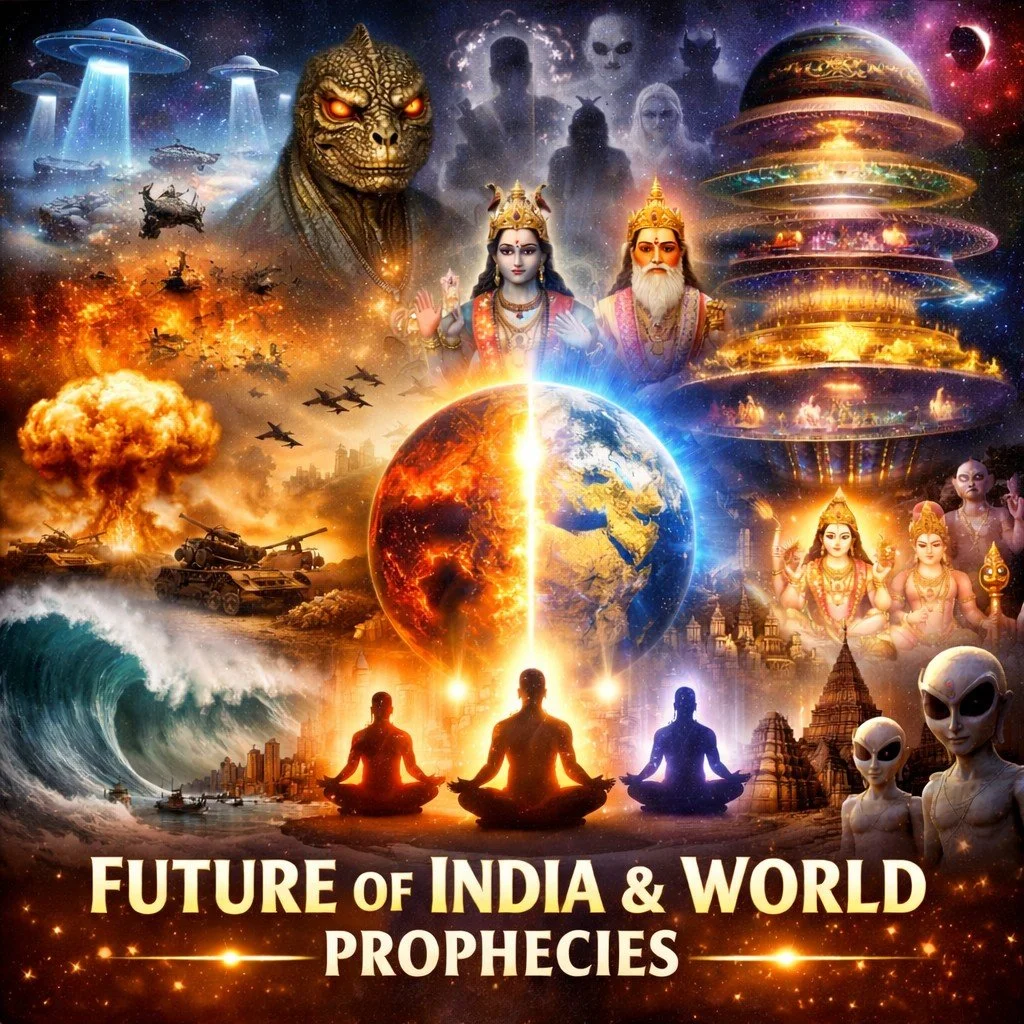

Discover Bapuji's profound spiritual explanation of the history of the universe, from Param Maha Shiva and the creation of souls to Paramdham, celestial dimensions, galaxies, solar systems, Earth, karma, 84 lakh yonis, Mahakaal Pralay, black holes, cosmic time cycles, parallel universes and the infinite multi-universe. Explore the deeper knowledge of Behad Gyan beyond science, mythology and conventional cosmology