
Episode 1416, Who Comes to take your soul at Death? Spiritual Truth About Soul Journey, Consciousness and Paramshanti
Introduction
Life and death are two inseparable aspects of existence. While much attention is given to living well, very few people reflect deeply on what happens at the moment of death. Across cultures, religions, and spiritual traditions, one common question arises:
Who comes to receive the soul when a person dies? Is it angels? Divine messengers? God? Or is it something beyond form and name? This article explores that question through spiritual teachings, scriptural references, and experiential wisdom.
A Real-Life Trigger for Reflection
A video circulated recently showing an elderly man on his deathbed describing a divine vision. He claimed that Lord Swaminarayan had come in a chariot with music to take him away. Moments later, he passed away. Such experiences are not rare. Many people report seeing light, relatives, divine figures, or unknown presences at the time of death. Courts and scriptures alike acknowledge that a person at the moment of death is believed to speak truthfully, as all worldly attachments are ending. This makes such experiences deeply significant.
Why Do Such Visions Occur?
The deeper question is not who appears, but why that particular presence appears. According to spiritual teachings: The soul is received by the same consciousness or spiritual field with which it remained connected during life. Our lifelong emotional, devotional, and spiritual attachments become active at death.
The Three Spiritual Paths in Hindu Scriptures
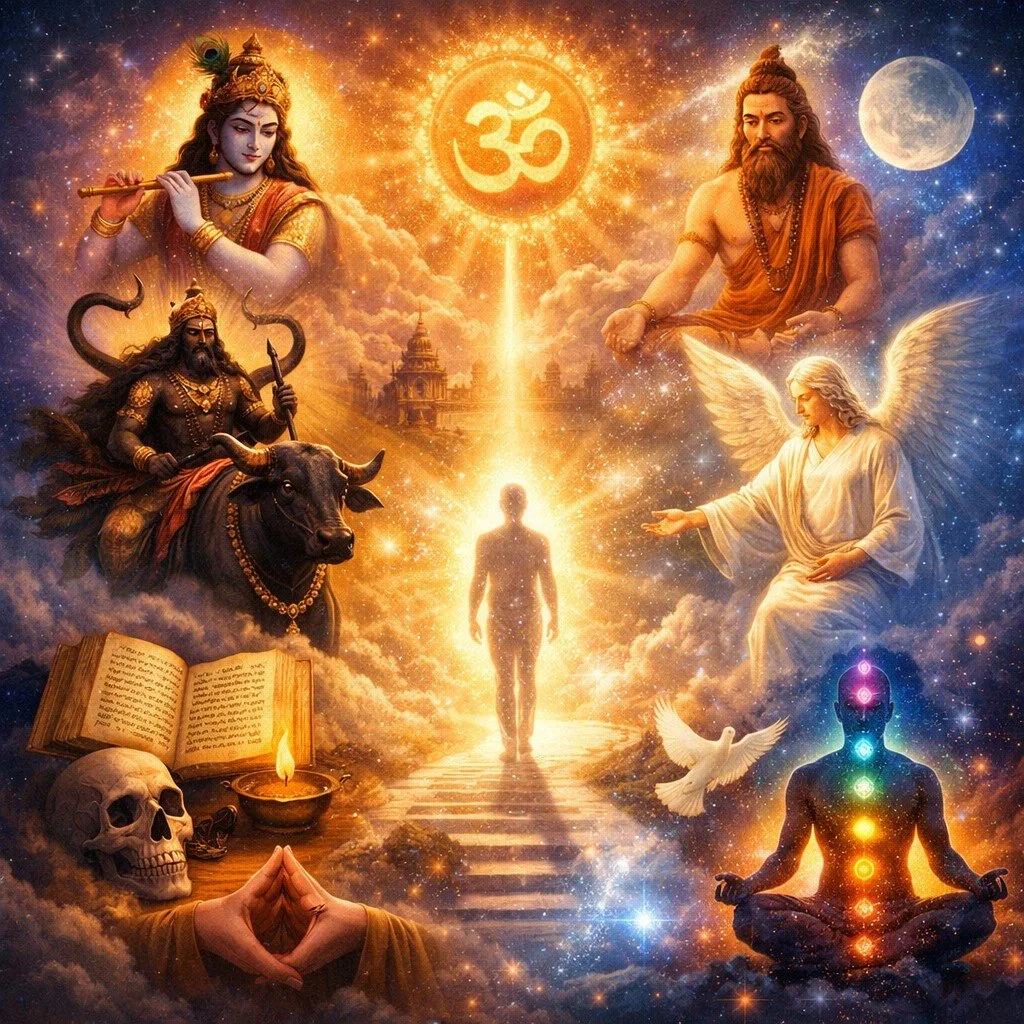
Hindu scriptures describe three main paths after death:
1. Yam Yana (Path of Yama)
For souls dominated by worldly desires and sinful actions
Governed by karmic law
Guided by messengers of Yama
2. Dev Yana (Path of Light)
For spiritually evolved souls
Guided by divine beings
Described as a luminous path
3. Vishnu/Shiva Path (Divine Vehicle)
For devoted seekers and yogis
Direct connection to higher realms
Supported by divine energies
Here, “vehicles” are not physical machines. They are modes of consciousness transport.
Scriptural References
Upanishads
Chandogya Upanishad: “Those who know Brahman travel through the path of light to Brahmaloka.”
Bhagavad Gita (8.6)
· “Whatever one remembers at death, that state he attains.” If you remember God, you reach God.Remembrance = Connection
Connection = Destination
· Your final thought decides your next realm.
Garuda Purana
“As Are the Deeds, So Is the Vehicle”
Meaning:
Sinful life → Yama’s path
Righteous life → Divine path
Devotional life → Vishnu’s path
Knowledge of Brahman → Path of Light
Your life prepares your departure.
Ramayana and Mahabharata
King Dasharatha ascended through a divine vehicle.
Bhishma left his body in the presence of Krishna.
Yudhishthira ascended bodily to heaven.
These are presented as real spiritual processes, not mere symbols.
The Principle of Connection
Spiritual teachers explain: The soul is received by the same force with which it built the strongest bond in life.
Examples:
Devotees of Vishnu → Vishnu’s messengers
Devotees of Shiva → Shiva’s attendants
Followers of spiritual masters → their subtle spiritual lineage
Materialistic people → karmic realms
Connection is formed through:
Repetition, Emotional attachment, Devotion, Fear, Meditation. Belief
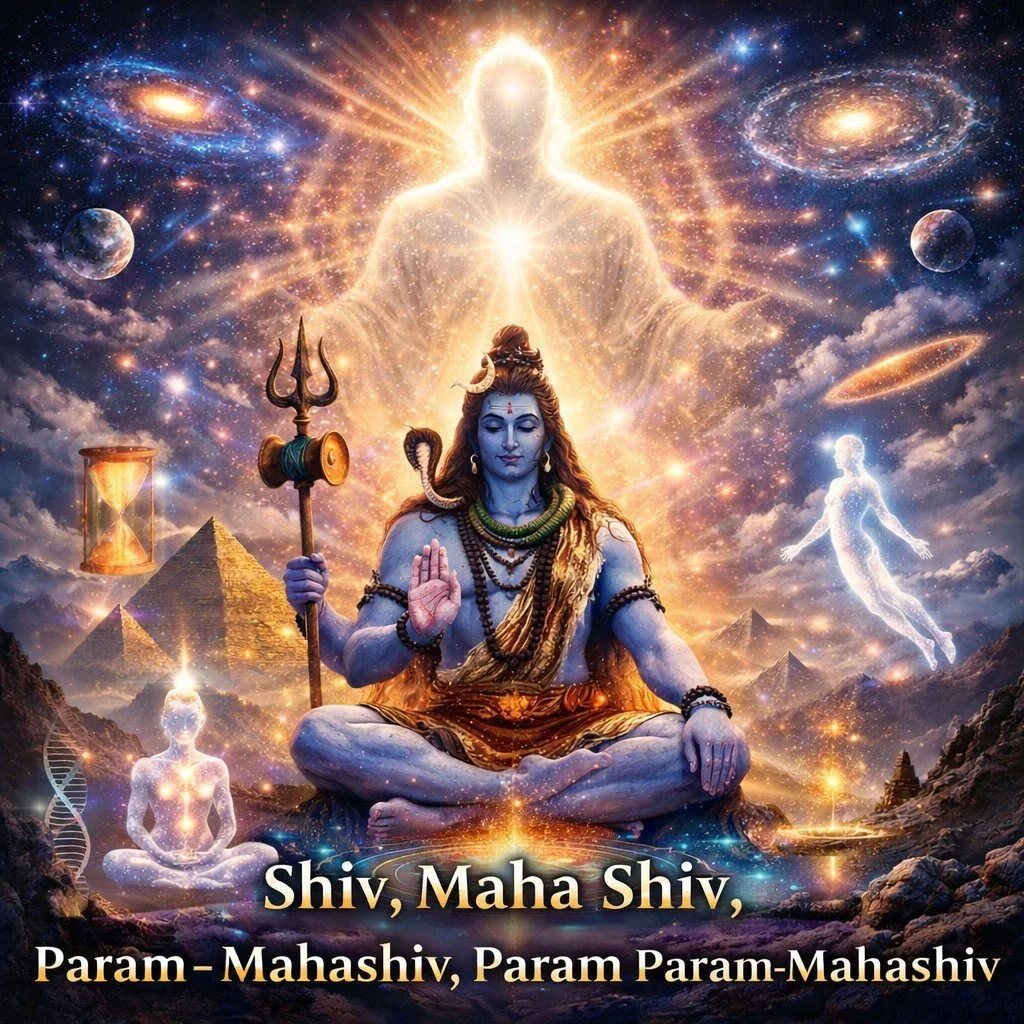
The Highest State: Paramshanti (Supreme Peace)
At the highest level of consciousness: No one “comes” to receive the soul. The soul rises naturally into Paramshanti (supreme peace), beyond fear, form, or intermediaries. It is like iron being drawn instantly to a magnet. No struggle. No delay. Only peaceful flow.
Role of Guru
Upanishads declare: Without a true Guru, the path is dark. Spiritual masters guide the soul subtly at death, helping it move toward higher realms. This guidance is not physical, but vibrational and spiritual.
Famous Scriptural Examples
Ajamila
Lived sinfully
Remembered Narayan at death
Vishnudutas stopped Yamadutas
Markandeya Rishi
Devotee of Shiva
Shiva intervened personally
Jatayu
Sacrificed for Ram
Granted liberation
Bhishma
Departed in Krishna’s presence
These examples show divine intervention based on devotion.
Comparison with Other Religions
Islam
Angel of Death (Azrael) extracts the soul
Gentle for righteous, harsh for sinners
Christianity
Angels carry the soul
Heaven, hell, or purification
Judaism
Angel of Death
Moral judgment
Buddhism
No permanent soul
Consciousness transmigrates
Liberation through awareness
Jainism
Soul moves by its own karma
No divine interference
Sikhism
Name remembrance frees from Yama
Zoroastrianism
Chinvat Bridge
Moral judgment
Despite differences, all agree: Consciousness at death determines destiny.
Psychological and Scientific View
Modern science studies Near-Death Experiences (NDEs):
Common features:
Leaving the body
Tunnel of light
Peaceful presence
Life review
Divine communication
Science explains it as chemical reactions in the brain, but cannot explain why experiences are similar across cultures. Spiritual view: Consciousness creates its own experience.
Why Fewer People Have Clear Visions Today
Constant mental noise, Digital overload, Medical sedation, Suppressed awareness, Lack of spiritual preparation
Many people still experience something—but forget it.
Three Types of Spiritual Connections
1. Emotional Connection
Attachment, love, fear, guilt
Leads to seeing relatives or familiar faces
2. Subtle/Energy Connection
Tantra, occult, unresolved fears
Leads to disturbing experiences
3. Divine Connection
Guru, God, Paramshanti
Leads to peace and clarity
Spiritual teachers warn: Not every subtle power is divine. Only connection with truth brings liberation.
The Ultimate Teaching
Upanishads say: As is your consciousness, so is your world. What appears at death is not an external visitor.
It is the reflection of your inner state.
Practical Message for Life
The real question is not: “Who will come to take me?” The real question is: “With whom am I connected today?”
Ask yourself:
Am I connected to fear?
To materialism?
To status?
To Paramshanti?
To self-knowledge?
Your answer determines your future.
Karma and Responsibility
No one can grant liberation merely by relationship. Children, wealth, relatives cannot save the soul.
Only: Knowledge, Devotion, Awareness, Discipline, Inner purity matter.
Final Conclusion
Across scriptures and traditions, one truth emerges: Death is not an accident. It is a spiritual transition.
What happens then is decided now.
Karma shapes the path
Memory activates connection
Consciousness defines experience
Those who live in fear meet fear. Those who live in devotion meet protection. Those who live in knowledge meet light. Those who live in Paramshanti merge into peace.
Final Message
Do not wait for death to prepare. Prepare now. Live in awareness. Live in discipline. Live in truth. Live in Paramshanti. Then, when the final moment arrives, nothing will need to come for you. You will simply rise. In peace. In light.

Discover the deeper meaning of Guru Purnima through the teachings of Bapuji Dashrathbhai Patel, Vedas, Upanishads, Puranas, and Bhagavad Gita. Learn how self-realization, Brahma consciousness, meditation, and Paramshanti awaken the divine soul within.