
Episode 1360, Guru Purnima: Awakening the Supreme Soul Within. What can be the most powerful lesson that a disciple receives from his Guru?”
Introduction: Guru Purnima and the Path of Inner Awakening
Guru Purnima is not merely a festival. It is a sacred reminder of our eternal relationship with the Supreme Teacher—the Guru who awakens divine consciousness within the soul. On this auspicious day, we express gratitude to our spiritual lineage and especially to Bapuji Dashrathbhai Patel, who continuously guides seekers toward self-realization and Paramshanti (supreme peace). His teachings echo the eternal wisdom of the Vedas, Upanishads, and Puranas: the soul is divine, powerful, and one with Brahma.
This article explores how ancient scriptures and Bapuji’s teachings converge into a single spiritual truth: Know yourself as Brahma, and you become free.
1. The Guru: Not a Giver of Words, But a Transformer of Consciousness
True Gurus do not merely provide information. They awaken vision. The scriptures repeatedly emphasize that: A Guru does not give words; he gives awareness. Bapuji teaches that the real Guru connects the disciple to their inner divinity. Knowledge without transformation is incomplete. When consciousness changes, life changes. The Guru’s role is to plant the “seed of Brahma” in the disciple’s soul—the awareness that:
“You are not limited.”
“You are divine.”
“You are the Supreme Soul.”
When this seed awakens, enlightenment begins.
2. Eternal Teachings from the Puranas
(a) Truth is Brahma — Brahma Vaivarta Purana
Narada learns that creation begins and ends in truth. False illusion never brings peace. To live in truth is to live in Brahma-consciousness. Bapuji echoes this by teaching that only soul-awareness leads to lasting peace.
(b) Meditation is the Real Sacrifice — Shiva Purana
Shiva teaches that:
Rituals are limited.
Silence is infinite.
Inner meditation is the true yajna.
Bapuji emphasizes the same: silence and self-awareness are more powerful than external practices.
(c) Learning from All — Dattatreya and King Yadu
Dattatreya says: “Nature itself is my Guru.” He learned from birds, rivers, wind, fire, and life itself. This teaches that the awakened soul learns from everything. Bapuji also teaches that every experience is a spiritual classroom.
(d) Ego is Bondage — Bali and Shukracharya
King Bali attained immortality through surrender. His ego dissolved in devotion. This reflects Bapuji’s teaching: ego blocks divine power; surrender unlocks it.
(e) The Guru Liberates the Soul — Narada Purana
The true Guru answers one question: “Who am I?” Mantras and rituals are tools. Self-realization is liberation.
3. The Core Teaching: “You Are Brahma”
From the Vedas and Upanishads The Mahavakya: Aham Brahmasmi — I am Brahma
The Upanishads declare:
You are not a part of Brahma.
You are Brahma itself.
When this truth enters the heart, fear and sorrow disappear. Bapuji constantly reminds seekers: “You are Shiva. You are Supreme. You are Divine.” Without realizing this, all practices remain incomplete.
From the Bhagavad Gita
The Gita declares: “The soul is never born and never dies.” (2:20) Krishna teaches Uddhava that:
Yoga, penance, and devotion are incomplete without self-knowledge.
Work done in soul-consciousness does not bind.
Bapuji teaches the same Karma Yoga: act from soul-awareness, not ego.
4. Understanding Mind, Intellect, and Soul
Human life operates on three levels:
Conscious Mind
Subconscious Mind
Unconscious Mind
The mind is influenced by environment, emotions, and past impressions. Even divine incarnations experienced sorrow. Bapuji teaches: “Do not fight the mind. Rise above it.”
The Gita explains the hierarchy:
Body < Mind < Intellect < Soul
Therefore, focus on strengthening the soul, not obsessing over mental weakness. When soul-power awakens, the mind heals naturally.
5. Attachment and the Journey After Death
Attachment binds even after death. The story shared in the discourse shows how emotional attachment can hold souls in lower realms. The mind carries these bonds beyond the body. The Gita teaches: “Whatever you meditate upon at death, you attain.” Therefore, Guru teaches detachment—not coldness, but spiritual freedom. Bapuji emphasizes: Liberation is freedom from mental bondage, not escape from the body.
6. The Supreme Teaching: Change the World by Self-Transformation
The Guru’s ultimate message is: “You are Brahma. Wake up and transform the universe through your consciousness.” This is not philosophy. It is a revolutionary awakening.
When a disciple realizes:--------“I am an ocean of light,” ------“Infinite suns exist within me,”
He becomes a source of transformation. Bapuji often says: “By changing yourself, you change the world.” This is spiritual revolution.
7. The Story of Dattatreya and King Yadu: Silence as Guru
King Yadu, despite wealth and learning, felt empty. He met Dattatreya, who lived in bliss.
Dattatreya said: “My true Guru is inner silence.” Yadu realized that he was seeking externally what already existed within. This is Bapuji’s core teaching: the Guru ultimately awakens the inner Guru.
8. Free Will and Divine Destiny
True freedom is free will with knowledge. Without wisdom, free will becomes ignorance.
With self-knowledge: Past karmas dissolve, Destiny transforms, Memory of suffering fades.
The awakened soul becomes creator, not victim. Bapuji teaches: You are not clay that breaks. You are eternal consciousness.
9. Becoming an Independent Spiritual Warrior
True spiritual education makes one independent. It does not create dependence on personalities, rituals, or institutions. The awakened soul:
Radiates peace.-------Dissolves darkness.-----Lives fearlessly.-----Serves silently.
Such a soul becomes a “cosmic warrior of light.”
10. The Final Initiation: Awaken the Brahma Within
The highest Guru-diksha is not a mantra. It is realization: “You are fire. You are creation. You are destruction. You are divine.” When this awakens:
Life becomes service, Existence becomes blessing, Presence becomes healing.
Nothing greater can be given.
Conclusion: The Path of Paramshanti
The essence of all scriptures and Bapuji’s teachings is one:
Know yourself as Brahma.
Live in soul-consciousness.
Practice silence and meditation.
Use free will wisely.
Release attachment.
Radiate Paramshanti.
When this happens, the disciple no longer needs external support. He becomes light himself. The Guru then disappears into the soul—because the soul has become the Guru.
Final Reflection
The true Guru does not speak much. He awakens eternity within you. The true disciple does not beg.He becomes divine. The true path is silence. The true destination is Paramshanti.
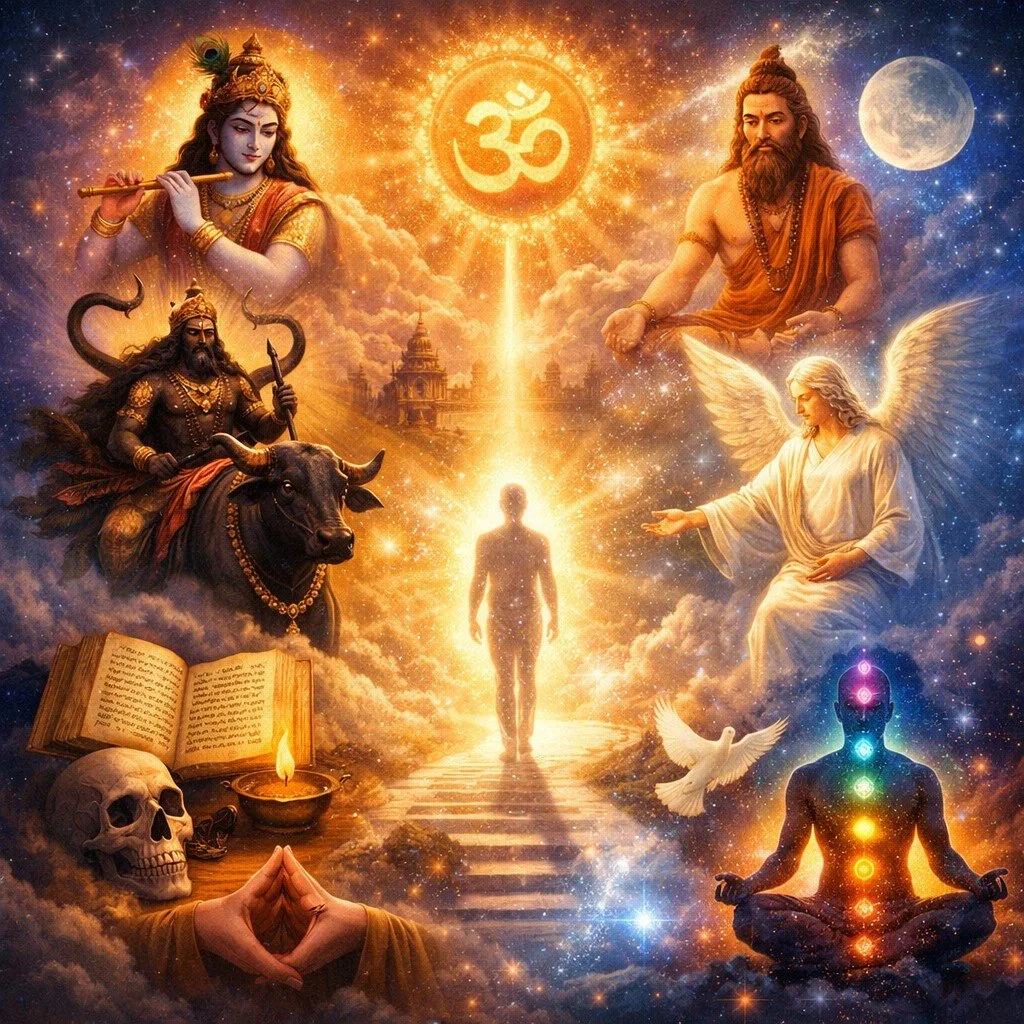
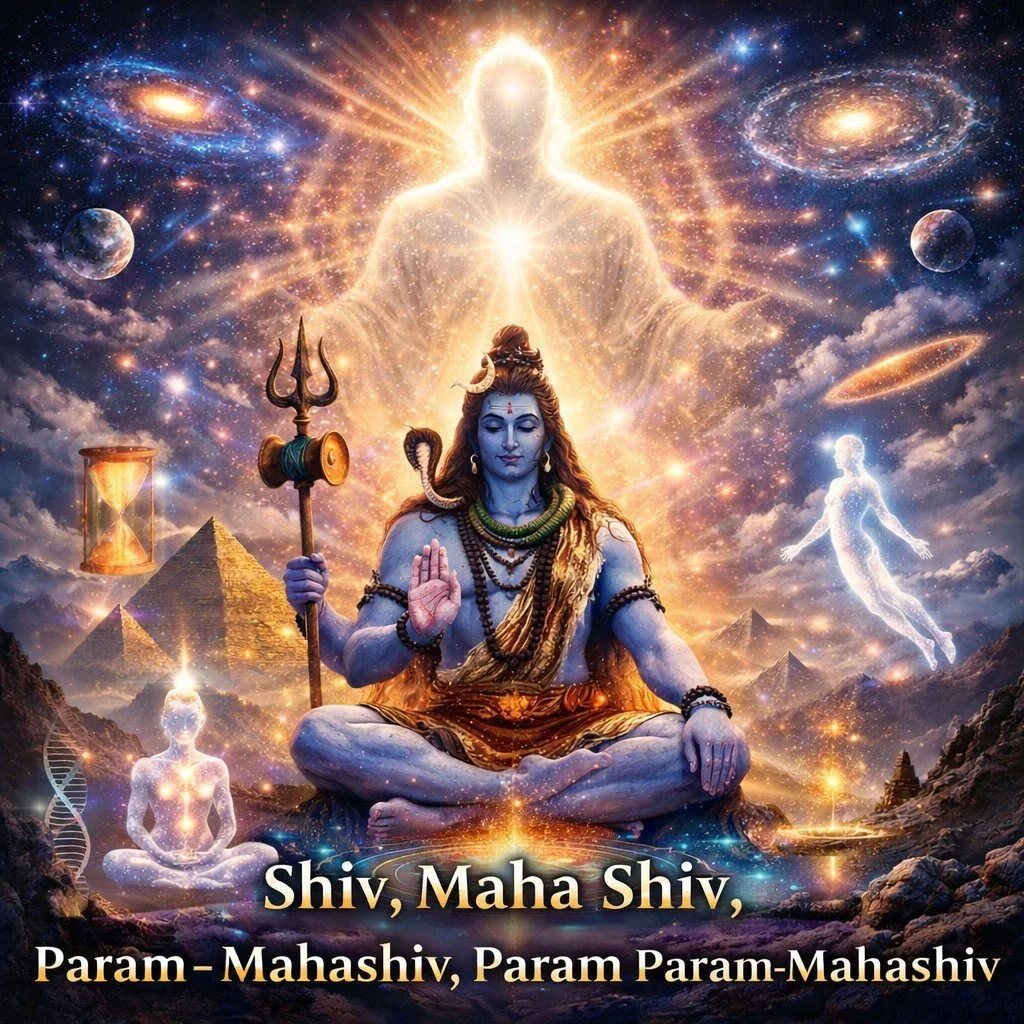

Discover the deeper meaning of Guru Purnima through the teachings of Bapuji Dashrathbhai Patel, Vedas, Upanishads, Puranas, and Bhagavad Gita. Learn how self-realization, Brahma consciousness, meditation, and Paramshanti awaken the divine soul within.