
The Timeless Teachings of Mahatma Jadabharat: Detachment, Self-Realization, and Supreme Peace
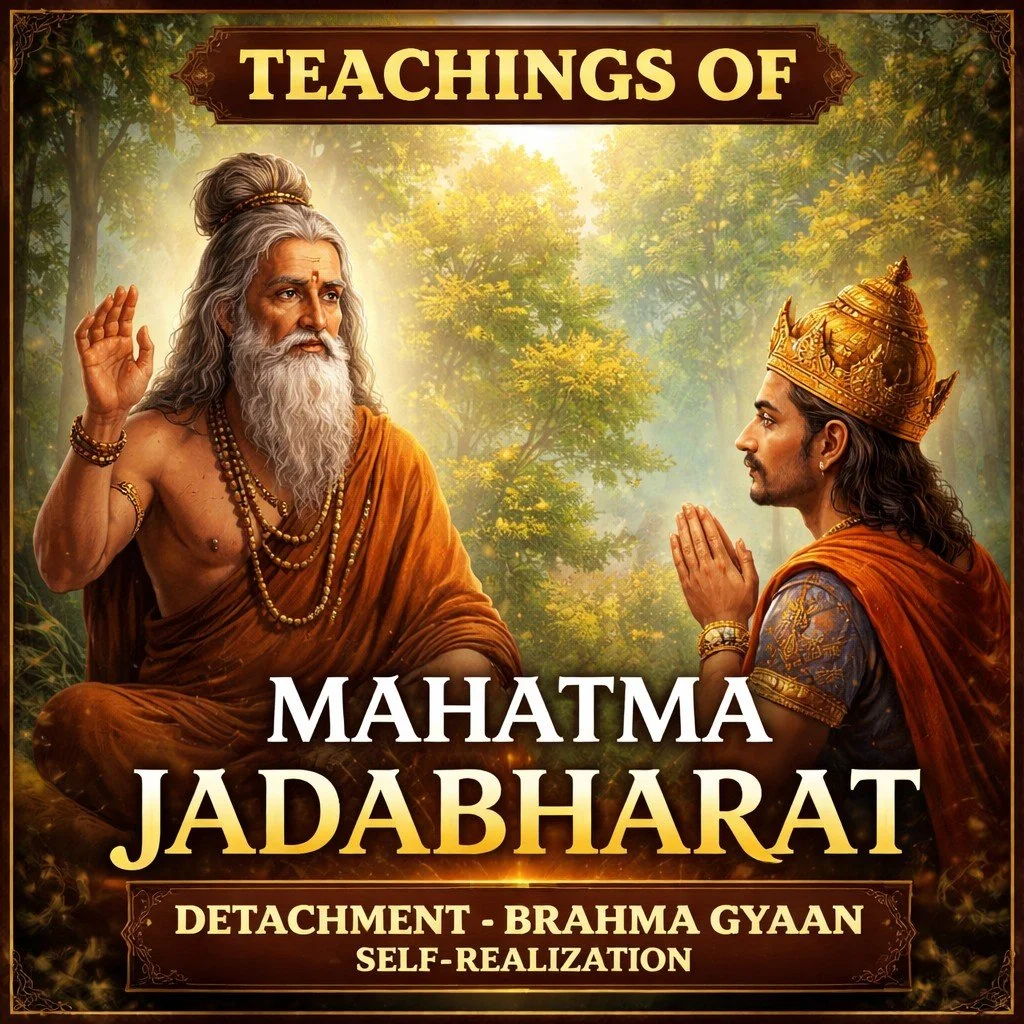
The discourse centers on the profound wisdom of Mahatma Jadabharat, especially his transformative dialogue with King Rahugana. Rooted in the sacred narrative of the Shrimad Bhagavata Purana, this teaching transcends time, guiding seekers toward inner freedom, self-knowledge, and Paramshanti (supreme peace).
1. The Journey of Jadabharat: A Living Lesson in Detachment
Jadabharat’s life itself is a spiritual teaching. Having experienced multiple forms of existence—human, animal, and even plant-like states—he understood firsthand how attachment binds the soul to repeated birth and suffering. Remembering the cause of his past rebirths, he resolved never again to be ensnared by worldly fascination. This radical detachment earned him the name “Jada” (appearing inert), though inwardly he was fully awakened.
2. Mind and Spirituality: Bondage or Liberation
At the heart of Jadabharat’s instruction lies the mind.
A mind entangled in desires and possessions becomes the cause of sorrow.
A mind freed from attachment becomes the doorway to moksha (liberation).
Worldly pleasures offer fleeting happiness, but when the same mind turns toward the Supreme, it transforms into a liberating force. Thus, the destiny of the soul is shaped by where the mind rests.
3. Self-Realization: Knowing “Who Am I?”
When King Rahugana questioned Jadabharat about his identity, the sage replied with a deeper challenge: “First ask yourself who you are.” Jadabharat explained that the true self is the witnessing soul—observing waking, dreaming, and deep sleep. The world, he said, is like a dream: terrifying while experienced, but unreal once one awakens. True awakening occurs when the mind detaches from objects and recognizes its own soul-nature.
4. The World as Dream and the Meaning of Awakening
Just as a person fears a lion in a dream until awakened, human beings fear loss, death, and dishonor until spiritual awakening dawns. Awakening does not mean abandoning life, but freeing the mind from obsession. The truly awakened being lives in the world yet is not bound by it.
5. The Role of Saints and Satsang
Jadabharat emphasized that the purification of the mind is not possible in isolation.
The company of saints (satsang) refines discernment.
Service to realized souls leads to the knowledge of Brahman.
Without such guidance, wisdom remains incomplete. Saints help seekers see the same divine presence in all beings, cultivating humility, compassion, and clarity.
6. Material Attachment and the Cycle of Birth
Human life, Jadabharat warned, is often consumed by the pursuit of comfort and wealth, while the eternal soul is forgotten. The body is temporary; the soul is unborn and undying. When actions are performed only to dominate or possess, anxiety multiplies. True fulfillment arises when the mind connects with the Supreme, loosening the knots of karma and rebirth.
7. Dreams, Illusion, and Discernment
A significant part of the discourse addresses dreams. Divine commands, Jadabharat clarified, do not truly arrive through dreams. Dreams may feature deities or saints, but without discernment they can mislead the seeker into deeper illusion. Transformation comes through conscious understanding, not subconscious imagery. Therefore, one must rise above fascination with dreams and anchor awareness in wakeful wisdom.
8. Brahma Gyaan: The Supreme Knowledge
Brahma Gyaan—knowledge of the Absolute—is presented as the greatest wealth. It purifies the mind, dissolves fear and desire, and empowers the soul to transcend worldly limitations. This knowledge is essential for all ages, from children to elders, guiding humanity toward inner transformation and collective welfare.
9. The Encounter with King Rahugana
When Jadabharat was forced to carry King Rahugana’s palanquin, his careful steps—taken to avoid harming ants—angered the king. Upon questioning him, the king realized he was no ordinary bearer but a realized sage. Jadabharat revealed that his compassion arose from deep karmic awareness: having suffered rebirth due to attachment, he now refused to harm any living being.
Moved by this wisdom, King Rahugana bowed in humility and received Brahma-knowledge. Jadabharat taught him: “If you discipline the mind, Yama (death) will not punish you.”
10. Renunciation and Inner Freedom
Wealth, power, and status, Jadabharat explained, do not grant peace. Those who cling to them often live in constant fear. Renunciation does not mean abandoning responsibilities, but relinquishing inner thirst—fear, anger, greed, and attachment. The truly wise person is one who understands the impermanence of all things before death arrives.
11. Liberation Through Knowledge
The essence of Brahma Gyaan can be summarized in two steps:
Realize who you truly are—the soul.
Live established in that realization.
When this happens, desires lose their grip, the mind becomes calm, and life flows with clarity. Such knowledge liberates not only the individual but also uplifts ancestors and the surrounding atmosphere through elevated vibrations.
12. Collective Spiritual Practice and Paramshanti
The discourse concludes with a call for collective meditation and silence. By awakening positive energies and calming restless influences, practitioners aim to purify the environment. Through shared stillness and remembrance of the Supreme, vibrations of Paramshanti (supreme peace) are spread for the welfare of all beings.
Conclusion
The life and teachings of Mahatma Jadabharat remind humanity that bondage and freedom are decisions of the mind. Attachment leads to repeated sorrow; knowledge and devotion lead to liberation. By purifying the mind through satsang, self-inquiry, and Brahma Gyaan, every soul—young or old—can awaken, transcend illusion, and rest in Paramshanti, the supreme peace that is our true nature.


Explore the profound dialogue between Narada and Vedavyasa revealing why love surpasses knowledge, how devotion attracts divine grace, and how the Bhagavata Purana emerged as the ultimate scripture of bhakti, transformation, and supreme peace.