
Episode 1357, How to End Sorrow? The Science of Paramshanti, Self-Realization, and the Dissolution of the Mind दुखों का मूल कारण क्या है?
Today we begin another super-duper episode together. The title of today’s discussion is: How to attain freedom from sorrow? How to end suffering? And finally, how to dissolve the mind itself? This episode is going to be extremely powerful. Those who did not watch yesterday’s episode should definitely watch it. It contained deep spiritual truths and fourteen important points every spiritual seeker must know.
Today’s discussion will help us understand the psychology of sorrow and the deeper spiritual science behind it.
We Will Not Fight Sorrow — We Will Witness It
Today we will not fight sorrow. We will observe it, and through observation it will melt away.
What a profound statement.
Do not try to destroy sorrow forcefully. Recognize that sorrow is not your real identity. You are bliss by nature. God did not create you as suffering itself. You are not sorrow. You are the soul experiencing sorrow, yet separate from it. Today we will not remove sorrow. We will remove ourselves from it.
Sorrow belongs to the body and the mind, but the soul is the witness — silent, peaceful, unmoving. Therefore return to the soul-conscious state. Become established in the self. Sorrow is like a cloud, while meditation is the sun that can shine beyond it. The silence within you can dissolve sorrow into peace. Sorrow exists in the body. The story exists in the mind. But the soul exists in awareness. When you descend within yourself, sorrow remains outside.
Today we will not run away from sorrow. We will become stable in the soul and burn sorrow in the fire of awareness.
Life has reduced us, hurt us, and made us suffer in many ways. But today we are not here to “fix” things externally. Today we are here to place ourselves in the correct spiritual position. We do not need to remove sorrow. We need to see who we truly are. Through that realization we descend into our original state, and sorrow begins melting on its own.
“I am the soul. Neither sorrow nor the body is truly mine. I am peace, silence, and light.”
What Is the Root Cause of Sorrow?
Every person asks: “How can my suffering end?” Whether rich or poor, knowledgeable or ignorant, almost everyone lives in some state of suffering. Can spirituality end sorrow? The answer is yes — but not through information alone. It happens through inner vision.
Listening to spiritual talks alone is not enough. For half an hour you may feel inspired, but after the session ends you often return to the same state. What is needed is transformation through inner realization.
The First Cause of Sorrow: Forgetting the Real Self
Spiritually speaking, the first cause of suffering is forgetting one’s true identity. We think:
“I am the body.” “I am this person.”
But in reality, we are souls. From this ignorance arise attachment, illusion, anger, and fear.
The Second Cause: The Bondage of Karma
Every emotion, every thought, every action plants an energetic seed. These seeds later return as pleasure and pain. Bapu Ji says the play of karma is the cosmic drama itself.
The Third Cause: Expectation
We expect love, respect, and happiness from the world. When we do not receive them, suffering begins. But no one outside can truly give fulfillment to the soul. This is an extremely deep truth.
The Fourth Cause: Desire and Craving
Uncontrolled desires never end. Desire becomes illusion, and illusion eventually becomes pain. Whoever understands this begins to transcend suffering.
The Spiritual Solution to Sorrow
Every day ask yourself: “Who am I?” “Who is the one seeing?” “Who sleeps?” “Who awakens?”
This practice separates awareness from mind, body, and circumstances. Through this process, one enters the witness state, and sorrow can no longer touch the soul deeply. The answer is: You are the divine soul. The supreme light.
Awakening Soul-Consciousness
Daily remembrance is essential: “I am a soul.” “I am eternal.” “I am indestructible.” “I am pure.” “I am peace.” “I am consciousness.” “I belong to the supreme light.”
This should not remain mere words. Make it a daily practice. Every morning after waking up, and every night before sleeping, close your eyes for two minutes and focus on the point of light between the eyebrows. Experience yourself as a point of divine light.
Karma Yoga and the Power of Higher Connection
Bapu Ji teaches: connect the intellect to the Supreme. Remove the intellect from body-consciousness and attach it to the soul and Supreme Consciousness. This is true Yoga of the intellect. Sorrow begins when the intellect becomes tied to situations. Therefore connect the intellect to the Supreme Source. Peaceful vibrations will flow from there.
Meditation and Silence: The Soul’s Bath
People bathe the body daily, but meditation and silence are the soul’s cleansing bath. Sit in silence for ten minutes every day. Do not solve problems. Do not think unnecessarily. Simply experience being. This calms the mind, resets consciousness, and weakens the grip of suffering.
Forgiveness Lightens the Soul
Suffering often arises from unresolved inner accounts. Therefore forgive others and forgive yourself. Forgiveness lightens the soul. As forgiveness grows, suffering naturally reduces.
Understand Your Karma
Do not run from suffering. Every sorrow is connected to previous thoughts or actions. When the soul realizes, “This fruit came from my own seed,” then it stops crying and begins learning. This understanding itself becomes liberation.
Sorrow Is Not the Problem — It Is an Alarm
Suffering is an alarm reminding the soul that it has wandered away from self-awareness. When sorrow appears, it means the alarm has rung. At that moment return to soul-consciousness. As the soul remembers its true home and nature, sorrow melts like darkness before sunlight.
You Are More Powerful Than You Think
You are consciousness. You are bliss. You are supreme light. No power on Earth is greater than the soul’s true nature. This is not said to increase ego, but to awaken inner strength.
The speaker explains that titles like “President” or spiritual names such as “Shri Shri 108” were originally reminders of spiritual identity and inner stature. But ultimately, we are beyond all names and labels. We do not belong permanently to this world. This Earth is not our final home.
Sorrow Awakens the Sleeping Soul
Suffering shakes the soul out of deep ignorance. Humans have slept in spiritual unconsciousness for lifetimes, identifying themselves with body, caste, history, and personality. But the soul neither takes birth nor dies. The discourse compares this to a lion raised among dogs. Forgetting its true nature, the lion suffers humiliation. Similarly, the soul has forgotten its divine identity. Another example is given of lions trained painfully in circuses until they forget their original strength. In the same way, worldly suffering has conditioned human beings into weakness and sorrow.
The Mind Is a Field of Vibrations
The mind is a flowing field of waves — a stream of thoughts, desires, impressions, and tendencies accumulated over countless births. Dreams, fears, and hidden impressions emerge from this subconscious reservoir. You mistake these vibrations for your real identity, but they are not you. They are accumulated energetic patterns. Like foam floating on the surface of the ocean, suffering appears on the surface of the mind, while the depth of the soul remains peaceful. You are not sorrow. You are the witness of sorrow.
Do Not Bind Anyone
The discourse emphasizes that imprisoning or controlling others creates karmic bondage. Whether it is children, relatives, spouses, or anyone else, no one should be trapped emotionally or psychologically. Each soul has free will and must learn through its own karma. Guide people, explain consequences, but do not dominate them.
Pleasure and Pain Both Exist in This World
This world is not heaven. Both pleasurable and painful vibrations exist here. Even heavenly realms contain attachment, ego, and desire in subtle forms. Therefore Bapu Ji teaches that one must transcend both pleasure and pain.
Suffering Purifies — It Does Not Destroy
One of the most powerful lines in the discourse is: “This sorrow has come to purify me, not to break me.” Perspective is everything. People suffer heavily because they perceive suffering negatively. If the viewpoint changes, sorrow becomes lighter.
Spirituality Does Not Eliminate Events — It Changes Identification
Even spiritually awakened people experience pain, illness, and challenges. The difference is that they no longer identify completely with those experiences. The discourse compares this to standing under an umbrella during rainfall. The rain continues, but you remain protected. Soul-consciousness becomes that umbrella.
The Science of Liberation
Every morning affirm: “I am not the body.” “I am a conscious point of light.” “No one can create or destroy me.” “I am master of my inner state.” “I am eternal consciousness.”
Gradually the world begins to feel dreamlike. When sorrow arises, do not become it. Observe it silently like a film. The speaker even criticizes emotionally manipulative movies that intensify suffering unnecessarily. Instead, sit silently and ask: “Who is the one feeling sorrow?”
Eventually you discover that the witness can never truly suffer.
Paramshanti: The Supreme State Beyond Mind
Paramshanti is not merely peace. It is the soul’s original condition where there is no fear, desire, memory, or future. It is a state beyond the cycle of birth and death.
In Paramshanti, the mind does not merely become quiet — it becomes absent.
The discourse defines Paramshanti as:
Original soul-consciousness
Awareness of the Supreme Abode
Detachment from karmic entanglement
How Suffering Ends in Paramshanti
Suffering gains strength through identification with “me” and “mine”: “Why did this happen to me?”
“I did not want this.” But in Paramshanti the identity changes: “I am not suffering. The body is suffering.” “I am not broken. A mental pattern has broken.” “I am the witness.”
The discourse beautifully says: “A lotus sitting amidst fire does not burn — it spreads fragrance.”
Similarly, the soul established in Paramshanti remains untouched even amidst pain.
Three Secrets to Remaining in Paramshanti
1. Constant Soul-Consciousness
Remain aware every moment: “I am a soul, not the body.”
2. Connect the Intellect to the Supreme Abode
Remain mentally connected to the supreme light and observe worldly drama from higher awareness.
3. Accept Every Situation as Karma
See every event as part of the soul’s karmic script. Become not merely an actor, but an awakened observer.
The End of the Mind
The final part of the discourse discusses the destruction or dissolution of the mind. The speaker explains that the mind is not an object. It is a stream of thoughts, desires, memories, and expectations. The mind is described as: Identity + Experience + Expectation = Mental Flow The mind exists because the soul has forgotten itself.
How Does the Mind End?
The mind cannot be forcibly stopped. The more you suppress it, the more strongly it runs. The mind dissolves only when its root energy disappears. That root energy is the false “I”: “I am the body.” “I am this person.” “I am this story.”
As soon as this false identity weakens, the mind naturally weakens.
Witness Consciousness Is the Death of the Mind
The discourse states: “The death of the mind is the awakening of the witness.”
You notice thoughts moving, but the observer behind them is not the mind itself. The moment the observer awakens, the thinker begins disappearing. The mind does not dissolve through struggle. It dissolves through observation.
Three Spiritual Practices for Dissolving the Mind
Stage One: Self-Inquiry
Ask repeatedly: “Who am I?”
Stage Two: Silent Observation
Sit quietly and observe the mind without changing anything.
Stage Three: Remember the Supreme Abode
Go beyond the origin of thought itself through remembrance of the supreme source.
Signs That the Mind Is Dissolving
Suffering is observed rather than emotionally absorbed
Time feels slower or irrelevant
Present-moment awareness deepens
False identity weakens
Inner silence becomes powerful and expressive
This silent state is called the soul’s true nature.
Final Spiritual Message
The speaker concludes by saying:
“You are consciousness.”
“You are Brahm Swaroop.”
“You are Shiv, Mahashiv, Param Mahashiv.”
“You are not the mind.”
“You are not weak.”
“You are not meant for suffering.”
The purpose of the discourse is not to teach something external, but to restore the soul’s forgotten identity.
The episode concludes with gratitude, remembrance of Paramshanti, and encouragement to join the morning meditation sessions dedicated to silence, witness-consciousness, and supreme peace.

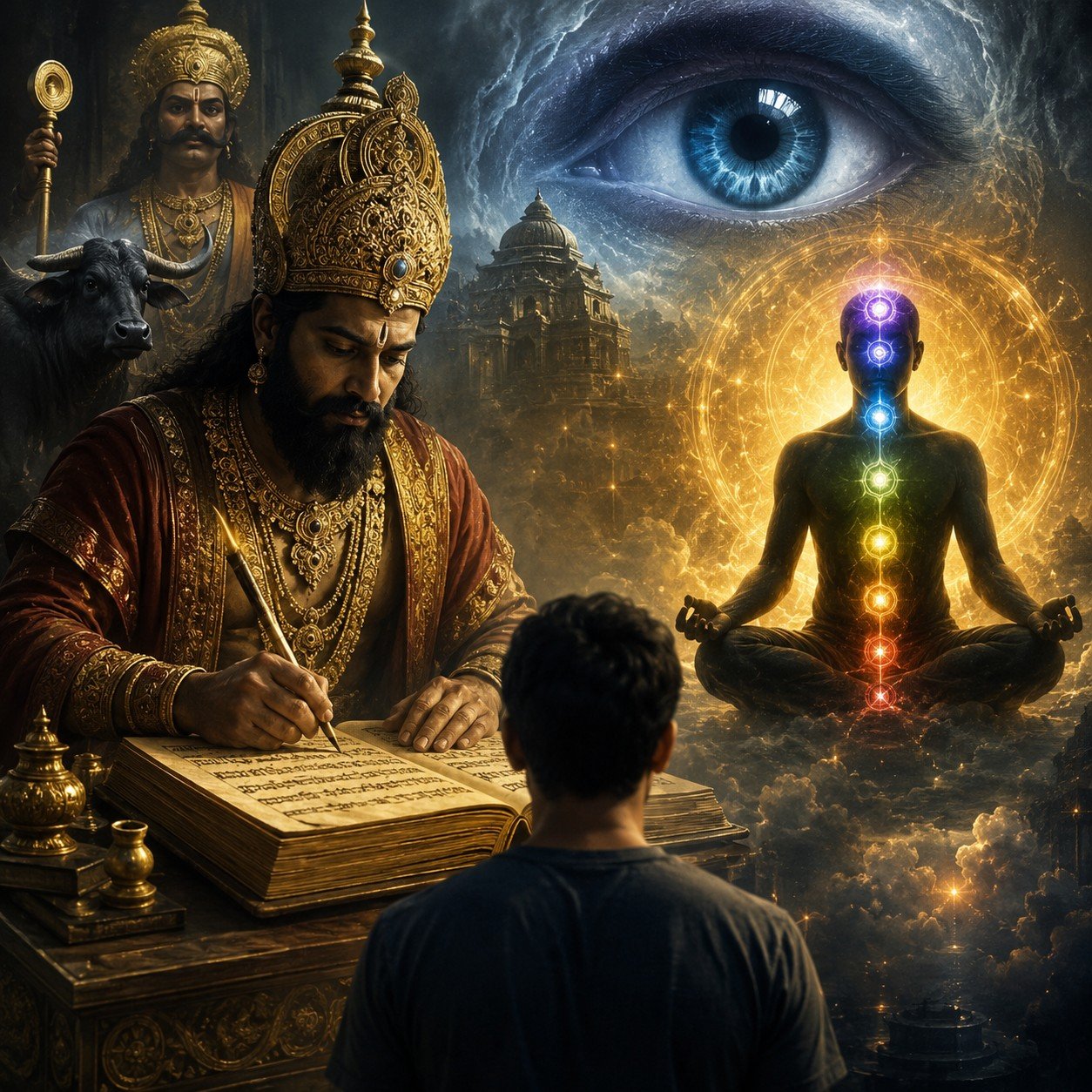

Discover the true meaning of Amrit Vela beyond the early morning hours. Learn the four types of Amrit Vela, the greatness of the Sadguru, Brahma Gyan, the symbolic meaning of Samudra Manthana, the power of the Divine Name, Guru-disciple wisdom, meditation, self-realization, and the path to Supreme Peace through Behad spiritual knowledge.