
Episode 1268, Positive and Negative Entities in the Subtle World – Ancient Knowledge from Vedas, Purana and Spiritual Dimensions
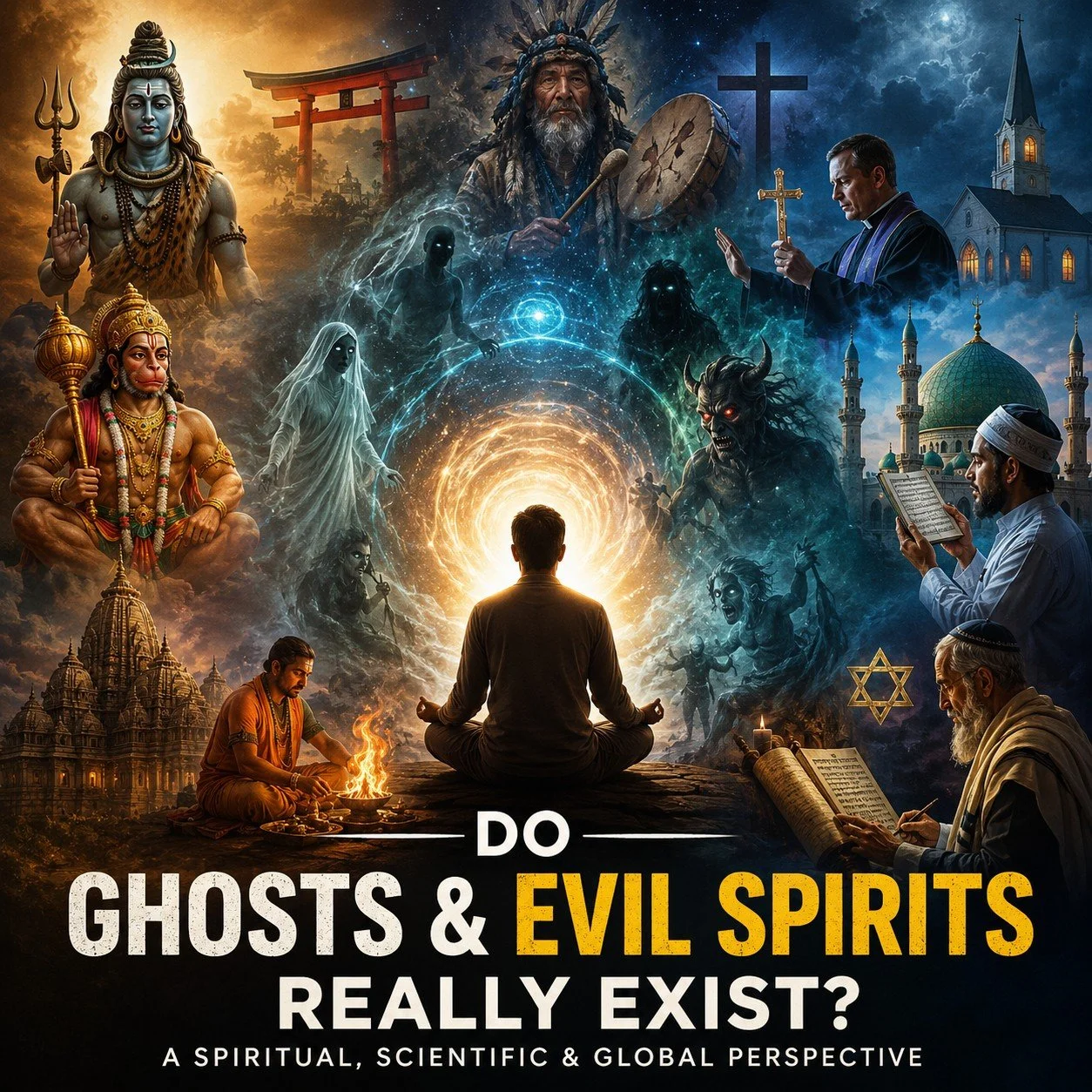
The discussion revolves around a fascinating and deep spiritual topic: Positive and Negative Entities in the Subtle World (Sukshma Jagat).
The speaker explains that by reading the Vedas and Mahabharata, one comes to know that from ancient times there existed mysterious and supernatural groups capable of fulfilling human desires. Even today, through invocation and spiritual practices, these beings are believed to help humanity. The discussion first focuses on positive spiritual groups and later mentions that negative groups also exist.
A reference from the Bhagavad Gita Chapter 9 is explained: those who worship gods attain the gods, those who worship ancestors attain the ancestors, and those who worship the Supreme attain the Supreme. Therefore, true devotees of the Supreme do not take rebirth. Another verse mentions 11 Rudras, 12 Adityas, 8 Vasus, Sadhya beings, Vishvedevas, Ashwini Kumars, Gandharvas, Yakshas, Rakshasas, Siddhas, and Pitras all witnessing the divine in amazement.
Vidyadharas – Masters of Mystical Knowledge
The first positive category discussed is the Vidyadharas. These beings are called Vidyadharas because they possess miraculous knowledge and supernatural sciences. They are described as highly intelligent celestial beings associated with the Himalayas and companions of Shiva. The transcript mentions that they are “Himalaya mein rehne wale [unclear transcript term: ‘upadesh’ / ‘upadev’].” They possess miraculous powers and are also mentioned in Buddhist traditions.
Yakshas and Yakshinis
Yakshas are described as beings possessing miraculous treasures and supernatural wealth. Kubera, the god of wealth and brother of Ravana, is said to have been a Yaksha. In the Mahabharata, Yudhishthira encounters a Yaksha living near a lake. The female counterparts are called Yakshinis. There are said to be eight principal Yakshinis capable of fulfilling desires.
Gandharvas – Celestial Musicians and Artists
The Gandharvas are celestial musicians and divine artists. They originated from Kashyapa and his wife Arishta. Gandharvas are invisible subtle beings associated with beauty, music, and art. They inhabit Gandharva Loka, a divine realm filled with music, light, and beauty. They act as intermediaries between gods and humans.
The speaker humorously compares modern Bollywood artists to Gandharvas. Gandharvas are known to assist gods during rituals and sacrifices by performing divine music. References to Gandharvas are found in the Mahabharata, Ramayana, Vishnu Purana, Garuda Purana, and Shiva Purana. Hanuman is said to have passed near Gandharva Loka while searching for Sita.
The chief Gandharva is Chitraratha, and their wives are the Apsaras.
Apsaras – Divine Celestial Women
Apsaras are celestial beings associated with beauty, dance, music, and playfulness. According to the Atharva Veda, they move upon waters and dwell near sacred trees while swinging and playing music. They are considered ageless and immortal.
The speaker mentions that Indra’s heaven contained 11 major Apsaras including Kritasthali, Punjikasthala, Menaka, Rambha, and others. Some names in the transcript were partially unclear, including [unclear transcript names: “Pralobhnama” and related Apsara names]. Rambha was considered the chief among them. Different scriptures mention anywhere from 108 to 1008 Apsaras.
Nayikas – Enchanters and Beauties
Nayikas are considered subgroups of Yakshinis and Apsaras. They are extremely beautiful and experts in attraction and enchantment. Their spiritual practices are associated with beauty and attraction powers. The speaker says they were often sent by gods to disturb the penance of sages. Eight major Nayikas are listed including Jaya, Vijaya, Rati Priya, Kanchan Kundali, Swarnamala, Jayanti, Surangi, and Vidyavati.
Guhyakas – Guardians of Secret Treasures
Guhyakas are described as masters of hidden knowledge and secret sciences. associated terms were “Ghumak / Ghook / Gumak”]. Tantric practitioners worship these beings. Jain and Buddhist texts also mention them extensively. They are believed to protect hidden treasures and secret vaults within mountains and the Earth.
Serpents and Nagas
Naga worship has been widespread throughout India. Nagas exist in serpent form and are believed to help and protect humans. Ten principal Nagas are named including Shesha, Vasuki, Takshaka, Karkotaka, Padma, Mahapadma, Shankha, and Kulika.
Siddhas – Perfected Beings
Siddhas are beings who attain spiritual perfection. Whatever they say becomes true. They never lie. They can become extremely large, heavy, or light. Hindu and Buddhist traditions mention 84 Siddhas. Bihar, Bengal, Odisha, and Assam are considered regions influenced by Siddhas. Nalanda and surrounding regions were important centers of Siddha traditions.
The speaker says Siddhas transform even their physical bodies into subtle forms through yoga and austerity. Many people desire their blessings and assistance.
Veers and Yoginis
There are said to be 52 Veers possessing different powers. Special tantric practices called Veer Sadhana are performed during Gupt Navratri. The 64 Yoginis are associated with Adi Shakti and Mahakali. Ten Mahavidyas and Siddha Vidyas are also linked to them.
Bhairava Groups
Tantric texts extensively discuss Bhairava groups. Eight principal Bhairavas are mentioned including Asitanga Bhairava, Ruru Bhairava, Chanda Bhairava, Krodha Bhairava, Kapali Bhairava, Bhishana Bhairava, and Samhara Bhairava. Some texts mention 64 Bhairavas and 10 Veer Bhairavas.
Kinnaras – Divine Musicians and Shape-Shifters
Kinnaras are beings capable of changing form. They originated from Kashyapa and another celestial source. Their principal abode is said to be Mount Kailash where they serve Shiva. They are known as divine singers and dancers similar to Gandharvas.
Different scriptures describe them differently: some as horse-faced humans, some as bird-human hybrids, and some with Garuda-like faces. The transcript specifically mentions “Ashvamukhi Manav Sharir wale Kinnar” meaning horse-faced human-bodied Kinnaras. The speaker notes that in modern India the term “Kinnar” is commonly used for transgender communities.
Pitras – Ancestors
Nine divine Pitras are listed including Agniva, Bahirshad, Ajyapa, Somapa, and others. Several names in the transcript were partially unclear and appeared as [unclear transcript sequence: “Rashm-updut / Ayatan / Shraddhabhuk / Nandimukh”]. According to the Puranas, their ruler resides in a celestial realm associated with Uttara Phalguni Nakshatra.
Vasus – Elemental Deities
The eight Vasus represent elemental and cosmic principles. They are considered protectors associated with Indra and Vishnu. Their names include Apa, Dhruva, Soma, Dhara, Anila, Anala, Pratyusha, and Prabhasa. Bhishma from the Mahabharata is said to have been one of the Vasus cursed into human birth.
Different Vasus govern Earth, fire, wind, space, sky, moon, stars, and the sun.
Yama Groups and Yamadevas
Yama is described as the ruler of ancestral beings and lord of death. Fourteen Yamas are named including Dharma Raja, Mrityu, Antaka, Chitragupta, “Vast / Vyavasthit / Kumbhar / Datt / Neel Parmeshthi / Vrikodar” and others. Ritual offerings of water are made to them in traditional rites. Their realm is known as Yama Loka.
There are also 12 Yamadevas associated with cosmic functions.
Tushitas – Divine Souls Preparing for Liberation
Thirty Tushita beings are described. They are said to be divine beings born in different Manvantaras. The speaker discusses Tushita Heaven, described in Hinduism, Buddhism, and Jainism as a realm where highly evolved souls reside before liberation or rebirth.
According to Buddhist traditions, Gautama Buddha resided in Tushita Heaven before his birth on Earth. Jain traditions also say that the souls of Tirthankaras resided there before incarnating. The speaker humorously comments that different religions may simply refer to different sections of the same heavenly realm.
Tushita is also described as a cosmic state of divine consciousness and pure energy.
Vishvedevas – Universal Divine Forces
The Vishvedevas represent collective divine powers and virtues. Their names include Kratu, Daksha, Vasu, Satya, Kama, Dhriti, Pushan, Soma, and Anumati. They symbolize truth, justice, nourishment, desire fulfillment, and blessings.
The Rigveda invokes them for protection. Garuda Purana describes them as guides for souls after death. Vishnu Purana states they maintain cosmic order and karma.
Sadhya Devas
Twelve Sadhya Devas are mentioned. Different scriptures list varying names for them. Manas, Mantā, Prāṇa, Nara, Apāna, Vīrayān, Vibhu, Haya, Naya, Haṁsa, Nārāyaṇa, Prabhu
Abhasvaras
The Abhasvaras are described as beings capable of controlling senses, elements, and the inner mind. Their number is given as 64. The transcript includes difficult phrases such as [unclear transcript terms: “Ashvar Mahabhasnya” and “Satya Mahabhasvar”] connected to their realms.
Marut Ganas – Celestial Warriors
The Maruts are powerful divine warriors associated with storms and the atmosphere. Forty-nine principal Maruts are mentioned among more than 180 total members. They serve as the army of the gods.
The speaker compares them to modern military chiefs and says they possess flying vehicles, weapons, and celestial aircraft similar to UFOs. Their domains include Brahma Loka, Indra Loka, space, and all directions of Earth. The transcript also mentions the horse name of the Maruts as [unclear transcript term: “Pushi / Pushiya”] Most people think that air is of the same type, but its form keeps changing, such as cold air, hot air and uniform air, but it is not so.
Actually, the air inside water has been given a different name in the Vedas and Puranas and the air present in the sky has a different name. The air in space has a different name and the air in the underworld has a different name. The meaning of name being different means that its qualities and behavior are also different. In this way, there is a description of 7 types of air in the Vedas.
These are 7 types – 1.Pravah, 2.Aavah, 3.Udvah, 4.Samvah, 5.Vivah, 6.Parivah and 7.Paravah.
1. Flow: The air that crosses the earth and extends up to the clouds is called flow. There are also types of this flow. This wind is very powerful and it blows the clouds here and there. This flowing air fills the clouds generated by sunlight and heat with sea water, due to which these clouds turn into dark clouds and cause heavy rainfall.
2. Avah: Avah is bound in the solar system. It is through this that the Sun is bound to the pole and rotated.
3. Udvah: The name of the third branch of air is Udvah, which is established in Chandralok. Through this, the lunar disk is rotated after being connected to the pole.
4. Samvah: The name of the fourth branch of air is Samvah, which is located in the constellation. Due to this, the entire constellation keeps rotating by being bound to the pole.
5. Vivah: The name of the fifth branch is Vivah and it is located in the planetary system. It is through that that the planet remains connected to the pole and keeps rotating.
6. Parivaha: The name of the sixth branch of air is Parivaha, which is located in Saptarshimandal. Through this, the seven sages associated with the pole travel in the sky.
7. Paravaha: The name of the seventh wing of air is Paravaha, which is bound to the pole. Through this, the Dhruva Chakra and other circles remain established at one place.
There are seven types of these seven airs which roam in the following places.
Brahmalok, Indralok, space, east direction of earth, west direction of earth, north direction of earth and south direction of earth. like this
7 x 7 = 49. There are a total of 49 Maruts who keep roaming in the form of gods.
Maharajikas – Guardians of Dharma
There are 220 Maharajikas. They are described as great kings or protectors guiding truth and righteousness. They dwell in subtle realms and help uphold cosmic law. Vedic rituals invoke them. Garuda Purana says they help souls receive justice after death according to karma.
The Importance of Yajnas and Positive Vibrations
The speaker concludes that ancient yajnas provided energy to these subtle positive beings. As yajnas declined, these forces weakened. Many of these entities may now be incarnating on Earth in human form. The speaker says artists may carry Gandharva qualities, Siddhas may become spiritual masters, and divine beings may manifest according to their accumulated sanskars.
The final meditation message encourages everyone to spread positive vibrations and Paramshanti (supreme peace) so that all positive subtle forces across all worlds, dimensions, and realms receive peace, power, and spiritual upliftment.
The episode ends with gratitude, encouragement to like, comment, and share the video, and a message that the next podcast episodes will come after a short break.
Paramshanti (supreme peace)

Discover the true meaning of Amrit Vela beyond the early morning hours. Learn the four types of Amrit Vela, the greatness of the Sadguru, Brahma Gyan, the symbolic meaning of Samudra Manthana, the power of the Divine Name, Guru-disciple wisdom, meditation, self-realization, and the path to Supreme Peace through Behad spiritual knowledge.