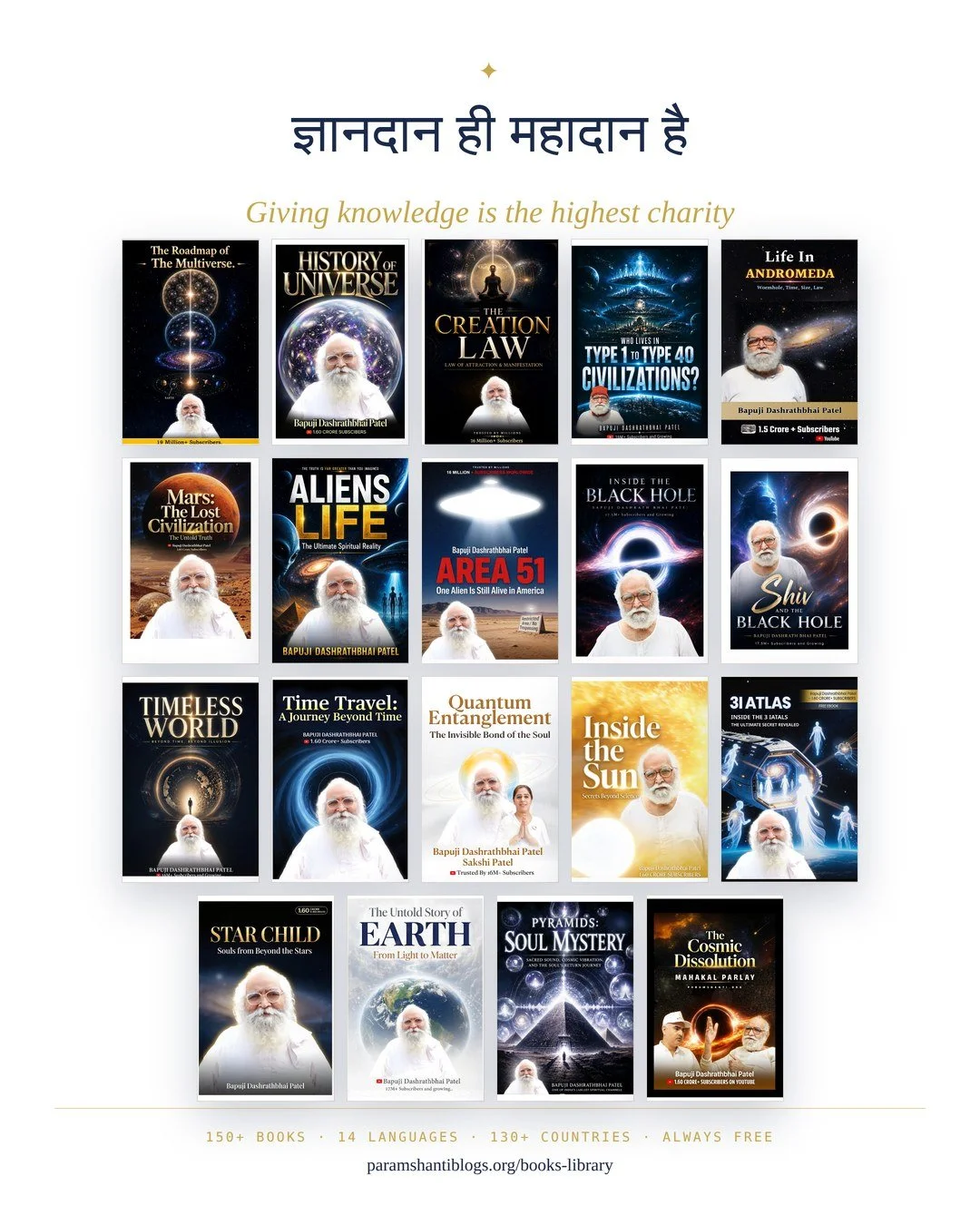
Cosmos · Brahmand · Multiverse
हमारे मल्टीवर्स की वास्तविकता
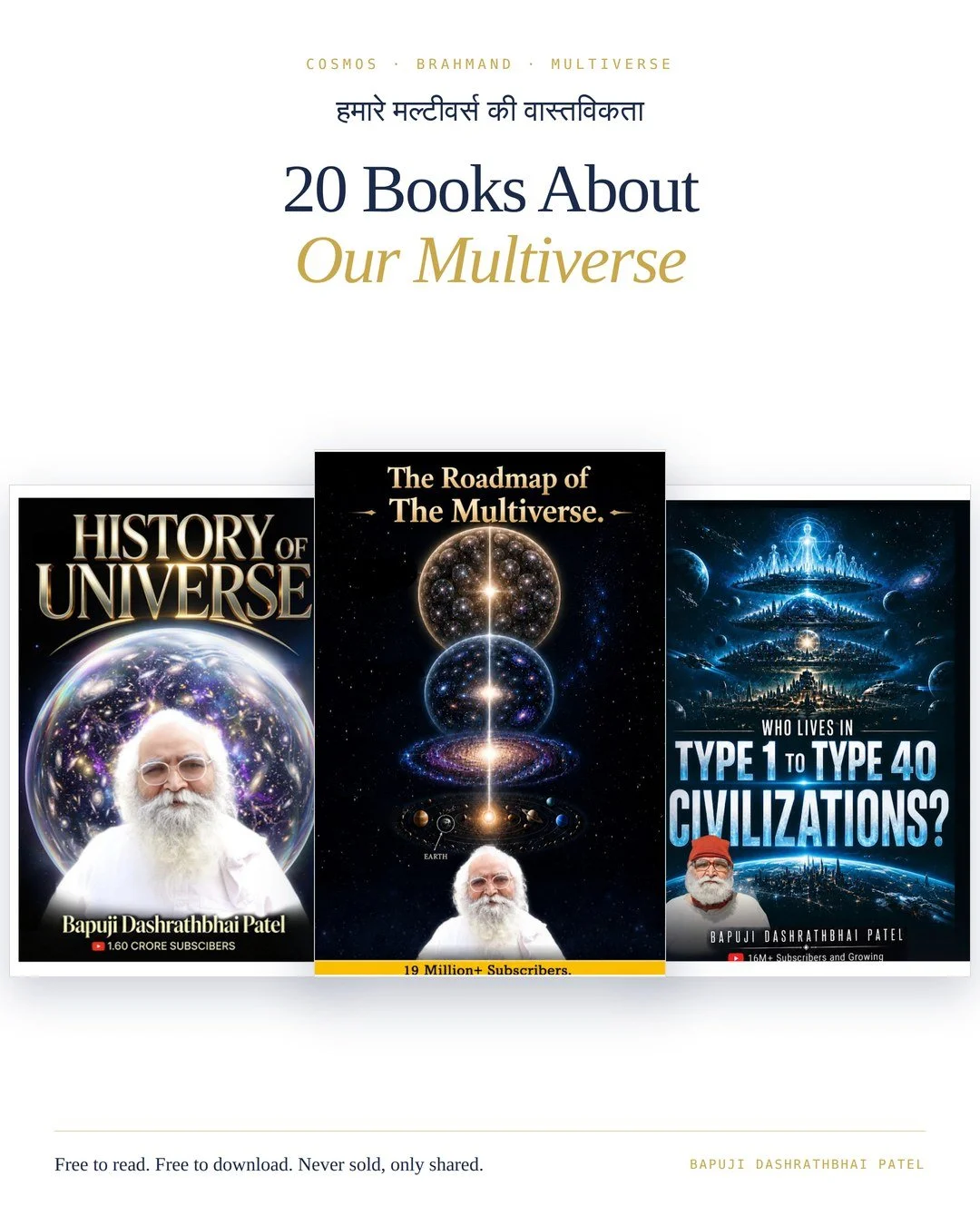
20 Books About Our Multiverse
Bapuji Dashrathbhai Patel has written 20 books on the Multiverse and the Brahmand. Together they describe reality as an infinite, layered cosmos — not one universe but countless — governed by consciousness rather than by chance.
Every one of the 20 is free to read online and free to download as a PDF. None has ever been sold.
- Books in this collection
- 20
- Cost
- Free — never sold, only shared
- Part of
- A free library of 150+ books
- Languages
- 14, and growing
What Bapuji means by the Multiverse
In modern cosmology the multiverse is a hypothesis — a mathematical possibility that, by definition, cannot be observed from inside a single universe. In Behad Ka Param Gyan it is not a hypothesis. It is a description.
Bapuji Dashrathbhai Patel teaches that the Atma is not confined to the body, and that what the Atma can reach, it can report. The 20 books below are that report: an account of the Brahmand given from the inside, in ordinary language, by someone who describes having gone there in meditation rather than having modelled it on paper.
The vocabulary matters, because two traditions are using overlapping words for different things:
| Term | In modern cosmology | In Behad Gyan |
|---|---|---|
| Universe | All observable spacetime, dated from the Big Bang | One region inside something far larger |
| Multiverse | An untestable hypothesis | A structure the Atma can enter and describe |
| Brahmand | No equivalent term | The infinite whole — countless universes, lokas and dimensions held in one order |
| Consciousness | Emerges from matter | Precedes matter; the field in which matter appears |
| The end of everything | Heat death, or a Big Crunch | Mahakal Pralay — dissolution, and return to the source |
Read the collection with that table in hand and the 20 books stop reading as speculation and start reading as a single continuous map.
coming
Answers: Is there more than one universe — and who lives in the others?
Life in the Multiverse
The keystone of the entire collection. Bapuji describes the Multiverse not as a physicist's conjecture but as a structure the Atma perceives directly — countless universes, each with its own worlds, its own beings, and its own stage of soul evolution. If you read only one book from this list, read this one first.
Link coming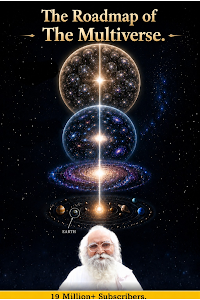 02
02
Answers: What is the actual layout of the Brahmand, layer by layer?
The Multiverse Roadmap
Where the first book establishes that the many worlds exist, this one charts them. The lokas, the dimensions, the thresholds between them, and the route an Atma takes as it moves through — drawn as a traveller's map rather than a theory.
Read free → 03
03
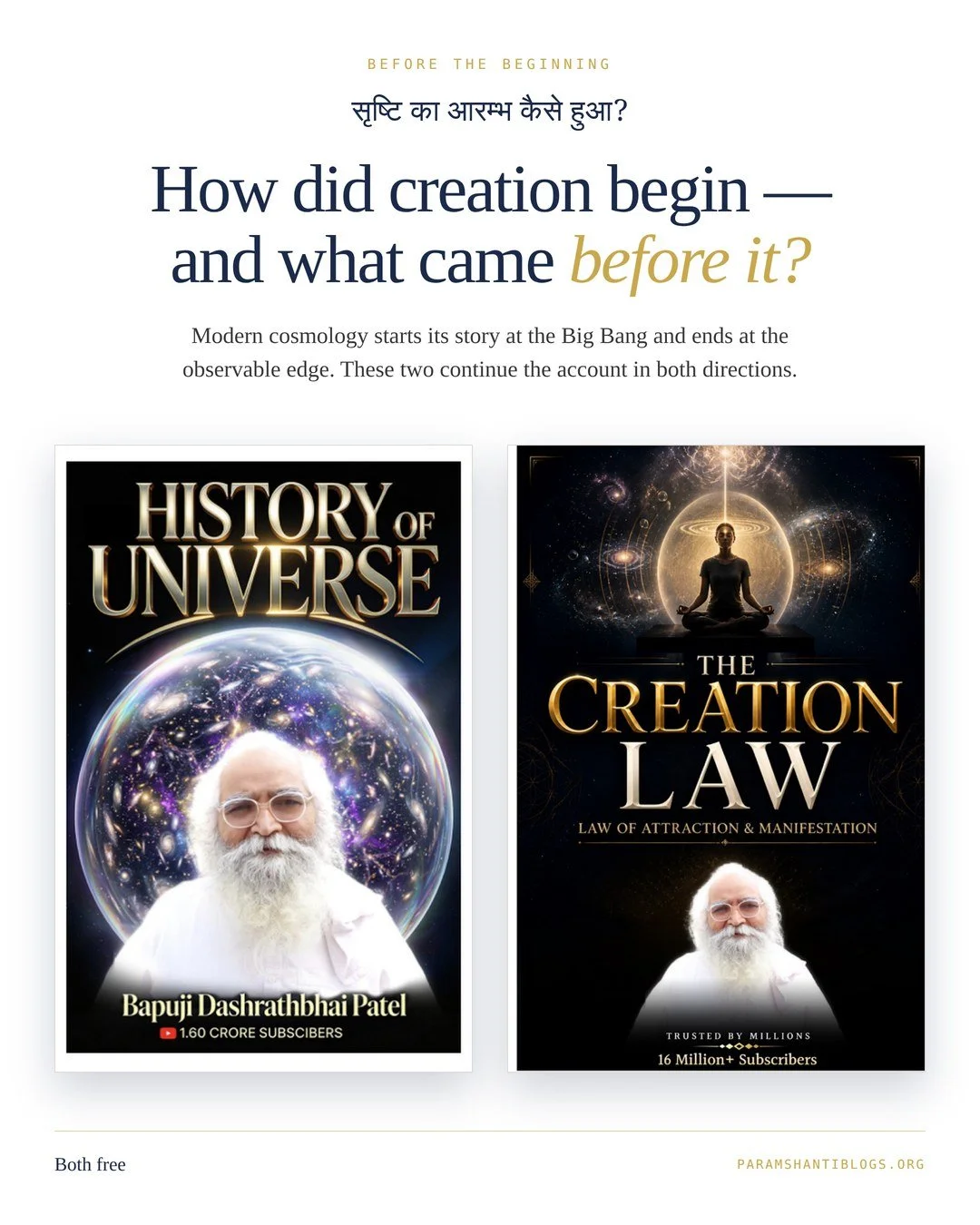
Answers: How did creation begin — and what came before the beginning?
History of Universe
The complete spiritual history of the cosmos, from the first vibration to the forming of galaxies. Modern cosmology begins its story at the Big Bang and ends it at the observable edge. Bapuji continues the account in both directions.
Read free →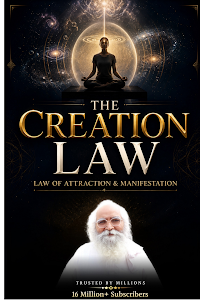 04
04
Answers: By what law are worlds made, sustained and dissolved?
The Creation Law
One law runs through every universe in the Brahmand. This book states it plainly, then shows it operating at every scale — in the birth of a galaxy, in the growth of a body, in the arc of a single thought.
Read free → 05
05
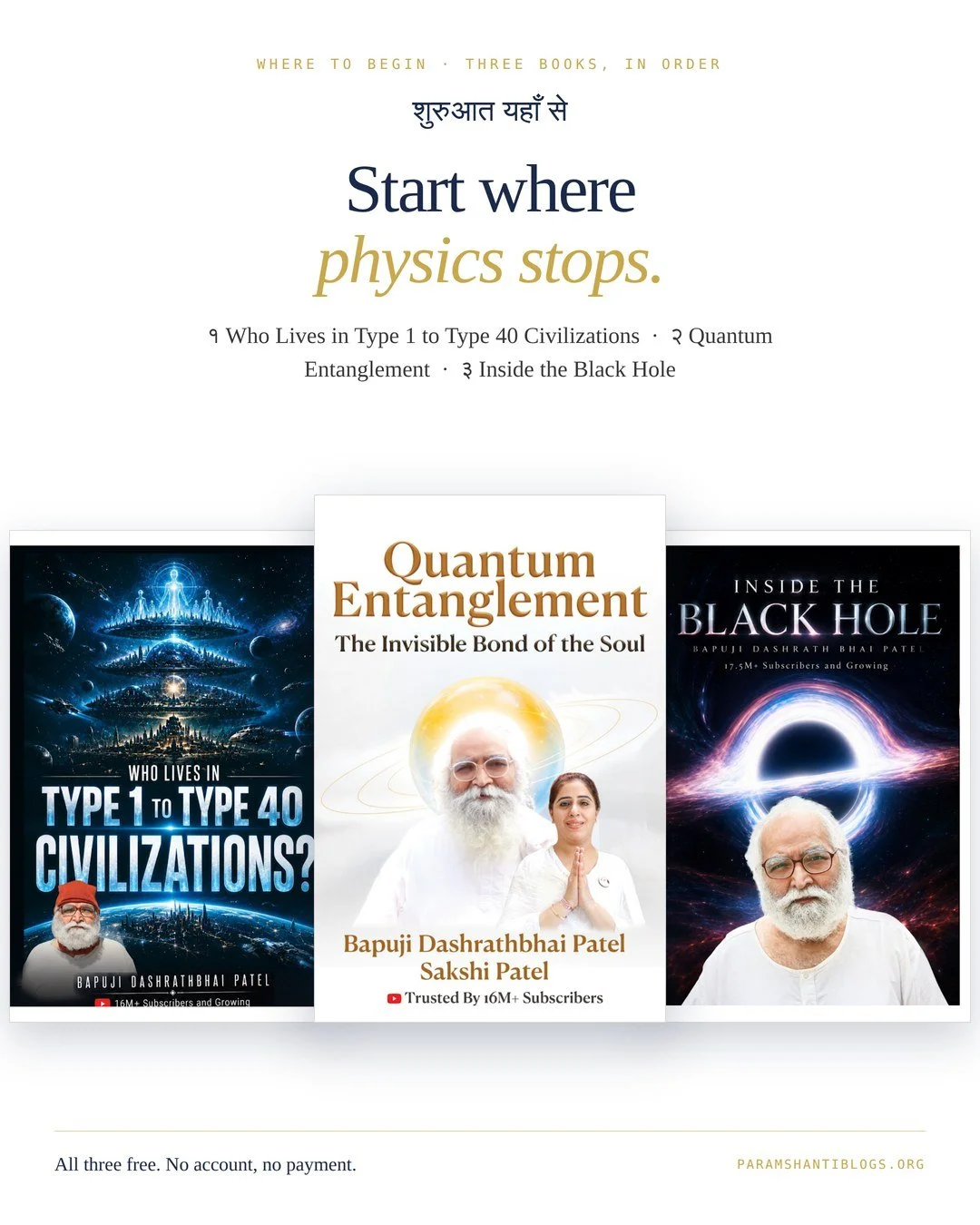
Answers: How far can a civilisation actually advance?
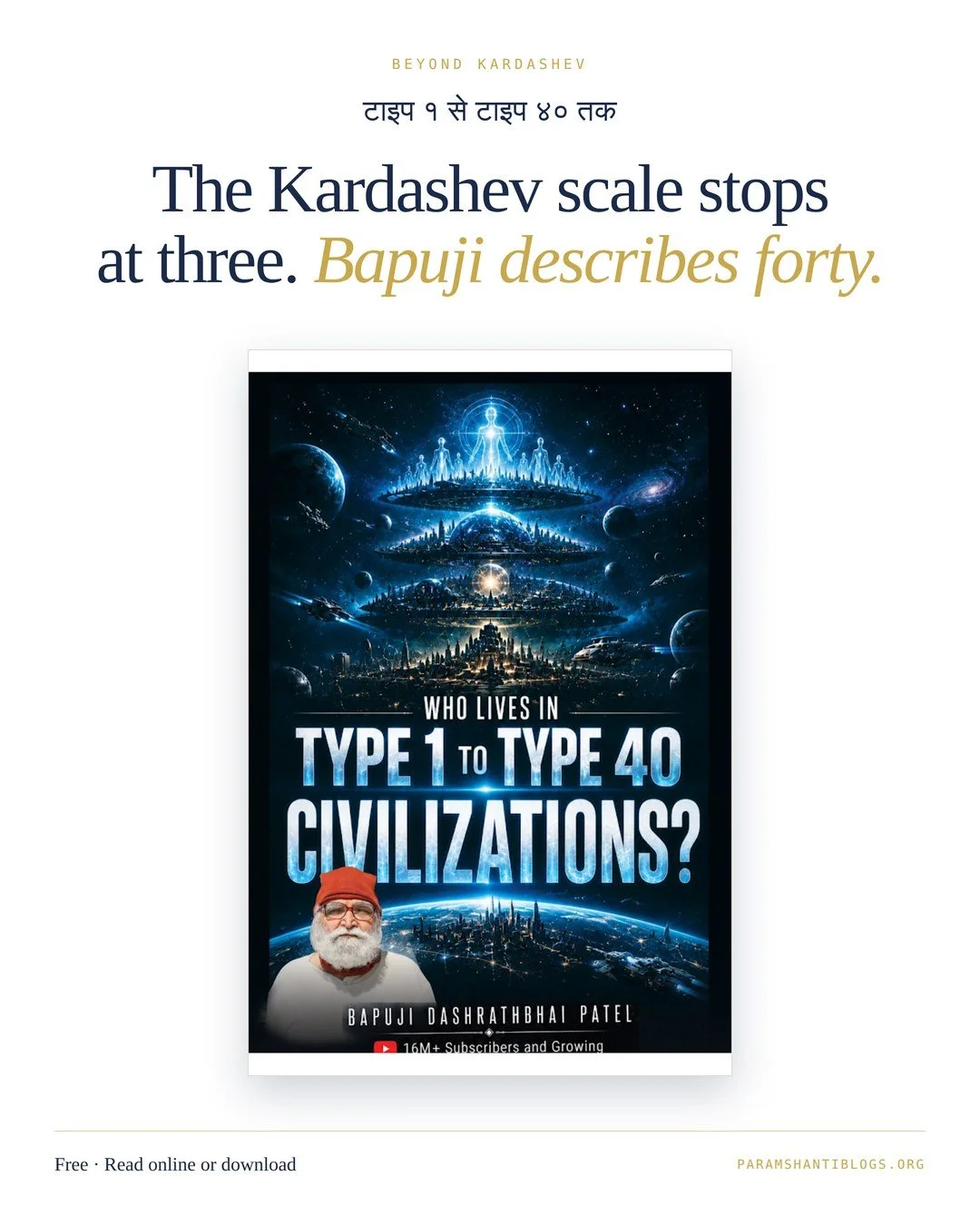
Who Lives in Type 1 to Type 40 Civilizations
The Kardashev scale stops at Type 3. Bapuji describes forty. A tiered account of who inhabits each rung of the Brahmand, what they are able to do, and the point at which technological advancement and spiritual advancement stop meaning the same thing. This is the title science-minded readers tend to reach for first.
Read free →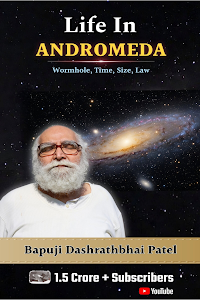 06
06
Answers: Is there life in the galaxy next door?
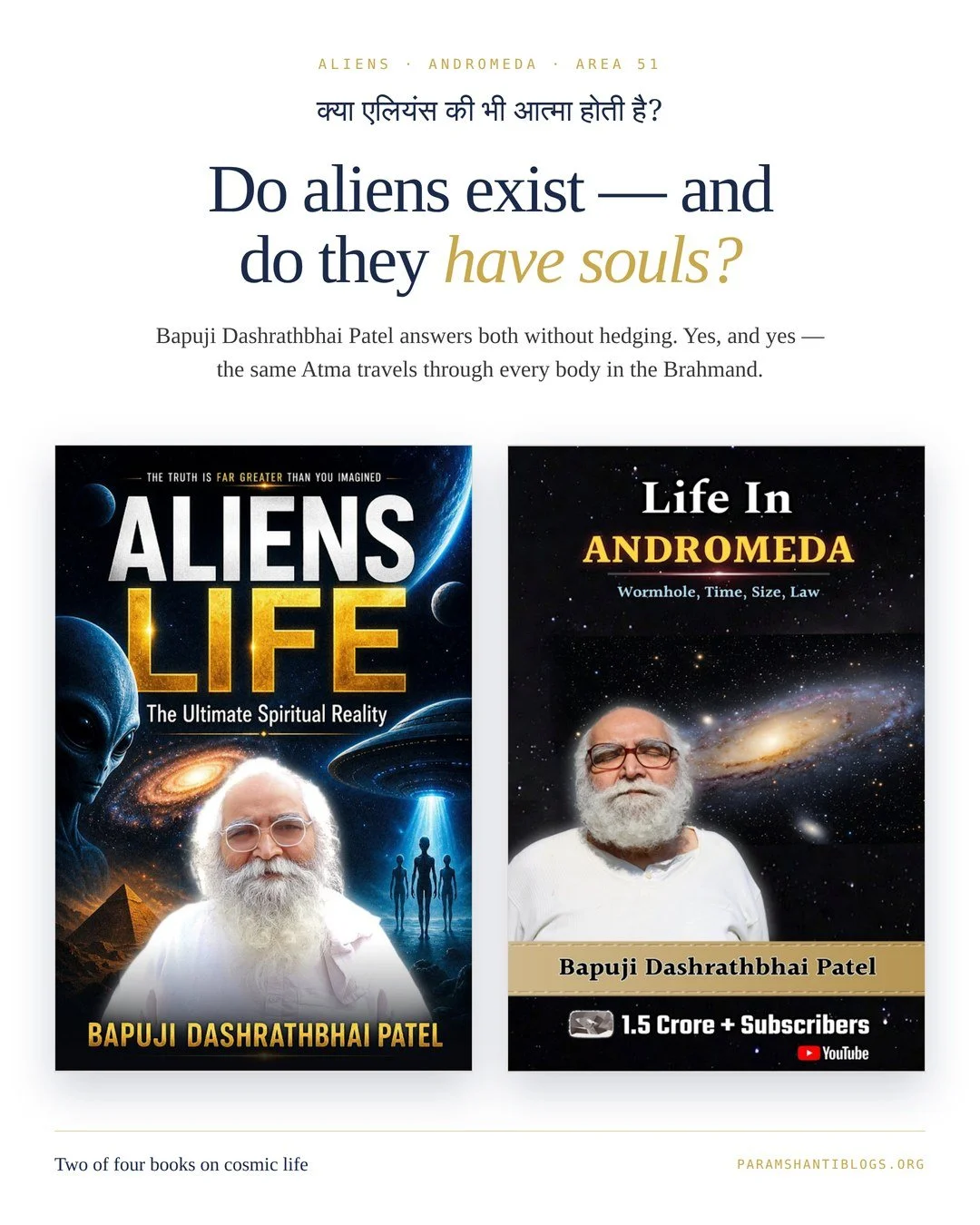
Life in Andromeda
A soul-science account of the civilisations of our neighbouring galaxy — how they live, what bodies they take, how long those bodies last, and how their line of evolution diverges from Earth's.
Read free →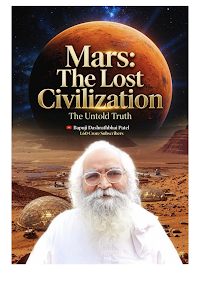 07
07
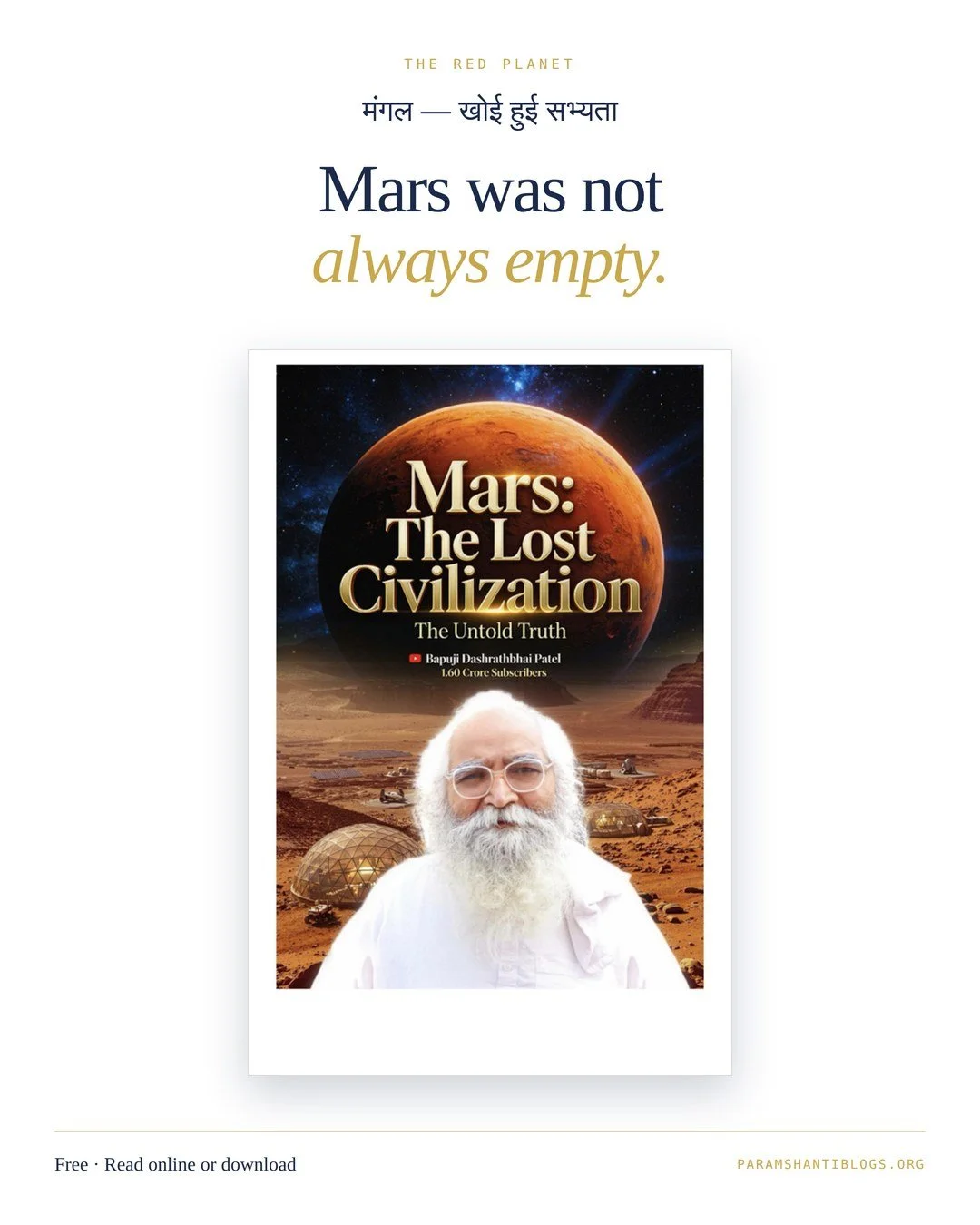
Answers: Was Mars ever inhabited, and what happened to it?
Mars — The Lost Civilization
Mars was not always empty. Bapuji describes the civilisation that lived there, the cause of its ending, and what the red planet's silence ought to teach a species currently repeating the same pattern.
Read free →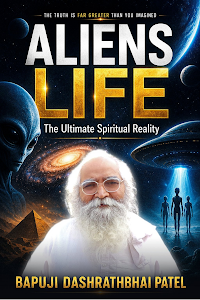 08
08
Answers: Do aliens exist — and do they have souls?
Aliens Life
The direct answer, without hedging. Where extraterrestrial beings live, how their bodies and lifespans differ from ours, and the question no documentary thinks to ask: whether the same Atma travels through all of them.
Read free →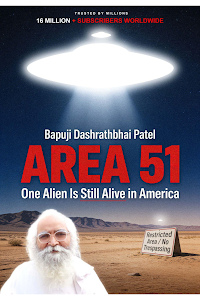 09
09
Answers: What is actually being kept hidden, and why?
Alien Technology in Area 51 & World
Bapuji approaches the secrecy around recovered technology from a spiritual vantage point: what such technology actually is, why it cannot be reverse-engineered without the consciousness that built it, and what full disclosure would genuinely cost.
Read free →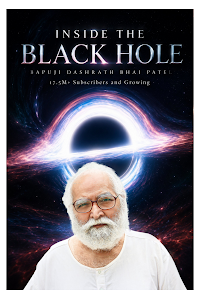 10
10
Answers: What is actually inside a black hole?
Inside the Black Hole
Physics arrives at the singularity and stops, because its equations stop. This book continues past that point, describing the black hole as a threshold within the Brahmand rather than a dead end — and what crosses it.
Read free →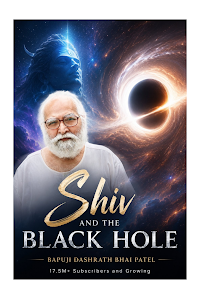 11
11
Answers: Why does the oldest description of Mahakal match the newest description of a black hole?
Shiv and the Black Hole
Bapuji sets the iconography of Shiva beside the physics of the event horizon and shows them describing the same phenomenon. Dissolution, timelessness, and the still centre that swallows everything and is itself untouched.
Read free → 12
12
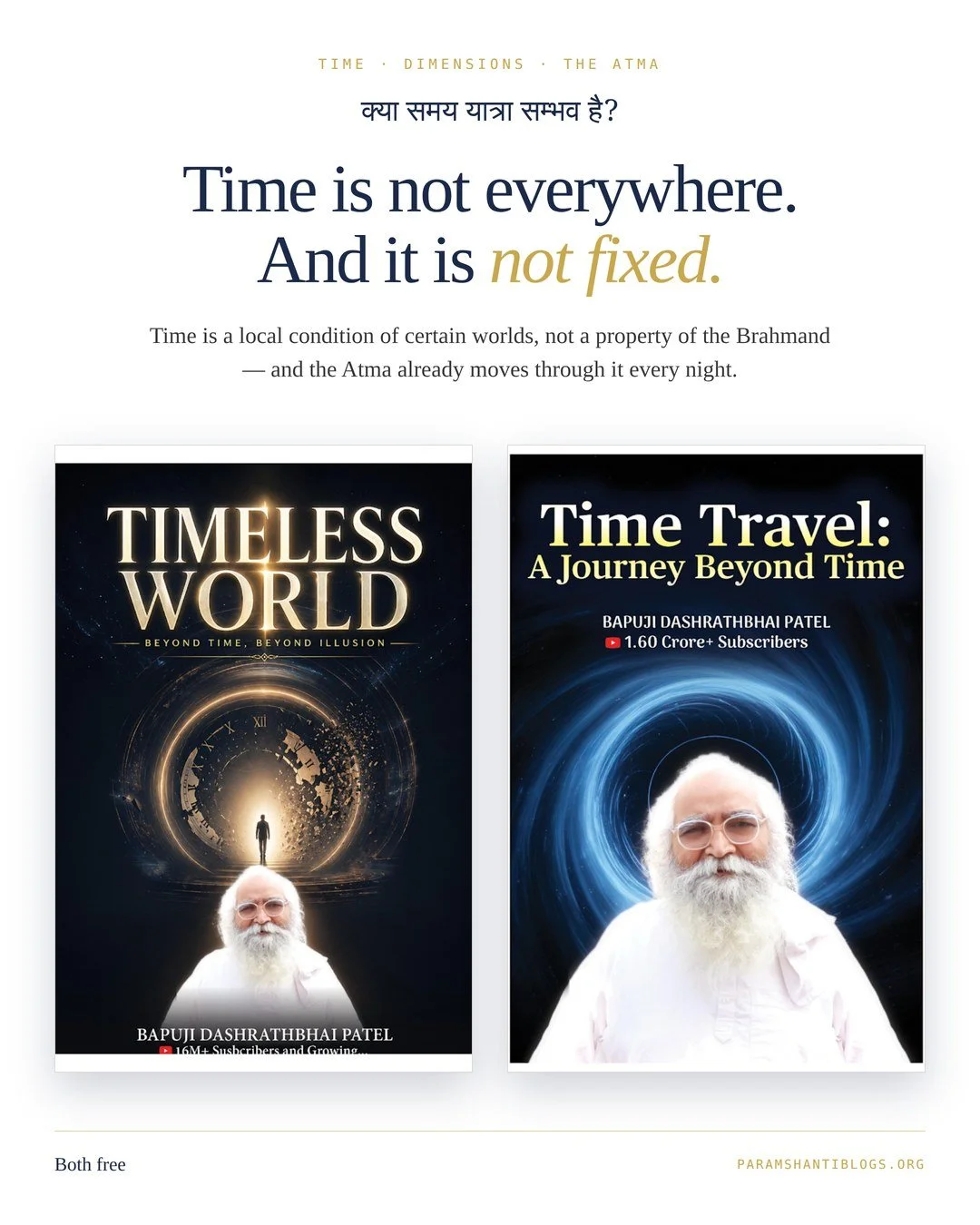
Answers: What exists where there is no time?
Timeless World
Beyond past, present and future there is a state the Atma can enter — and does enter. This book describes that world, and argues that time is a local condition of certain worlds rather than a property of the Brahmand itself.
Read free →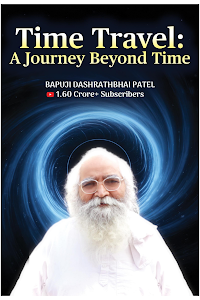 13
13
Answers: Is time travel possible?
Time Travel
Not by machine. Bapuji explains what movement through time actually requires, what the Atma already does every night without noticing, and why the science-fiction version misunderstands the medium it is trying to travel through.
Read free →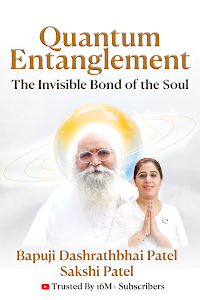 14
14
Answers: Why does one particle respond instantly to another across the Brahmand?
Quantum Entanglement
Entanglement read as soul science. Bapuji's argument is that non-locality is not a strange exception inside physics but the ordinary condition of a cosmos that was never divided to begin with.
Read free → 15
15
Answers: What is the Sun, beyond fusion?
Surya Narayan
The Sun as a conscious presence rather than a reactor — Surya Narayan, light-giver of the Brahmand — and the relationship between solar light and the vitality of every living body beneath it.
Read free →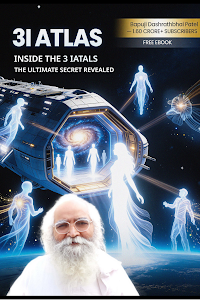 16
16
Answers: What is the interstellar object passing through our solar system?
Secrets of 3I Atlas
Bapuji's reading of 3I/ATLAS — where such visitors originate, what they carry with them, and why interstellar objects tend to arrive at the moments they do.
Read free →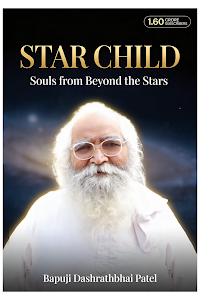 17
17
Answers: Why do some children seem to arrive already knowing?
Star Child
Souls born from higher worlds into human bodies — how to recognise them, what they have come to do, and how parents and teachers can avoid mistaking their difference for a disorder.
Read free → 18
18
Answers: Why does Earth exist, and what is it for?
The Untold Story of Earth
Earth's spiritual origin and purpose — why this particular planet became a meeting point for souls from across the Brahmand, and how much of its own history the planet has forgotten.
Read free →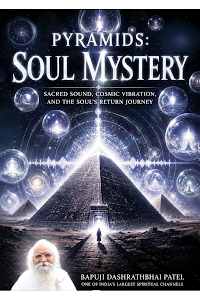 19
19
Answers: What were the pyramids really built to do?
Pyramids — The Soul Mystery
Not tombs. Bapuji describes the pyramids as soul technology — instruments raised by people who understood energy, alignment and the passage of the Atma — and explains what they were designed to hold.
Read free →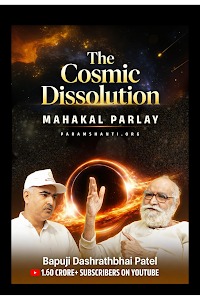 20
20
Answers: How does everything end?
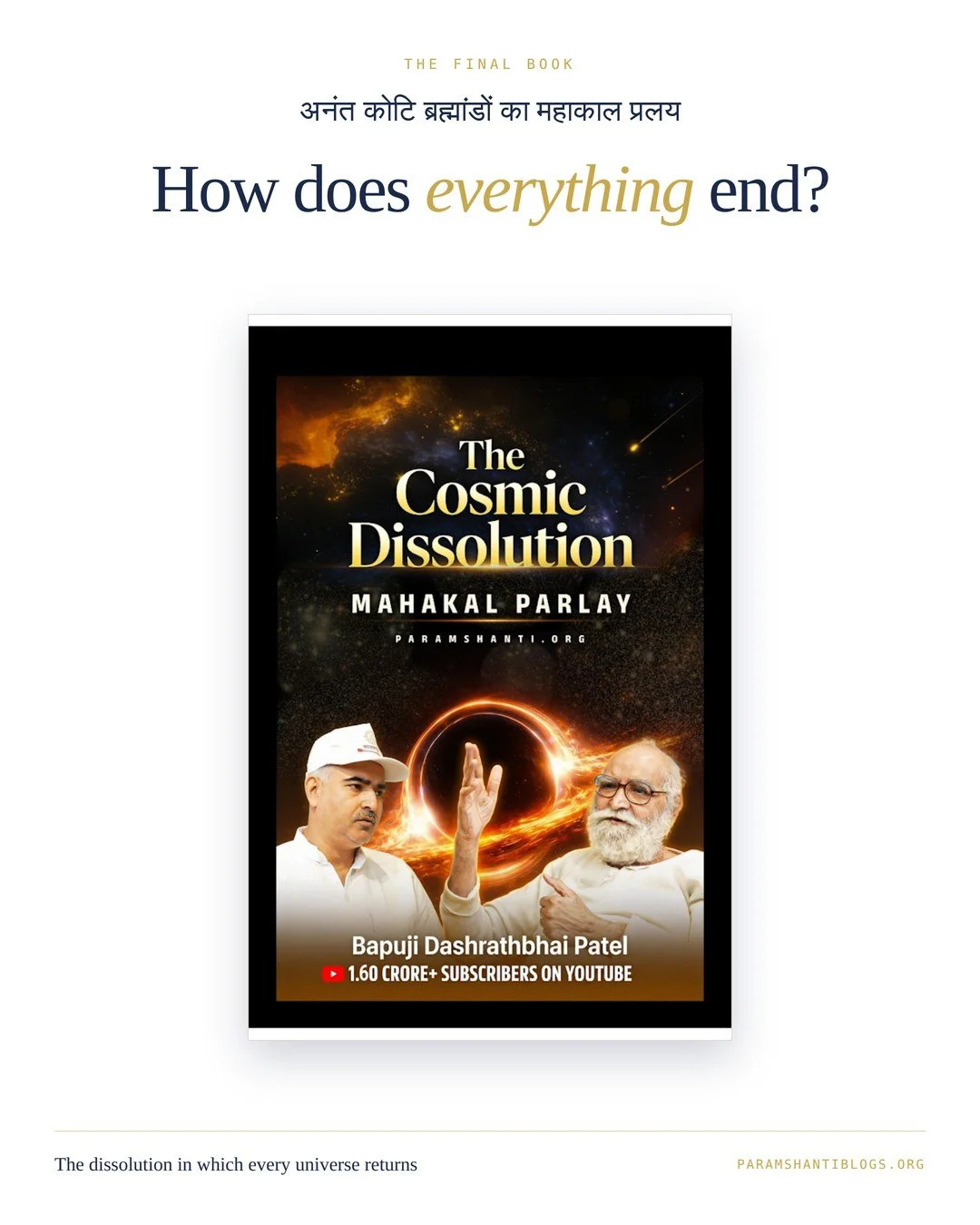
The Cosmic Dissolution — Mahakal Parlay
The last book of the collection and the largest in scope. Mahakal Pralay: the dissolution in which every universe in the Brahmand returns to its source — and the question of what remains when nothing remains.
Read free →Where to begin
The 20 books are numbered as a sequence, and reading them in order works. But most readers arrive with a specific question, so here are four shorter routes in.
If you are new to Bapuji's cosmology
Life in the Multiverse → History of Universe → The Multiverse Roadmap
If you come from physics or astronomy
Who Lives in Type 1 to Type 40 Civilizations → Quantum Entanglement → Inside the Black Hole → Shiv and the Black Hole
If you are here for extraterrestrial life
Aliens Life → Life in Andromeda → Mars, The Lost Civilization → Alien Technology in Area 51 & World
If you want the largest question first
The Cosmic Dissolution, Mahakal Parlay → The Creation Law → Timeless World
The words these books use
- Brahmand
- The infinite whole. Not a synonym for "universe" — the Brahmand contains countless universes, along with the lokas and dimensions that no telescope is built to reach.
- Multiverse
- The many worlds within the Brahmand, each running its own time, its own physical conditions, and its own stage of soul evolution.
- Atma
- The soul. In Bapuji's teaching the Atma is the traveller, and every world in the Multiverse is a place it can arrive at.
- Behad Ka Param Gyan
- Boundless supreme knowledge — the body of teaching these books belong to, covering the Atma, karma, the Brahmand and the Almighty Authority.
- Mahakal Pralay
- The great dissolution. The event in which all creation across the Brahmand returns to its source, and from which creation begins again.
- Type 1 to Type 40 civilisations
- Bapuji's extension of the idea behind the Kardashev scale, which stops at Type 3. The higher tiers are distinguished less by energy use than by the state of consciousness a civilisation has reached.
- Gyan Daan
- The gift of knowledge. The reason every book in this library is free: knowledge given, not sold.
Questions readers ask
How many books has Bapuji Dashrathbhai Patel written about the Multiverse?
Twenty books in English deal directly with the Multiverse, the Brahmand and cosmic life. They sit inside a larger free library of more than 150 titles covering the Atma, karma, meditation and self-realisation.
Are these Multiverse books free?
Yes. All 20 are free to read in the browser and free to download as PDFs, with no payment, subscription or membership. They are shared as Gyan Daan — the gift of knowledge. They are never sold, only shared.
What is the difference between the Universe and the Brahmand?
The universe is what can be observed from here — one region of spacetime. The Brahmand is the infinite whole that contains countless such universes, together with lokas and dimensions that are not physical at all. In Bapuji's teaching, the universe sits inside the Brahmand the way a room sits inside a city.
Which of the 20 books should I read first?
Life in the Multiverse. It establishes the structure the other nineteen books build on. Readers who prefer to start from science rather than from cosmology often begin with Who Lives in Type 1 to Type 40 Civilizations instead.
Does Bapuji say aliens are real?
Yes, directly and without qualification. Aliens Life, Life in Andromeda, Mars — The Lost Civilization and Alien Technology in Area 51 & World describe extraterrestrial beings as inhabitants of the Brahmand carrying the same Atma that inhabits a human body, in bodies suited to their own worlds.
What is Mahakal Pralay?
The great dissolution — the point at which every universe in the Brahmand returns to its source. It is the subject of The Cosmic Dissolution, the final book in this collection, and the nearest thing in Behad Gyan to what physics calls an end-state of the cosmos.
Are these books science, or scripture?
Neither, and it is worth being clear about it. They are spiritual teachings, drawn from Bapuji Dashrathbhai Patel's meditation and Brahm Gyan rather than from experiment or peer review. He uses the vocabulary of modern cosmology — multiverse, black hole, entanglement, civilisation types — because it makes the teaching legible to a scientific age, not because the books are presenting laboratory findings. Read them as an account given from within, and compare them against physics yourself.
What is a Type 40 civilisation?
The Kardashev scale ranks civilisations by the energy they can harness and stops at Type 3, a species commanding its own galaxy. Bapuji extends the ladder to forty tiers, where the distinguishing feature above a certain point stops being energy and becomes consciousness — what a civilisation knows about the Atma, rather than what it can build.
In which languages are these books available?
The 20 listed here are the English editions. Many are also published in Hindi, Russian, Chinese, Spanish, Arabic, Portuguese, French, Bengali, German, Indonesian, Punjabi, Telugu and Japanese, and new translations are added regularly.
Who is Bapuji Dashrathbhai Patel?
A spiritual teacher from Ahmedabad, Gujarat, India, and the author of every book in the Paramshanti library. Through the Paramshanti mission he shares Behad Ka Param Gyan worldwide — in free books, in daily live meditation, and in podcasts — entirely without charge.