
Brahmananda vs Manushya Anand:A Journey from Human Joy to Supreme Bliss (Taittiriya Upanishad)
Introduction
In today’s world, people chase happiness through wealth, relationships, success, and sensory pleasures. Yet despite having everything, many remain inwardly restless. Why? Because what most people experience is Manushya Anand — human joy — which is temporary, dependent, and limited.
The Taittiriya Upanishad reveals a much higher state of joy known as Brahmananda — the bliss of Brahman, the infinite source of all existence. This article explores the deep spiritual science behind this difference and explains how the soul rises from human pleasure to divine bliss through tapas (inner discipline).
Varuna and the Search for Brahman
In the Taittiriya Upanishad, Varuna’s son approaches his father with a powerful prayer: “O Father, teach me the knowledge of Brahman.”
Varuna replies: “That from which all beings are born, by which they live, and into which they dissolve — that is Brahman.” Yet Varuna does not give him an intellectual explanation. Instead, he gives him one command:
“Practice tapas (deep spiritual discipline). Through tapas you will know Brahman.”
This reveals a fundamental truth: Brahman cannot be understood by thinking — only by inner realization.
The Five Layers of Existence
Through tapas and meditation, Varuna’s son ascends through five layers of being:
Kosha (Sheath) Level of Reality
Annamaya Physical body (food-based existence)
Pranamaya Vital energy
Manomaya Mind
Vijnanamaya Intellect & higher understanding
Anandamaya Bliss
With each level, awareness becomes purer and more subtle. At the final level — Anandamaya Kosha — the seeker realizes: “Bliss itself is Brahman.”
The Upanishad declares: “From bliss all beings are born, By bliss they live, And into bliss they dissolve.”
What is Manushya Anand (Human Joy)?
The Upanishad defines the highest possible human joy: A person who is: Completely healthy, Highly intelligent, Morally virtuous, Powerful, Owner of the entire wealth of the world
Such a person’s happiness is called Manushya Anand. Even the richest person on Earth — a global billionaire — belongs only to this category. Yet the scriptures declare something astonishing: One unit of Brahmananda equals millions and millions of Manushya Anand. Human joy is not false — but it is microscopic compared to divine bliss.
Why Humans Still Suffer
People remain unhappy because:
They identify with the body and mind
They do not realize they are souls
They do not practice tapas
They do not experience inner stillness
They chase outer happiness while their inner self remains disconnected from Brahman — the true source of joy. Without crossing the mind, one cannot reach bliss.
Tapasya: The Path to Brahmananda
Through meditation and tapas: Karma dissolves, The mind becomes still, The intellect becomes clear, The soul awakens, Divine light begins to flow
The seeker moves from: Body → Energy → Mind → Intellect → Bliss → Brahman
This is not philosophy. This is direct experience.
The Nature of Brahmananda
Brahmananda is: Limitless, Independent of objects, Eternal, Pure awareness, Supreme peace It is not pleasure — it is being itself in perfect harmony.
The Call of the Soul
When a soul becomes aware of itself, it naturally seeks the Supreme Being. This is why meditation is not optional — it is the return journey of the soul to its source. The more we dissolve the mind, the closer we come to Brahman.
Conclusion
Human joy is small. Brahmananda is infinite. The Taittiriya Upanishad gives humanity a direct map — from body to bliss, from mind to infinity. Through tapas, meditation, and self-realization, every soul can rise beyond suffering into eternal bliss. When we enter Brahmananda, we do not just become happy — We become
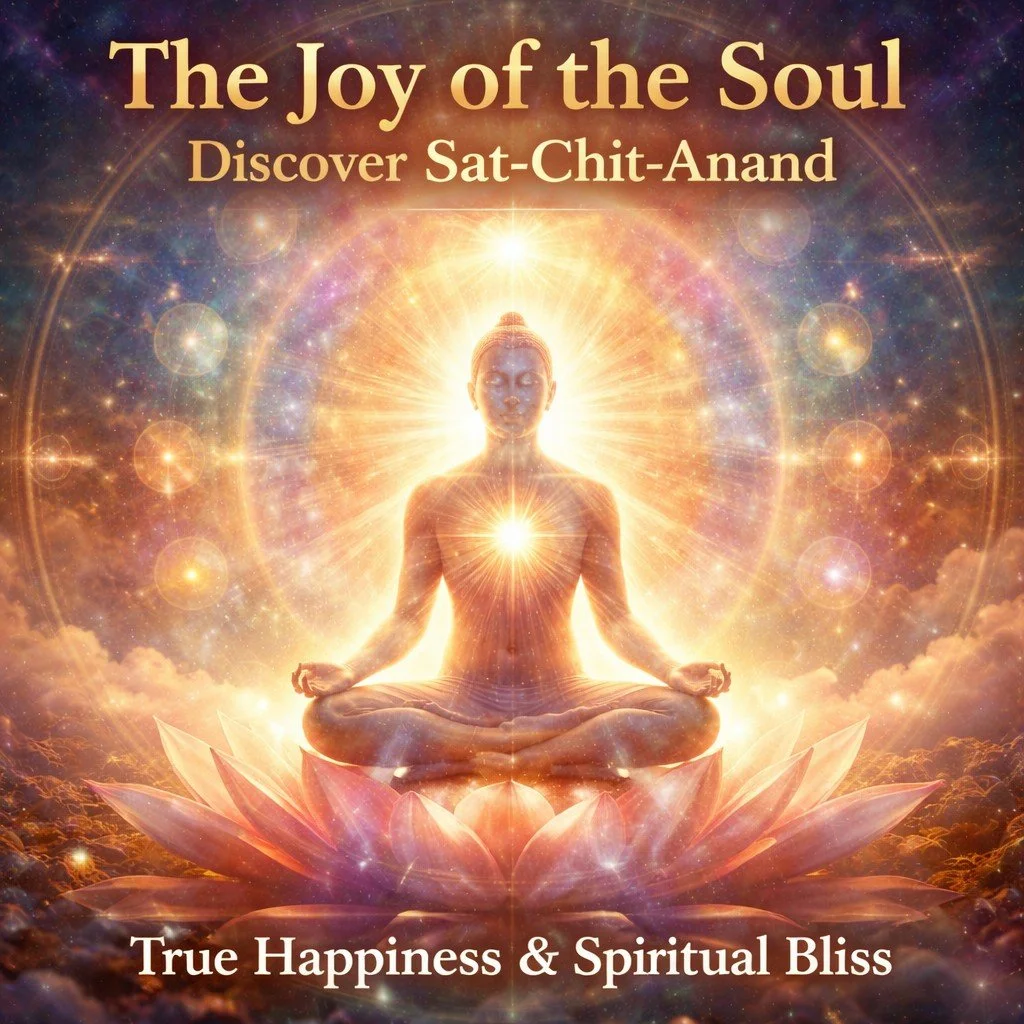

Discover how the soul, mind, and intellect work together in spiritual awakening. Learn how meditation, supreme peace, and inner light can dissolve karma, silence the mind, and transform your life through divine consciousness.