
Understanding the Fourteen Types of Death and the Journey of Inner Transformation
Introduction: A Call for Global Peace
Recent developments in the Ukraine–Russia conflict have brought a glimmer of hope, as Russia has reportedly withdrawn its troops—a positive step toward peaceful resolution and harmony among nations, and a reminder that conflict must always be avoided.
Insights from Sanjeev Malik’s Video
A thought-provoking video by Sanjeev Malik has sparked discussions on whether human life can exist beyond Earth, a topic strongly aligned with Bapuji’s revelations about souls arriving from other galaxies. His hypnosis-based past life regression cases offer documented accounts of individuals remembering extraterrestrial incarnations, reinforcing ancient spiritual wisdom.
Symbolism of Transformation
A shared image of a caterpillar transforming into a butterfly beautifully symbolizes the spiritual journey—struggle, growth, and eventual awakening into a higher self. True transformation requires patience, discipline, and faith.
The Question of Death: Wisdom of Yajnavalkya
In King Janaka’s court, the sage Yajnavalkya was asked: “Death consumes all. Who can conquer death?”
His reply: “Just as fire is calmed by water, death is overcome through the realization of Brahman. The death of death occurs when Brahman is known.” This profound truth reveals that fear dissolves in the light of supreme knowledge.
The Fourteen Types of Death (Metaphorical Death)
In spiritual philosophy, being biologically alive is not sufficient to be truly alive. Many walk the world as “living corpses” due to inner darkness, ignorance, and destructive tendencies. The scriptures describe 14 such states.
1. The Desire-Driven Life
One who lives only for sensory pleasures and lust is considered spiritually dead. Bound by endless desires, such a person never discovers the path of the soul.
2. The One Who Opposes Righteousness (Left-handed Path)
A person who constantly finds negativity, opposes societal harmony, and rebels against dharma is considered dead in consciousness.
3. The Miser (Kanjus)
The one who refuses charity or good deeds is also spiritually dead. The humorous yet enlightening tale of the miser who pretends to be dead to avoid donating a single coin reveals the absurdity of greed. Even when God Himself appears, the miser only asks to save that one coin—showing how poverty of thought is the greatest poverty.
4. The Perpetually Sorrowful
Those who constantly complain, glorify their suffering, and immerse themselves in self-pity lose the vitality of life.
5. The Ignorant (Foolish)
An ignorant person—unable to differentiate right from wrong, refusing wisdom, and mocking spirituality—is as good as dead.
6. The Dishonored
A person who has lost respect in family, society, or nation due to immoral actions carries the weight of spiritual death.
7. The Chronically Sick and Negative
constant illness that overwhelms the mind and steals joy leads to a state where life becomes mere existence without purpose.
8. Extreme Old Age Without Awareness
When the body and mind become fully dependent and awareness diminishes, spiritual vitality fades, creating a condition similar to death.
9. The Permanently Angry Person
One who burns in anger day and night, loses wisdom and happiness, becoming destructive to self and others.
10. The One Living on Sinful Wealth
Money earned through immoral actions brings darkness to one’s family and future. Wealth without virtue is poison.
11. The Self-indulgent Egoist
A person who lives only for themselves—without service, compassion, or empathy—has no real life-force.
12. The Chronic Criticizer
Slanderers and fault-finders who see only negativity become trapped in cycles of inner darkness.
13. The One Opposed to God/Truth
Those who reject the existence of the Supreme Being and deny divine order lose access to higher wisdom, becoming spiritually disconnected.
14. Opponents of Saints and Scriptures
Those who oppose sages, scriptures, and divine teachings create chaos within society, spreading confusion and negativity.
Self-Reflection: The Path to Life and Light
Paramshanti, these 14 states serve as mirrors for self-examination. To avoid becoming a “living corpse,” one must:
check their thoughts daily
avoid negativity and slander
practice charity and compassion
cultivate humility and surrender
distance oneself from harmful tendencies
True life begins when one awakens inner peace, self-discipline, and divine awareness.
Spiritual Awakening and Transformation
Cultivating virtues, refining thoughts, and recognizing the divine presence within leads to true joy and liberation. Meditation, yoga, and self-observation transform negative traits into light. This inner work becomes a service to the world, contributing to global harmony.
Conclusion: Choosing the Path of Paramshanti
humanity must rise above greed, anger, ignorance, and selfishness to build a peaceful world. By practicing awareness, compassion, and divine remembrance, each soul becomes a messenger of Paramshanti for the universe.
A transformed individual transforms the world.
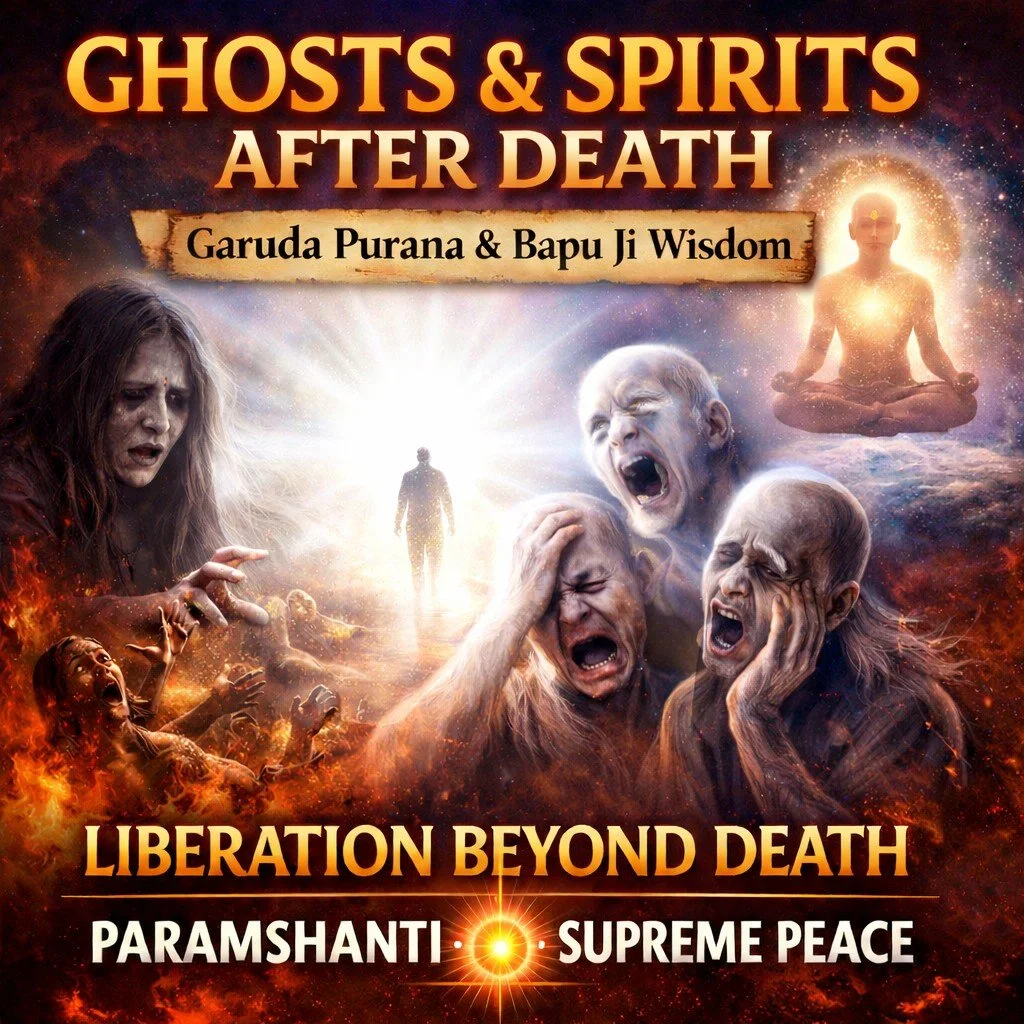
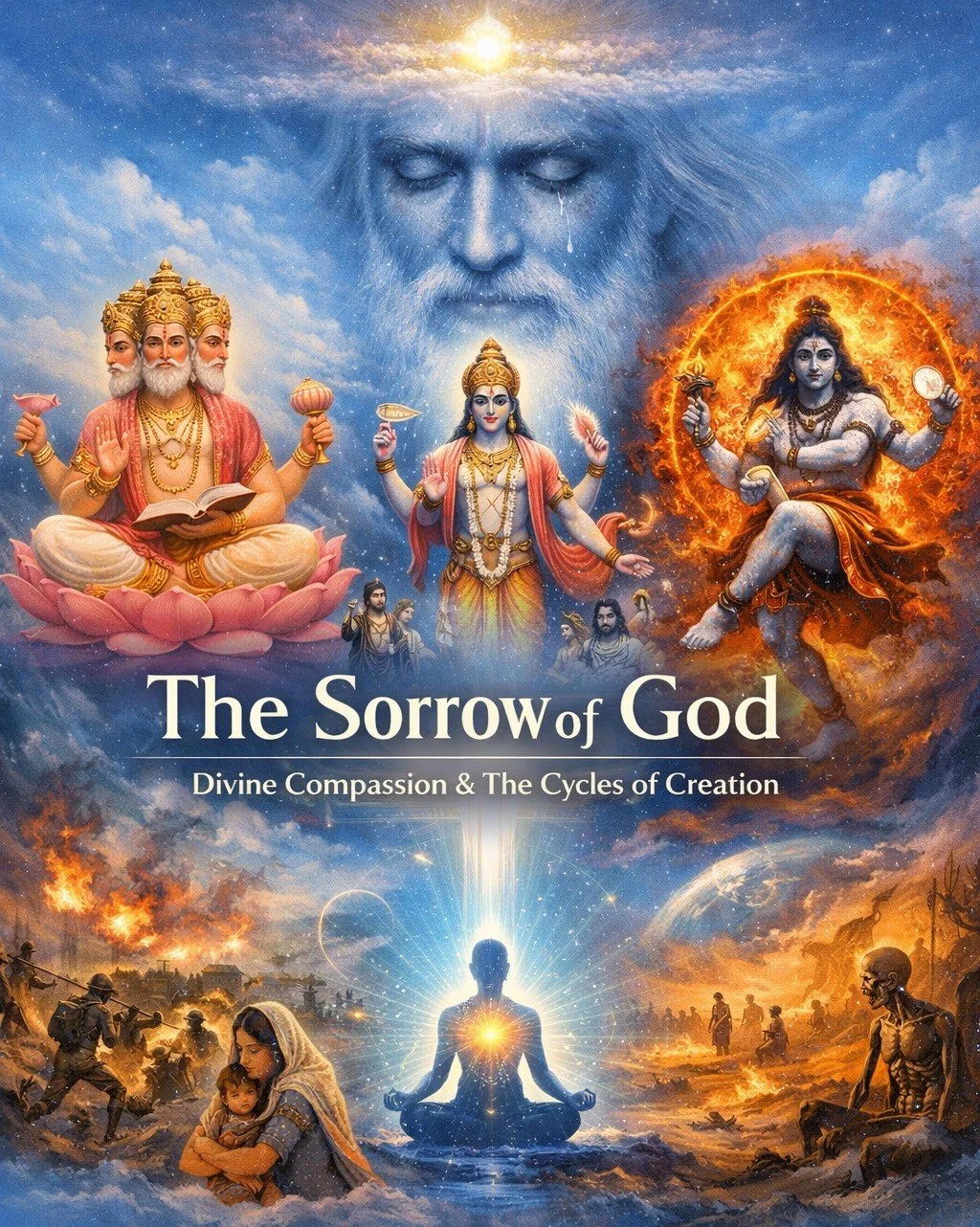

Explore the deep spiritual cosmology of planetary souls, alien interference, karmic zones, and cosmic wars based on Bapuji Dasharathbhai Patel’s knowledge. Understand how Paramshanti (supreme peace) can restore universal balance and protect human consciousness from artificial and dark energies.