
Understanding Spiritual Stress
Spiritual stress arises when deep inner questions meet the realities of time, karma, and human limitation. Many seekers experience frustration when change does not manifest as expected, when wisdom is not heard, or when divine insight seems delayed. This article explores spiritual stress not as a weakness, but as a transformative force that pushes the soul toward maturity, self-realization, and Paramshanti (supreme peace).
The Boat on the Ocean: Trusting Time and the Journey
Life on the spiritual path is like a boat that has set sail into a vast ocean. Once the journey begins, there are only two apparent possibilities: reaching the shore or being tested by the waves. Time alone decides the outcome. Time governs revelation, ripening, and realization. Impatience only increases stress; trust allows growth. The seeker’s duty is not to control time, but to remain steady and continue rowing forward.
Spiritual Stress: Knowledge or Ignorance, Same Effect
Spiritual stress can arise both from knowledge and from ignorance. Regardless of its source, its impact on the body and mind is the same. Therefore, the solution is not intellectual debate, but disciplined movement forward. For those destined to progress, there is only one option: continue walking the path, regardless of uncertainty, doubt, or emotional turbulence.
Karma as the Anchor of Stability
When questions multiply and answers seem absent, focus on karma. Performing one’s duty sincerely—toward family, work, society, and the self—grounds the soul. Karma connects effort with truth. Whether recognition comes or not, action aligned with righteousness slowly reshapes the environment. Transformation begins within and radiates outward.
Mastery of the Mind: The Central Discipline
Self-realization requires mastery over the mind. Distractions, comparisons, and expectations weaken inner power. The seeker must develop the habit of witnessing life rather than reacting to it. There is no competition in spirituality. Progress is measured only by inner change. Observing one’s own transformation without comparing it to others is the key to sustained growth.
Self-Realization: Defining Yourself from Within
No one else can define who you are. Seeking validation from others—gurus, astrologers, or society—leads to incomplete understanding. Only the soul can know itself. Life’s challenges and karmic situations are not obstacles; they are accelerators designed to push the soul forward. When accepted consciously, they become tools of awakening.
Illusion, Maya, and the Witness State
Most suffering is born from mistaking the visible world as ultimate truth. This is the illusion of Maya. The seeker must become a witness—aware, detached, and steady. Just as dreams vanish upon waking, worldly anxieties dissolve when soul-consciousness stabilizes. Rising above pleasure and pain leads directly toward Paramshanti.
Small Numbers, Great Impact
History proves that transformation never requires crowds. A handful of awakened souls is enough to change the world. Temples are remembered, not their builders. True spiritual work is subtle, invisible, and enduring. Faith in oneself and commitment to action matter more than external support.
The Four Pillars of Spiritual Life
A balanced spiritual life rests on four pillars:
Knowledge – continuous listening and contemplation.
Yoga – daily connection with the soul and the Supreme.
Service – sharing wisdom through action and language.
Self-maintenance – caring for body, mind, and sanskars.
Excellence in all four leads to stability and clarity.
Purification and Positive Energy
Just as the body requires daily cleansing, the soul requires daily purification. Negative emotions must be consciously transformed into positive energy. Through meditation and awareness, the mind, intellect, and sanskars gradually become pure. As inner vibration rises, the surrounding atmosphere also transforms.
Supreme Peace as a Universal Mission
Paramshanti (supreme peace) is not a personal achievement alone; it is a collective responsibility. Every thought influences the atmosphere. Every awakened soul becomes a lighthouse of divine light. When many such lights shine together, the Earth, elements, and even subtle realms are purified.
Faith, Effort, and Divine Timing
Some answers belong to the future. The seeker must learn to act without anxiety, trusting that divine guidance arrives at the right moment. Leaving the body is easy; transcending consciousness while living requires effort. Therefore, the body must be protected, nurtured, and used as an instrument of service.
Krishna, Arjuna, and Instrumental Living
Like Arjuna, humans often see only visible conflict and become agitated. Krishna’s teaching is simple: surrender outcomes, perform duty, and become an instrument. When ego dissolves, stress dissolves with it. Self-realization—not entertainment or escapism—is the true cure for spiritual stress.
Awakening the Inner Light
Within every soul exists a radiant center of supreme light. This power emerges only when attention turns inward. As awareness deepens, subtle and causal bodies transform, consciousness expands, and bliss becomes natural. This awakening frees the soul from karmic bondage across time.
Conclusion: Moving Forward in Paramshanti
Spiritual stress is not an enemy; it is a signal for deeper alignment. Through discipline, faith, karma, and inner focus, stress transforms into strength. A new world is shaped not by force, but by vibration. When souls stabilize in Paramshanti, the atmosphere of the Earth—and the multiverse—inevitably changes. The journey continues, and every sincere step forward is already success.
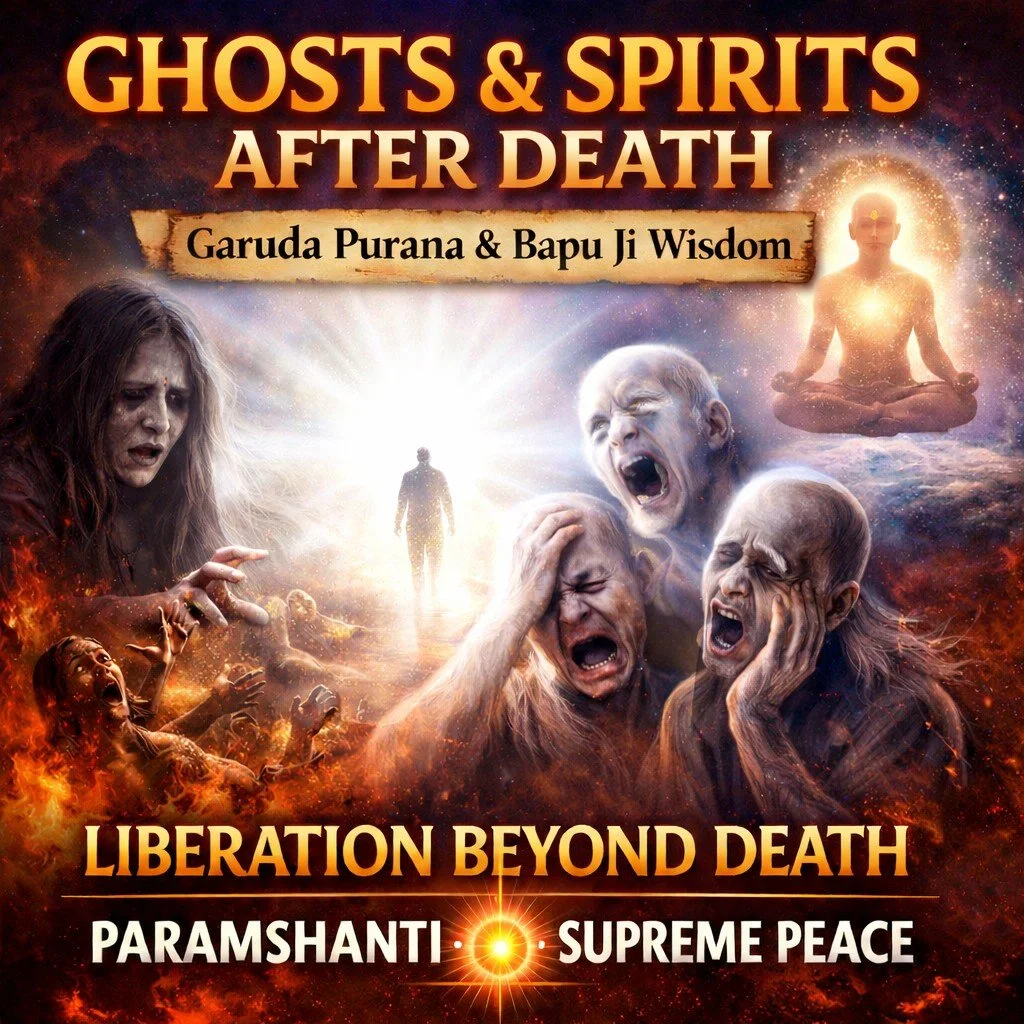


Explore the deep spiritual cosmology of planetary souls, alien interference, karmic zones, and cosmic wars based on Bapuji Dasharathbhai Patel’s knowledge. Understand how Paramshanti (supreme peace) can restore universal balance and protect human consciousness from artificial and dark energies.