Transcending Joy and Sorrow – The Path of Supreme Peace and Soul Liberation
As we celebrate India’s Independence Day and also the milestone of 7 million subscribers, we extend heartfelt gratitude to all for their love and support. But beyond all celebrations, today’s discussion brings us face to face with a greater inner independence — the liberation of the soul from the cycles of joy and sorrow.
The Outer World and Its Reflections
We live in times of conflict — political, social, emotional. The world awaits peace between nations, leaders, and communities. Yet, the true peace that humanity seeks cannot come from external meetings or treaties. It begins within each soul. Whether it is the debate over the Supreme Court’s decisions, social media controversies, or the endless discussions about love for animals and nature — all these are reflections of human restlessness. Each being in the 84 lakh species is playing its role in the cycle of creation. But human life has been gifted for a higher purpose — self-realization. The essence of life is not in attachment or reaction, but in understanding the soul’s eternal nature.
Recognizing the Soul Beyond Pleasure and Pain
The Vedas, Upanishads, and the Bhagavad Gita declare that the soul is eternal, indestructible, formless, and pure. Pleasure and pain belong only to the body and the mind, born from the interplay of the three gunas — sattva, rajas, and tamas. When we realize, “I am not this body or mind — I am the pure, conscious, peaceful soul,” then both joy and sorrow appear like fleeting scenes in a film. This realization does not come through reading or hearing alone; it requires deep practice. When joy comes, remind yourself: “This is temporary; do not be overjoyed.” When sorrow arises, remind yourself: “This too shall pass.” By practicing this awareness daily, one attains the state of witness consciousness — sakshi bhav — where the soul observes all experiences without being affected by them.
Freedom from Reaction – The Real Test of Knowledge
The greatest bondage of the soul is reaction. A small comment, disagreement, or inconvenience can disturb our peace for hours or days. Every reaction arises from the hidden faults (vikars) within us — anger, ego, jealousy, attachment. To attain liberation (moksha), we must rise above reaction. If someone insults you, do not return the insult. If a situation provokes you, breathe and remind yourself: “Every situation is the result of karma. I accept it without reaction.” This one line — “I accept without reaction” — is the key to freedom. Print it, remember it, and practice it daily.Even when the sage kicked Lord Vishnu on the chest, the Lord asked with compassion, “O sage, are your feet hurt?” That is the power of divine consciousness — absolute acceptance without reaction.
Karma Yoga and Acceptance
Every circumstance in life is the direct outcome of past karma. When this truth is realized deeply, the mind ceases to resist or complain. Acceptance purifies the soul. If someone criticizes you, it cleanses your karmic debt. If pain comes, it is an opportunity for liberation. If happiness comes, it too shall pass.
Just as Lord Krishna guided Arjuna, “Perform your duty without attachment,” we too must act with clarity but remain free from reaction and ego. The essence of existence lies in recognizing that every situation is the result of past actions, thus emphasizing the importance of acceptance without reaction. Cultivating tolerance and inner strength is vital for spiritual growth and liberation from suffering, encouraging a mindset that views challenges as opportunities for karmic cleansing. Ultimately, maintaining a focus on inner peace, divine love, and enlightenment allows one to transcend the dualities of happiness and sorrow, leading to profound tranquility.
The Practice of Witness Consciousness
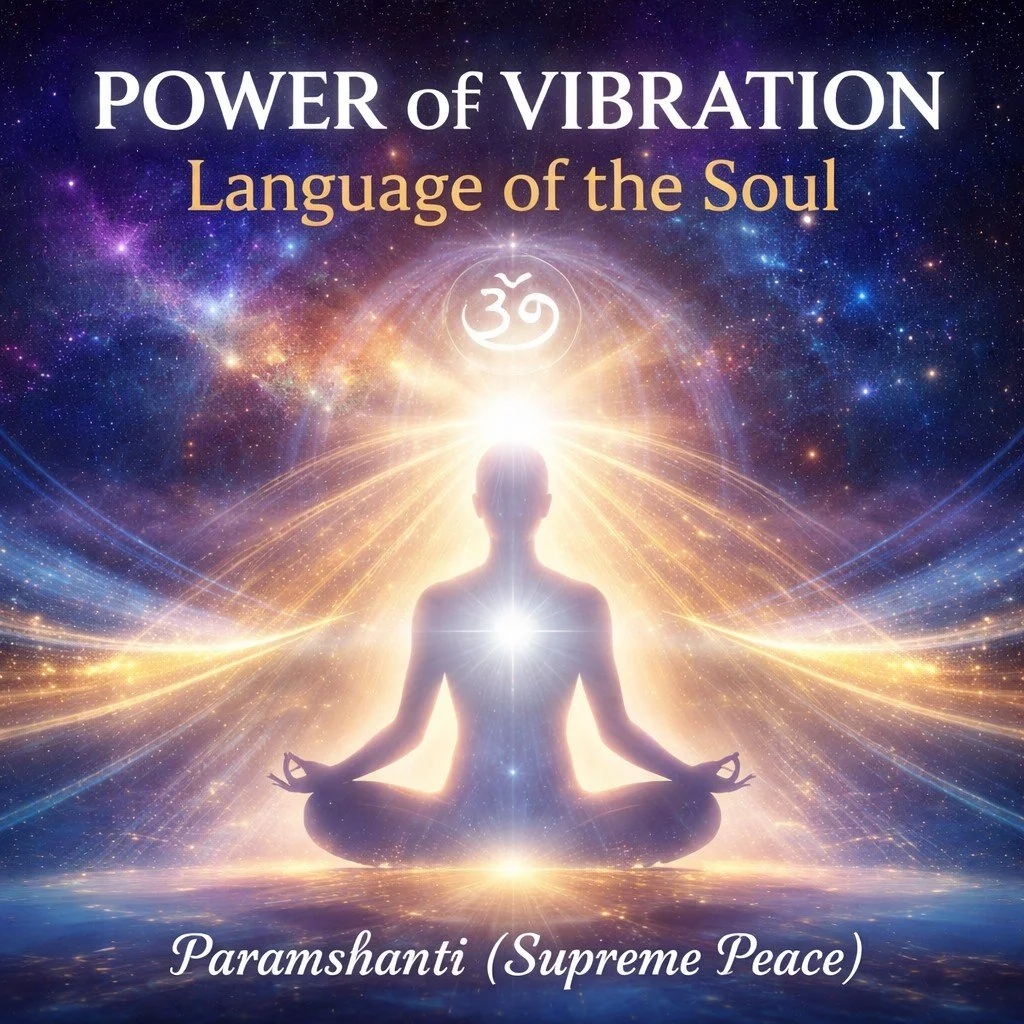
Morning Meditation: Sit silently for 20–30 minutes. Think deeply — “I am not the body. I am the pure, conscious, divine soul. My nature is supreme peace.” Visualize pure white divine light — the light of the Supreme — descending into your soul, filling you with peace and power.
Observation: Throughout the day, watch every emotion and thought as if watching a movie. Happiness and sorrow are just passing scenes.
Breath of Peace: Inhale supreme peace, exhale supreme peace. Spread vibrations of Paramshanti to all beings, all elements, and the environment.
Evening Reflection: Revisit your day. See where reactions arose. Forgive, release, and return to peace.
Rising Beyond the Three Gunas
In meditation, visualize the colors of the three gunas:
· White for sattva,
· Red for rajas,
· Blue-black for tamas.
See them merge into golden divine light — the color of transcendence. Visualize yourself bathing in an ocean of white light, free from the play of the gunas.This is the state of divine balance where the soul lives in the world yet remains untouched — “lotus-like in muddy waters.”
Becoming Fault-Free and Fearless
Every fault within us creates bondage. When faults awaken, they manifest as reactions. To build a fault-free world, we must first make ourselves fault-free. When no fault remains, there is no reaction, no sorrow, no bondage — only Paramshanti. To reach that state, cultivate self-defense, tolerance, and awareness, but never aggression. Self-defense protects the body; awareness protects the soul.
Liberation Through Understanding and Practice
No ritual, no pilgrimage, no offering can replace the inner transformation of consciousness. Even those who lived with God — with Rama and Krishna — failed to recognize Him because they were filled with ego and enmity. True realization is not in seeing God outside but in awakening the divinity within. As Lord Krishna said, “Those who see Me everywhere and see everything in Me — I never leave them, and they never leave Me.”Thus, to be in the presence of the Divine, one must be free of reaction, ego, and fault.
The Soul’s Final Freedom
When every reaction ceases, when every fault dissolves, the soul attains its original nature — eternal peace, eternal light, and eternal bliss. At that moment, one becomes not just a soul but a supreme soul in awareness, one with the Supreme Being. Practice this daily — through meditation, through karma yoga, through understanding — and soon you will experience the reality that:
“I am not the body. I am not the mind. I am the eternal, imperishable, supreme soul — the child of the Supreme Father, the Ocean of Paramshanti.”

Discover how self-transformation through Brahma Gyan, soul awareness, and Paramshanti leads to liberation, karmic freedom, and true world transformation. . When souls begin remembering their origins and speaking of them with conviction, it signifies a great awakening of consciousness on Earth.