The Necessity of Self-Restraint and Soul-Awareness in Yogic Life
Understanding Self, Sanatan Dharma, and the Path of True Liberation
In yesterday’s discussion, we explored the importance of self-restraint in yoga and the practice of self-observation. Today’s reflection continues the same journey—going deeper into contemplation, purity of mind, and how these form the spiritual foundation for a stable, awakened life. Modern society is drifting away from its inner essence. People—religious or otherwise—are often misled, influenced, or diverted by practices that promise quick peace, instant relief, or emotional comfort. Mantras are recommended, new paths are introduced, and conversions are encouraged as solutions to human sorrow. But the real issue lies elsewhere: we have forgotten our true Self.
The Real Problem: Forgetting Our Inner Wisdom
Today, many are turning to different religions not because those traditions are flawed but because we have not taught ourselves or our children who we truly are. When the foundation becomes weak, any external influence can shake it. People chase peace outside—through chants, mantras, or rituals from various traditions. Yet the danger lies not in those practices, but in the possibility of losing connection with one’s own soul and the Supreme Soul.
Many villages in Gujarat converting to Buddhism is not problematic in itself; the true concern is losing awareness of one’s original identity in the process. If one embraces another philosophy due to open-mindedness but forgets their inner wisdom, then the shift becomes a spiritual loss.
Sanatan Dharma teaches that the Supreme dwells everywhere—plants, trees, beings, elements. It gives honor to all forms of divinity. Even if society denies temple entry, the source of your soul remains divine, eternal, truth-consciousness-bliss. That identity cannot be taken away.
A Weak Foundation Invites Confusion
When a person forgets their root—who they are, where they came from, why they are here—then any new mantra, philosophy, or teaching feels attractive. This is why homes today experience identity conflicts:
· Children adopt new practices without understanding their own tradition.
· New philosophies enter homes and silently reshape values.
· Without proper grounding in soul-knowledge, families face disharmony.
Christianity, Buddhism, or any other religion isn't the problem. The real challenge is lack of inner stability. Every religion’s followers want their teachings to grow. That is natural. But if the Sanatani soul remains unaware of its essence, it becomes vulnerable to influence, confusion, and conversions.
True Peace Comes From Within
People say, “Try this mantra, you’ll get peace.” But real peace is not in external words—it resides in the soul.
You yourself are peace, truth, consciousness, and bliss. Mantras may help temporarily, but without self-knowledge, they cannot bring liberation. The Gita clearly states: without knowledge of the Self, there is no escape from the cycle of birth and death.
Teach Children Their True Identity
If parents do not teach their children about:
· the soul, the Supreme Soul, Ram, Krishna, the epics and eternal values, karma and reincarnation, the purpose of life,
then the next generation grows up without spiritual strength. New traditions will arise, and confusion will follow. Thus, awareness—not opposition—is essential.
The Subtle World and the Influence of Religion
The subtle realm is very active today. Every religion’s subtle energies are influencing human minds. If souls are weak, they become targets for:
· negative influences, spirits, misleading philosophies, emotional manipulation
Only awareness and self-control can protect the seeker.
Ego, Fame, and the Fragility of Human Recognition
We see movie stars and celebrities who once ruled the world of fame. After a few decades, no one remembers them. This is a reminder not to get swayed by glamour or public influence. What shines today may be forgotten tomorrow. The purpose of human life is not popularity, but liberation.
The Essence of Self-Restraint (Brahmacharya)
Self-restraint is mandatory on the path of yoga—whether one seeks dharna, meditation, or higher consciousness. Without brahmacharya, full success in yoga is impossible. Many great practitioners have fallen due to lack of restraint. No amount of external teaching or guidance can help a person who cannot control their senses.
· All pleasures of touch, form, taste, and smell are temporary.
· Attraction pulls one into sorrow.
· True advancement occurs only when desires are restrained.
Celibacy is not merely physical; it is purity of: mind, speech, thoughts, senses.
A person who practices restraint becomes courageous, radiant, and resolute.
Why People “Have No Time” for Soul-Work
People claim they have no time for meditation, introspection, or spiritual pursuit. Yet they easily find time for:
· weddings that last 4–5 days, vacations, social functions, entertainment, endless worldly tasks.
Where does all this time suddenly appear from? Because priorities determine how we spend our days. Without dedicating time to the soul, impurities accumulate in the mind. This turns the inner world into a trash bin of unwanted thoughts. Soul-awakening requires cleaning this inner garbage.
Two Types of Spiritual Seekers
In Brahma Vidya (knowledge of the Supreme), there are two categories:
1. The Worshipper (Form-Oriented)
They worship deities, go on pilgrimages, perform rituals, and remain focused on form. They have devotion but not deep knowledge.
2. The True Worshipper (Knowledge-Oriented)
Through devotion, they awaken the essence of the Self and eventually gain the capacity for Brahma Vidya.
They move beyond form toward the formless truth. Both paths lead forward, but only knowledge grants final liberation.
Current Trends: Observing Feelings but Missing Self-Knowledge
Meditation techniques like witnessing thoughts, feelings, and sensations are becoming popular. They help temporarily but cannot grant liberation. Without awakening the soul, one remains trapped in cycles. Krishna clearly states: Liberation comes only through knowledge—atma jnana. Observation without deeper soul-awareness leads only to temporary calmness, not moksha.
Understanding Sanatan Knowledge: Devi, Brahma, Vishnu, and Shiva
Sanatan Dharma contains profound truths:
· Devi is the cosmic Mother, the origin of Brahma, Vishnu, and Shiva.
· Shiva and Mahashiva are different levels of cosmic consciousness.
· Brahma creates, Vishnu sustains, Shiva transforms—each as per divine purpose.
Understanding these subtleties enriches the seeker’s journey.
The Realization of Brahman
When a person enters the inner cave of the heart and realizes the soul’s pure form:
· ignorance dissolves, karmic knots break, bondage falls away, actions no longer create attachment.
Self-knowledge becomes natural and effortless. This is the ultimate aim of yoga and human life.
Conclusion: Move Forward With Awareness and Self-Restraint
Those who wish to move ahead must understand:
· Self-restraint is essential.
· Knowledge is greater than virtue.
· Awareness is the foundation of liberation.
· The soul must become pure, courageous, and detached.
· Sanatan Dharma’s wisdom must be understood, not blindly followed.
· Teach children their true identity.
· Strengthen your inner foundation so no external philosophy can shake you.
True peace, true liberation, and true spiritual success bloom only when the soul becomes aware of its own light.
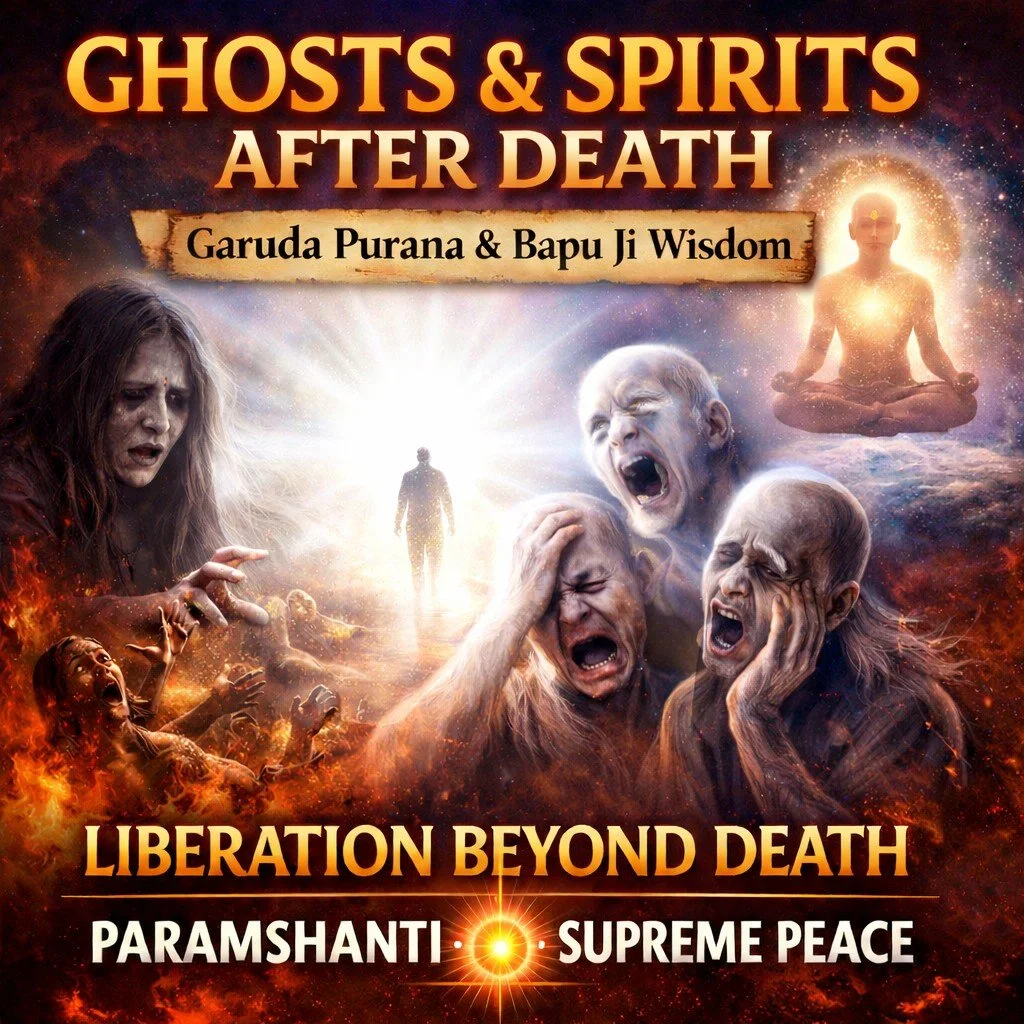
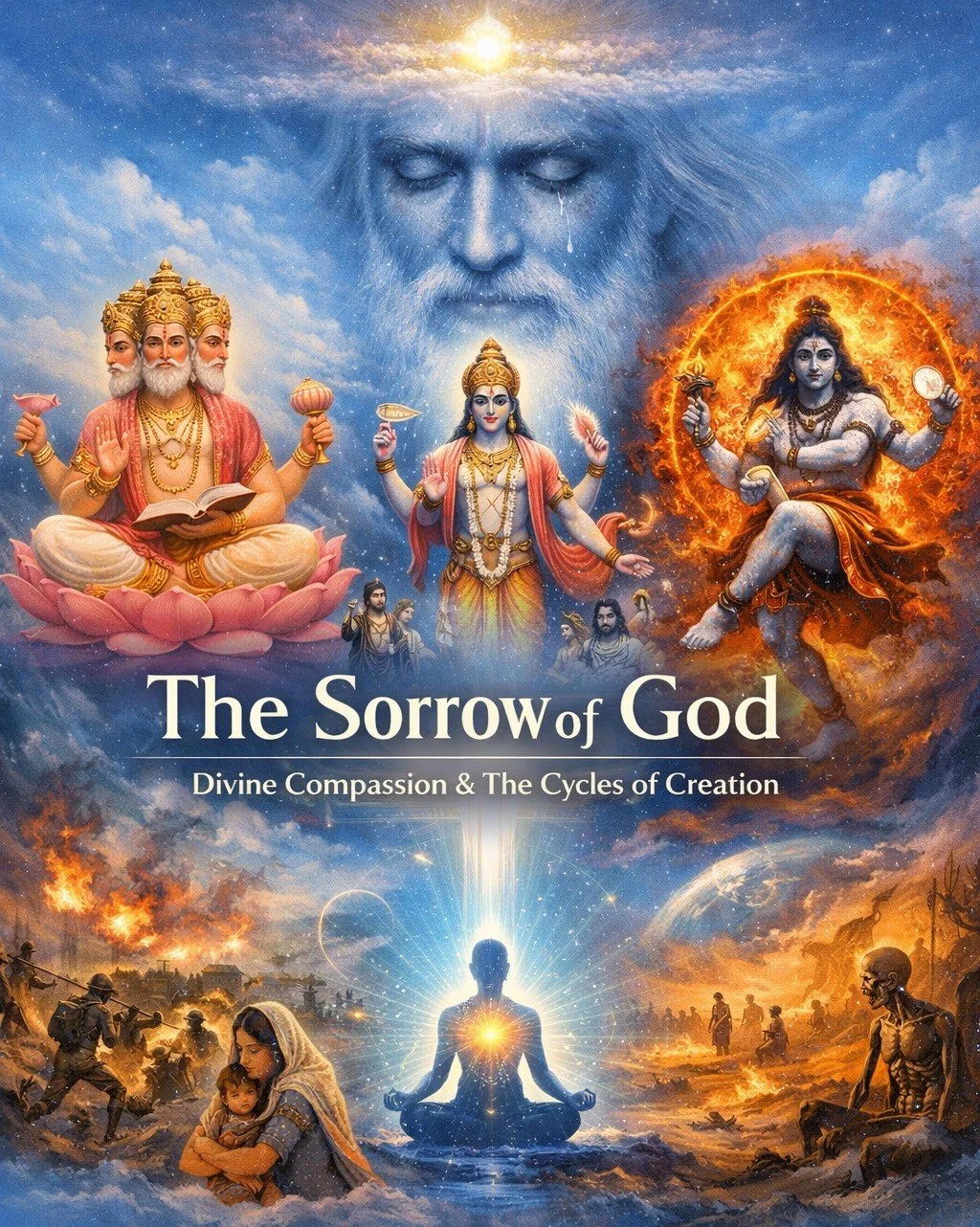

Explore the deep spiritual cosmology of planetary souls, alien interference, karmic zones, and cosmic wars based on Bapuji Dasharathbhai Patel’s knowledge. Understand how Paramshanti (supreme peace) can restore universal balance and protect human consciousness from artificial and dark energies.