
Putra Darshan Parv — The Eternal Reunion of Souls in the Mahabharata
Divine beautifully unfolds the story of the Putra Darshan Parv—an annual festival of remembrance, reunion, and realization. This sacred chapter from the Mahabharata reveals how Sage Vyasa (Vyas Ji) granted the power of divine vision to the grieving parents, allowing them to witness their departed sons on the banks of the sacred Ganga. This festival is not merely a story—it is a spiritual mirror, showing the eternal truth of the soul’s journey, the continuity of existence beyond death, and the divine law that governs birth, death, and liberation.
The Divine Assembly at the Banks of Ganga
Vyasa called forth Kunti, Gandhari, Dhritarashtra, Draupadi, and the Pandavas to the banks of the holy Ganga. There, through his divine yogic power, he summoned the souls of those who had perished in the Kurukshetra war. The gathering that ensued was unlike any other—heroes, kings, and celestial beings who had once walked the earth as warriors appeared again, radiant and peaceful. The five sons of Draupadi, the sons of Kunti, and the valiant Karna—all met again in divine reunion. The souls of the departed were not ghosts or illusions; they were conscious beings from the subtle realms, called back into visible form through Vyasa’s spiritual energy. This confirmed that souls never die—they merely shift from one realm of vibration to another.
The True Nature of the Warriors
Vyasa revealed a cosmic secret during this festival. Each warrior in the Mahabharata was not merely human—they were incarnations of divine and celestial beings who had descended for a cosmic play. like Garga Samhita this thing is happening
· Dhritarashtra, the blind king, was revealed to be a Gandharva Raj in Gandharv Yoni. In Human form he was Dhritrashtra
· King Pandu and Bhimsen was higher than Marut Gana (part of devtas) and Part of Marut Gana
· Vidhur and Yudhishtir was part of Dhramraj himself.
· Karna, son of Kunti, was an incarnation of part of Surya Deva (the Sun God) himself.
· Abhimanyu, son of Subhadra and Arjuna, was a manifestation of Chandra (the Moon).
· Duryodhan, son of Dhritarashtra and Gandhari was kaliyog himself reincarnated.
· Dushason and other sons of Gandhari, were of Rakshas yoni reincarnated
· Shakuni, brother of Gandhari was Dwapar yug himself reincarnated,
· Dronacharya was none other than Brihaspati, the divine Guru of the gods.
· Ashwatthama embodied the fierce energy of Rudra (Shiva).
· Bhishma Pitamah, the son of Ganga, was a Vasu, (A part of devta.there are 8 vasu)
· Drushtodyom was wart of Fire reincarnation
· Nakul- Sahdev, were Ashwani Kumars
Even the demons and divine entities, Gandharva, Apsara, Pisacha, yakshas, Raksha, Punyajan, Siddha Devarshi, Devta, Demon and Nirmal Devasi, all of them incarnate here had incarnated as humans during the Mahabharata era to participate in this cosmic drama.
The Reunion Beyond Death
When Vyasa entered the sacred waters of the Ganga and invoked divine mantras, the miracle unfolded.
From the holy river emerged the radiant forms of those who had perished in the war. Clad in celestial garments, adorned with divine ornaments, and surrounded by a luminous aura, they came forth from the subtle world to meet their loved ones. The night turned into a moment of timelessness. Fathers met sons, mothers met their departed children, husbands met wives, and brothers embraced each other. All enmity, grief, and separation dissolved into supreme peace. Even Gandhari, whose heart had been shattered by the loss of her hundred sons, saw them again—peaceful, divine, and full of light. Dhritarashtra too saw his sons and warriors of his lineage radiant with divine energy, free from suffering.
This was not illusion; it was a real interaction between the physical and subtle worlds, revealing the truth that the soul is eternal and the bond of divine love transcends death.
Liberation of the Departed and the Sati Women
Vyasa declared that those widowed queens and devoted wives who wished to reunite with their husbands in the higher realms could immerse themselves in the waters of the Ganga. Through that sacred immersion, they would leave their mortal bodies and join their husbands in the worlds of light—Devalok, Brahmalok, and other celestial planes. This sacred act was not out of sorrow but out of divine devotion, symbolizing liberation from earthly attachments and ascension to a higher dimension of existence.
The Philosophy Behind the Festival
When King Janamejaya heard this tale, he questioned: “How can the dead, who have left their bodies, appear again in the same form?” Vyasa replied with the profound law of cosmic order: “The soul never dies. It only shifts from one body to another. Until the fruits of all karmas are experienced, the cycle continues. The soul, bound by its own deeds, travels through various realms—sometimes visible, sometimes subtle. Liberation comes only when knowledge awakens and the soul realizes its oneness with the Supreme.” Every action—physical, mental, or emotional—creates a corresponding effect. The results of pure actions elevate the soul, while impure actions bind it further. But those who awaken divine knowledge attain freedom beyond the karmic cycle.
The Cosmic Meaning of Putra Darshan Parv
The Putra Darshan Parv is far more than a story of reunion; it is a revelation of the laws governing the multiverse.
It teaches that:
· Souls continue to exist eternally beyond the physical realm.
· The subtle and causal bodies remain active even after death.
· Through spiritual power and divine will, connection between dimensions is possible.
· Liberation (moksha) comes not by rituals alone, but through gyan (divine knowledge) and realization of the self.
Bapuji Dashrathbhai Patel and many enlightened beings have often explained that the Mahabharata was not merely a battle—it was a cosmic cleansing where divine energies descended to reset the vibration of the earth. The Putra Darshan Parv symbolizes the completion of that cycle—where divine justice, reunion, and realization all meet.
The Message for Today
In the age of ignorance, when people dismiss such scriptures as mythology, we forget the deep science behind these divine events. Each verse of the Mahabharata is encoded with truths about the soul, karma, time, and creation.If humanity rediscovers this wisdom, it can awaken the light of consciousness once again. As it was in the Mahabharata, so it is today—the souls who understand divine knowledge and strive for inner awakening are preparing to return to their true home, beyond illusion, in the realm of Paramshanti (supreme peace).
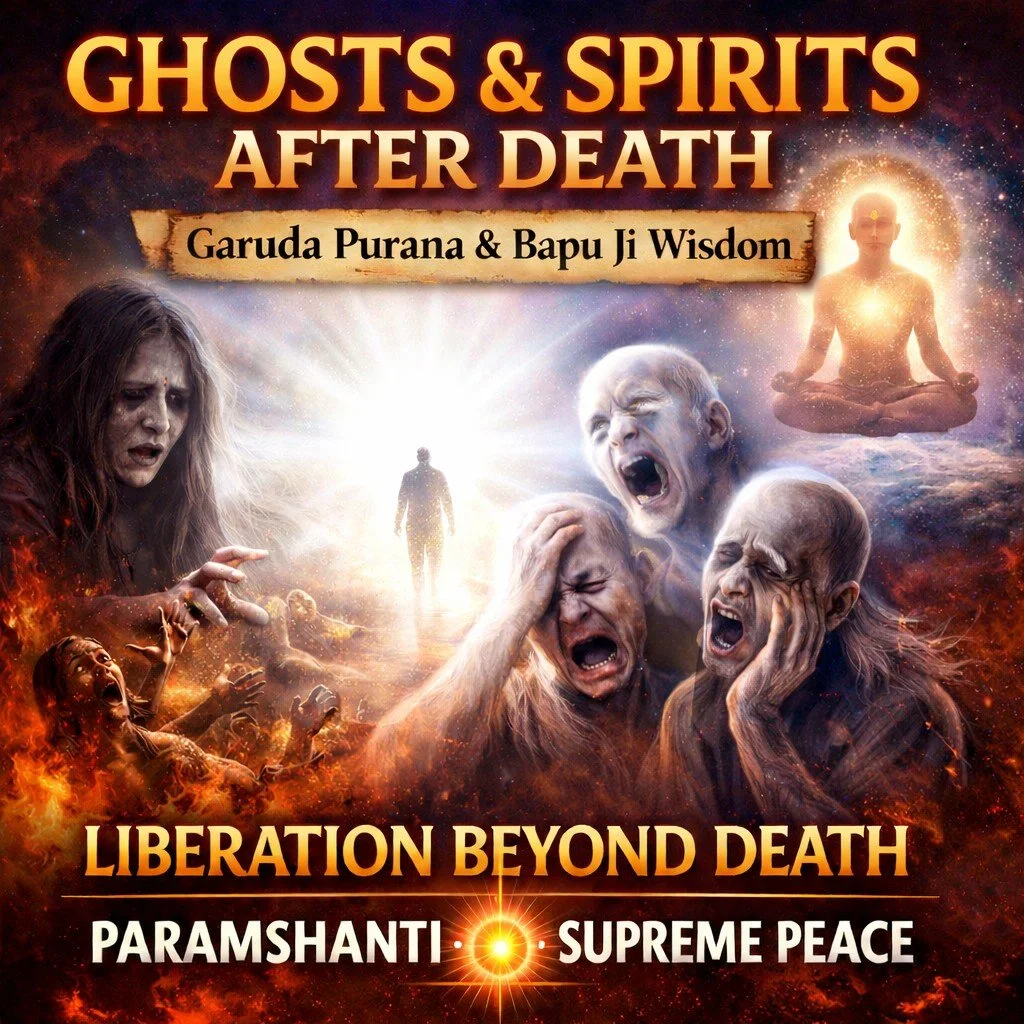
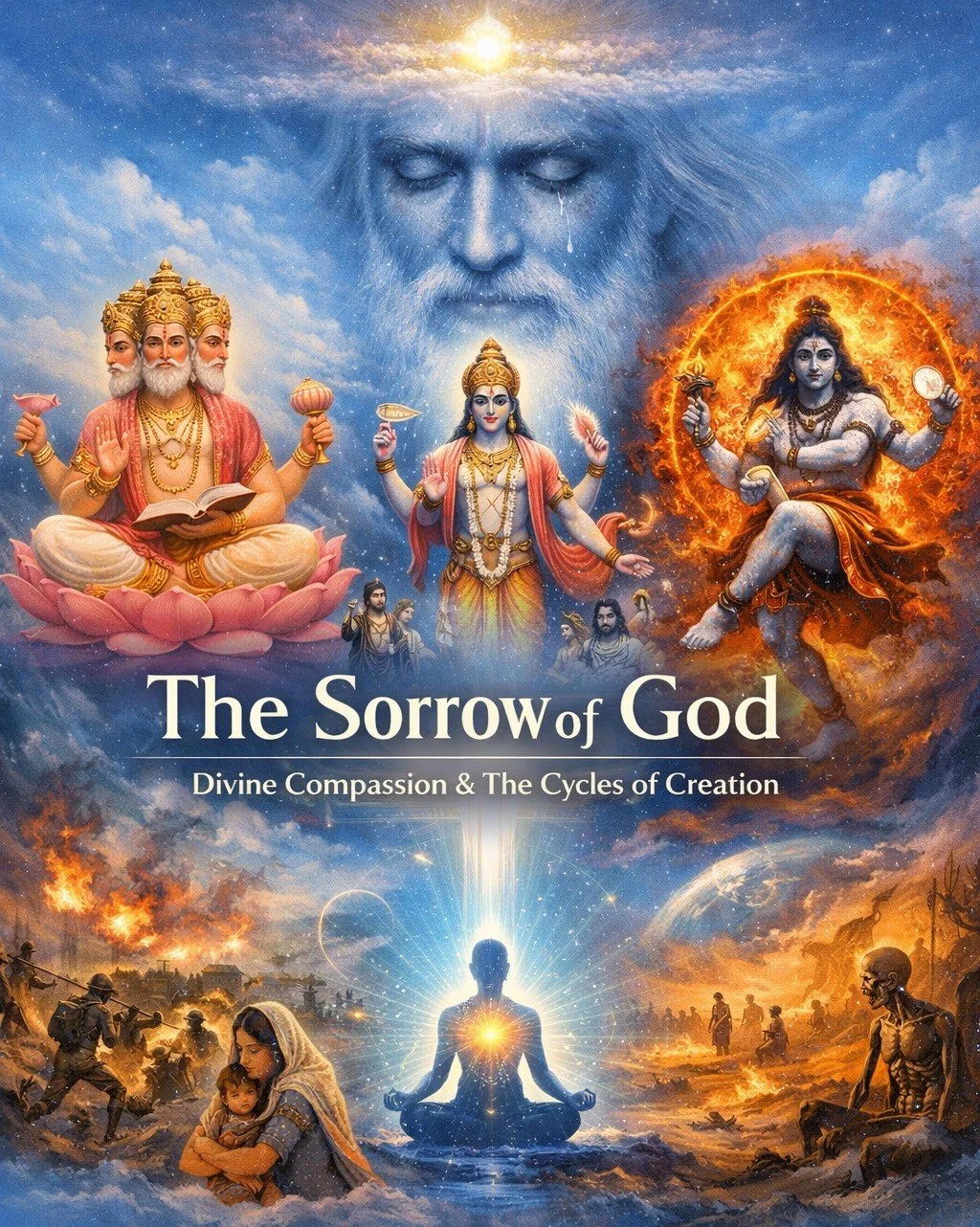

Explore the deep spiritual cosmology of planetary souls, alien interference, karmic zones, and cosmic wars based on Bapuji Dasharathbhai Patel’s knowledge. Understand how Paramshanti (supreme peace) can restore universal balance and protect human consciousness from artificial and dark energies.