
The Mystery of Shaktipat (Initiation) — Should One Receive It from a Guru?
One of the most subtle, mysterious, and powerful subjects of the inner journey — Shaktipat, the divine descent of power. The question before us is profound: Should one take Shaktipat from the Guru? The answer to this requires deep understanding, not blind belief. So, let us explore what the Vedas, Upanishads, Puranas, and the Bhagavad Gita reveal about this sacred process.
What Is Shaktipat?
The word “Shaktipat” comes from two Sanskrit roots — Shakti, meaning power or consciousness, and Pat, meaning to fall or flow. Thus, Shaktipat is the flow of divine energy from the Guru to the disciple. It is said to be the direct transmission of the Guru’s awakened consciousness into the disciple’s being, often resulting in the awakening of the Kundalini energy. This sacred process can accelerate spiritual evolution manifold — sometimes what takes years of meditation, austerity, and chanting can happen in a single moment, if the disciple is ready and receptive. It is like plugging into a live current — once the connection is made, the divine energy begins to flow.
What Do the Ancient Scriptures Say?
Interestingly, the Vedas do not mention the term Shaktipat directly. However, they describe its essence through other words such as:
· Initiation (Dīkṣā) – receiving the mantra or energy of the Guru.
· Śruti (Listening) – the act of hearing divine vibration.
· Vision of the Sage (Darshan) – seeing through the Guru’s awakened sight.
· Grace of the Supreme (Anugraha) – the descent of divine power upon the soul.
In the Śvetāśvatara Upanishad, it is said that the truth is revealed only to the one who has supreme devotion to both God and the Guru. This refers to the entry of divine knowledge through the vibration of the Guru’s words and energy — the true Vedic form of Shaktipat.
Similarly, the Mundaka Upanishad says:
“The soul is not attained through speech, nor through intellect, nor through study; it is attained only when the Divine chooses to reveal Itself.”This means that realization happens not by effort alone but by the grace and will of the Supreme Consciousness.
The Gita’s Revelation on Shaktipat
In the Bhagavad Gita (4:34), Lord Krishna says: “Approach the wise with reverence, inquiry, and service. The seers of truth will impart knowledge unto you.”This verse beautifully captures the spirit of Shaktipat — the transmission of divine knowledge and vibration through the Guru, not merely through words, but through energy. When divine knowledge is imprinted upon the soul, the stamp of God’s power awakens the inner light, and illusion begins to dissolve.This is true Shaktipat — the awakening of the divine essence, the Brahman nature, within.
Shaktipat in the Puranas
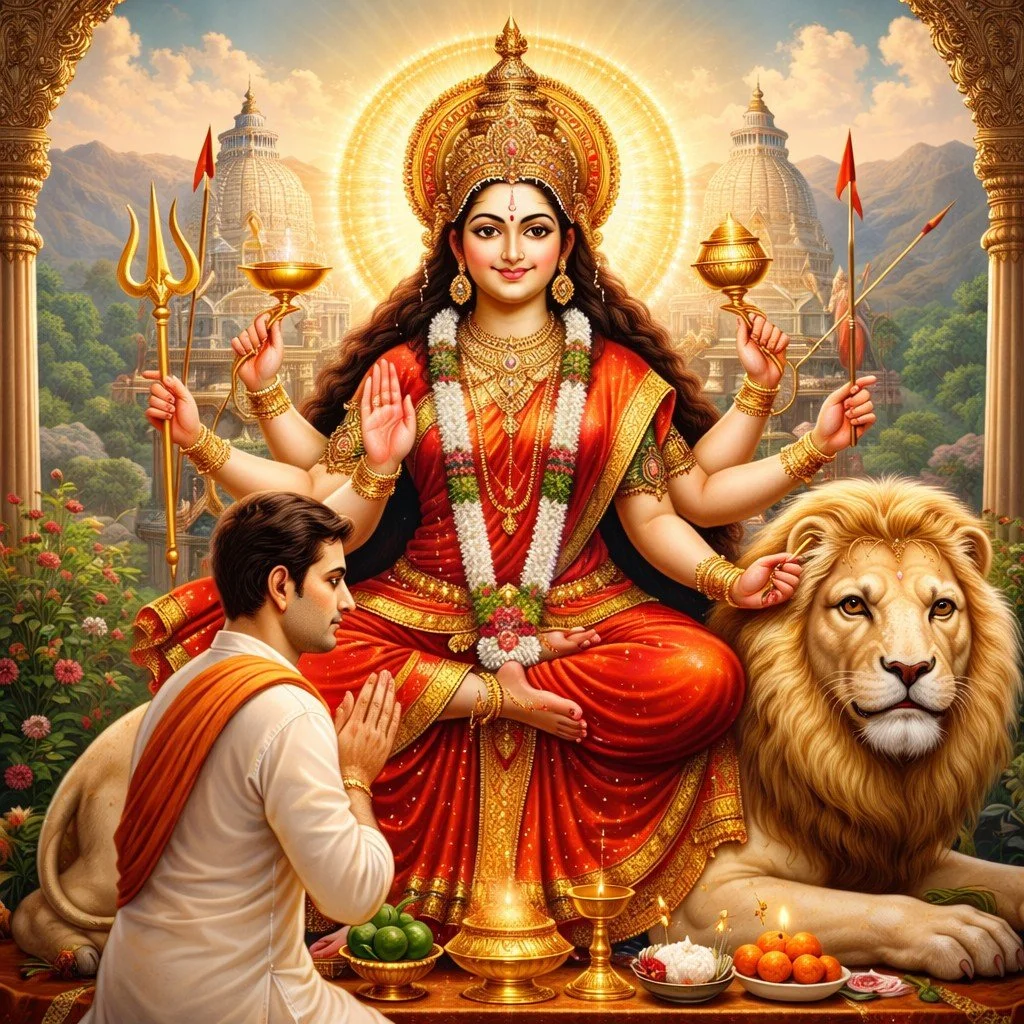
In the Shiva Purana, Lord Shiva declares that whoever connects with His worship, meditation, and the grace of the Guru, automatically receives His power. The techniques revealed to Goddess Parvati describe seven levels of Shaktipat, ranging from awakening through a mere thought to complete transformation through touch or intention. The Devi Bhagavata Purana says that the Goddess becomes self-luminous in the heart of Her devotee — even without ritual means, if devotion is pure, the divine energy descends. This descent of the Goddess is none other than Shaktipat. When this divine light enters, it melts the layers of illusion covering the soul, and the darkness is dispelled by the brilliance of knowledge.
Should One Take Shaktipat from a Guru?
If the Guru is accomplished (Self-realized), and if the disciple possesses faith, receptivity, devotion, and surrender, then Shaktipat can multiply one’s spiritual progress a hundredfold. However, both must be aligned — the Guru’s signal and the disciple’s receptivity must be clear. If either side has interference, the connection fails. Therefore, the Guru must be a true guide, one who lives for world welfare, not for fame or wealth. In today’s age, many offer “instant initiation” for money — but real Shaktipat is not a performance, not an external miracle. It is silent and subtle, a transmission of divine consciousness.
The Signs of True Shaktipat
How can we recognize genuine Shaktipat?
· Peace and calmness begin to increase.
· Ego and restlessness decrease.
· Compassion and divine love grow.
· Meditation becomes effortless.
· The purpose of life becomes clear from within.
If after receiving Shaktipat, no transformation occurs — if the same confusion, anger, and ignorance remain — then either the Guru is not genuine, or the disciple is not yet receptive. True Shaktipat awakens inner knowledge, burns ignorance, and reveals one’s true self — the divine spark within.
The Ultimate Purpose of Shaktipat
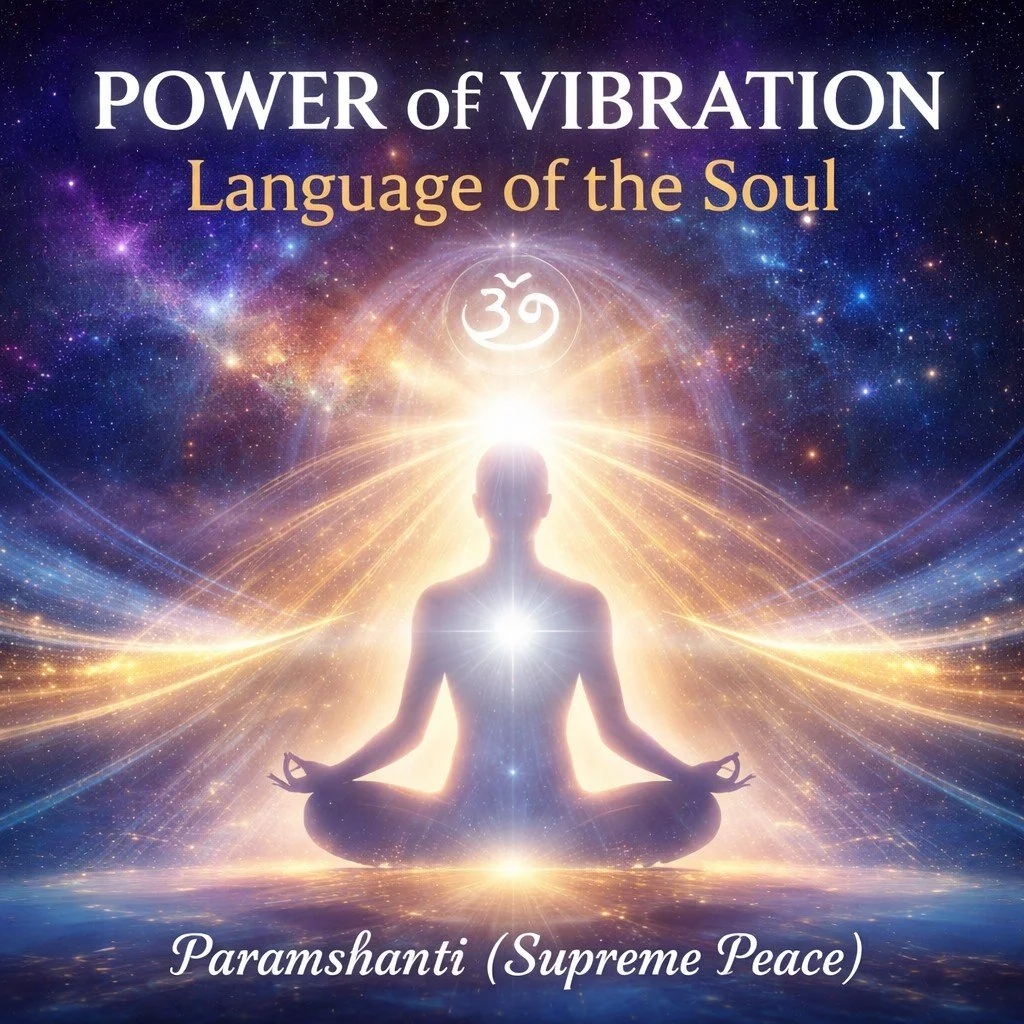
The goal of Shaktipat is not display of power or miracles, but soul awakening — the realization of “Who am I? Why am I here? What is my divine role?” When the soul awakens through Shaktipat, the illusion of separation fades. The being becomes an instrument of divine will, living only for world welfare and supreme peace (Paramshanti).
The Science Behind Shaktipat — The Flow of Divine Energy
In continuation of our earlier discussion on the sacred process of Shaktipat, let us now go deeper into understanding the science, mechanism, and inner experience behind this divine transmission of energy. We have already learned that Shaktipat is not merely a physical or external act; it is a spiritual technology where the consciousness of the Guru aligns and awakens the dormant consciousness of the disciple. But how does this actually happen? What are the laws that govern it? Let us explore step by step.
The Subtle Science of Energy Transmission
In reality, everything in existence — every soul, atom, and vibration — is energy. When the Guru’s consciousness has merged into the Supreme Consciousness, the energy that flows through them becomes divine, pure, and unlimited. During Shaktipat, this divine current connects with the disciple’s energy field (aura) and DNA vibration. Just as one electrical current can ignite another dormant circuit, the Guru’s energy activates the latent potential within the disciple.One spiritual researcher beautifully explained that when the disciple connects with the Guru, even their DNA begins to vibrate in harmony. The higher frequency of the Guru’s DNA pattern subtly influences the disciple’s inner frequency, leading to transformation at both the physical and spiritual levels.This is why ancient sages said, “When the Guru looks at you, His vibration enters through His eyes; when He speaks, His word becomes mantra; and when He touches, His touch becomes divine fire.”
The Seven Levels of Shaktipat
As mentioned in the Shiva Purana, there are seven degrees of Shaktipat, each corresponding to the disciple’s level of purity, receptivity, and karmic readiness.
1. Tīvra-tīvra Shaktipat – Instant awakening through a single thought or glance of the Guru.
2. Tīvra Shaktipat – Awakening through the Guru’s word or command.
3. Madhya-tīvra Shaktipat – Awakening through subtle transmission in meditation.
4. Madhya Shaktipat – Awakening through the Guru’s touch.
5. Mandya-tīvra Shaktipat – Awakening through dreams or inner visions.
6. Mandya Shaktipat – Awakening over time through grace and faith.
7. Ati-mandya Shaktipat – Gradual awakening through long association and service.
These stages show that the Guru’s energy transmission works beyond space and time — even a single thought, intention, or remembrance can awaken the disciple if the bond is pure and divine.
The Divine Descent — How It Actually Happens
When the Guru’s energy touches the disciple, a light current begins to flow from the crown (Sahasrara chakra) down through the spinal centers. The Kundalini, which lies coiled at the base of the spine, begins to rise gradually, clearing the blockages of karmas and desires. At first, the disciple may experience heat, vibrations, or tingling sensations. Later, deep peace and bliss arise as the inner light (Atmajyoti) starts shining. But the most important sign is not the sensation — it is the transformation of the mind. The restlessness begins to disappear, desires fade, and the awareness of the soul becomes constant.This is true Shaktipat — not a show of shaking, jerks, or dramatic behavior, but silent ignition of divine consciousness within.
The Guru–Disciple Connection
For Shaktipat to work, there must be complete alignment between the Guru and disciple. The Guru must be self-realized — one whose ego is dissolved and who serves only for universal welfare (Lok Kalyan).
On the other hand, the disciple must have:
· Faith — the inner acceptance that the Guru is a divine medium.
· Eligibility (Adhikāra) — purity of heart and readiness for transformation.
· Devotion (Bhakti) — surrender without resistance or doubt.
· Receptivity (Shraddha) — openness to receive the divine flow.
If any of these are missing, the connection remains incomplete — just like a wire not properly connected to the power source.
The Role of the True Guru
A true Guru is not one who performs miracles or collects disciples for fame. A true Guru awakens the divine light in others silently. He or she does not give jolts or push the disciple’s body into movement; rather, the Guru’s presence itself becomes the transmission. In their company, peace descends automatically, and the disciple feels an inner shift toward truth and love.
The Guru’s true Shaktipat gives the disciple:
· Stability of mind
· Clarity of purpose
· Reduction of ego and desires
· Awakening of compassion and divine love
· Realization of one’s higher self
This is how we recognize that Shaktipat has truly happened.
Shaktipat and the Awakening of the Soul
The essence of Shaktipat is not in energy alone, but in awakening the soul’s own divine memory. Every soul carries within it the record of its origin — the light of the Supreme Father. Shaktipat simply triggers that remembrance, bringing back the awareness of who you truly are: a divine spark of Paramatma.When the soul remembers this truth, illusion (Maya) begins to dissolve. Desires, fears, and attachments lose their grip. The being naturally turns toward Paramshanti (supreme peace). This is why those who have truly received Shaktipat no longer live for themselves. Their every breath becomes a prayer for the liberation and peace of all souls.
Modern Misconceptions
In today’s time, many falsely claim to “give Shaktipat” through public ceremonies, money-based initiations, or external gestures. But remember, real Shaktipat cannot be bought, forced, or dramatized.The true Guru never says “I gave you power.” Instead, they say, “God’s grace has descended through me.” Because it is never the human personality, but the Supreme Consciousness, that transmits the light.When Shaktipat becomes a show, it turns into spiritual ego. But when it is done with humility, silence, and divine intent, it becomes the purest act of grace.
The Final Stage — Merging with the Supreme
Ultimately, Shaktipat is not the end but the beginning — the ignition point of soul awakening. As the light grows, the disciple’s consciousness expands beyond individuality, merging gradually into the Infinite Ocean of Paramshanti (Supreme Peace). When the energy of the soul unites with the energy of the Supreme, duality ends. The “Guru” and “disciple” dissolve into one vibration — the eternal consciousness that pervades the multiverse. Then, no words remain. Only silence. Only peace. Only light.
The Ancient Basis — Energy Transmission Across the Scriptures
The Vedas, Upanishads, Gita, and Puranas all accept the concept of energy transmission, even though the terminology may differ. The essence remains the same — the transfer of divine knowledge and consciousness from one awakened being to another.If the Guru is self-realized and the disciple is devoted and pure-hearted, then this transmission of divine energy becomes the most auspicious turning point of life.However, Bapuji has beautifully explained that one must deeply understand the inner science before blindly practicing or accepting any “energy transmission.” In one discourse, he revealed why energy transfer should not be performed casually or physically, as many so-called Gurus do today.
Bapuji’s video on this subject explains the entire mystery — that true transmission does not involve shocking displays or dramatic reactions. There was a video once where a foreign Guru was seen touching people’s foreheads, causing them to shake and react as if struck by a 440-volt current. It was labeled “energy transmission.” But Bapuji clarified that true Shaktipat is not physical; it is spiritual and silent — a flow of vibration, not an electric sensation.
He said, “If the Guru is in divine consciousness, his vibration itself will awaken the disciple — no touch, no drama.”
The Meaning of Dīkṣā — Light and the Destruction of Ignorance
The word Dīkṣā comes from two Sanskrit roots:
“Di” meaning knowledge or light
“Kṣa” meaning the destruction of sins or ignorance
Thus, Dīkṣā means the transmission of divine light that destroys ignorance. Until one’s sins and karmic darkness are removed, the light of knowledge cannot shine through. Hence, real initiation is not about a ceremony — it is about removing ignorance and awakening the soul’s true awareness.
Bapuji beautifully explains that initiation means the moment the soul recognizes itself. When the soul realizes — “I am eternal, I am infinite, I am the child of the Supreme” — that is the moment of true initiation.
The Story of the Teacher and the River
To illustrate this, consider the ancient story Bapuji mentioned:
A teacher once carried a woman across a river. His disciples were surprised, saying, “Guruji, you told us not to touch a woman, yet you carried her!”The teacher smiled and said, “I left her on the other side of the river — but you are still carrying her in your mind.” This reveals the essence of spiritual learning: the intellect holds impressions and becomes trapped by them. True initiation happens when we drop these impressions and purify the mind.Similarly, Ramakrishna Paramahansa’s Guru, Totapuri, helped him transcend the form of Kali during meditation. Ramakrishna’s attachment to form was blocking his realization of the formless Absolute. His Guru guided him to pierce through the attachment — symbolizing the destruction of mental conditioning. This was the moment of true initiation.
So initiation means freedom from the mind, intellect, and conditioning, not dependence on rituals.
What Do the Vedas and Upanishads Say?
The Rigveda mentions:
“Let noble thoughts come to us from all directions.”
This verse signifies the reception of divine knowledge — the true essence of initiation. The Yajnopaveet Sanskar (sacred thread ceremony) is also a symbolic initiation — a purification ritual signifying readiness to receive Brahmavidya (divine knowledge).
The Upanishads add that initiation happens through Shravan (listening), Manan (contemplation), and Nididhyasan (meditation) — these are all ways of receiving divine energy through the vibration of the Guru’s wisdom.
The Mundaka Upanishad states:
“Go to a self-realized Guru with humility, inquiry, and service. Through their grace, you shall receive divine knowledge.” Thus, the Upanishadic initiation is not a physical act — it is the internal transfer of realization.
What Does the Gita Say?
In the Bhagavad Gita (4.34), Lord Krishna tells Arjuna:
“Approach the wise with humility and service; they will impart true knowledge to you.”
This verse defines initiation as a mental and spiritual process. Shri Krishna did not formally initiate Arjuna with a ritual or mantra; instead, he initiated him through divine knowledge and realization — directly awakening his higher consciousness.
Thus, the Gita reveals that initiation through faith and surrender is superior to initiation through external ritual.
The Ultimate Meaning According to Bapuji
Bapuji simplifies all this wisdom in one line:“Initiation means the awakening of soul consciousness — not ritual, not formality.”He says, “You are Shiva. You are Mahashiva. You are Parama Mahashiva. You are Brahman. Aham Brahmasmi.”This is the real initiation — the realization of one’s divine origin. The external initiation is not necessary if the inner connection with the Supreme is already active.
If the soul has already awakened from within, if divine knowledge flows naturally, then the external act of initiation is no longer needed. The true Guru awakens knowledge through consciousness, not touch.
When Is Initiation Necessary?
Bapuji explains that initiation is necessary only in two cases:
When the mind is unstable and requires the Guru’s touch or inspiration to stabilize.
When one follows the physical or ritualistic path such as mantra, tantra, or yoga practices.
However, when the soul has awakened through knowledge, when inner awareness and witnessing consciousness arise, external initiation is no longer required.
True initiation is internal — the connection of the soul with the Supreme Soul.
The Final Truth
True initiation does not only come from the Guru — it comes from within your own soul. The Guru simply reminds you of your forgotten divinity, helps remove ignorance, and connects you back to the Supreme Light.
When the soul realizes —
“I am the light of the Supreme. I am infinite, eternal, peaceful, and divine,”
that is the moment of true initiation.
Therefore, don’t run after rituals or external symbols. Seek inner awakening, inner connection, and inner realization. That is where real initiation happens.
When you live in this awareness — I am a divine soul, a soul of supreme light, residing in supreme peace — then you have already received the highest initiation.

Discover how self-transformation through Brahma Gyan, soul awareness, and Paramshanti leads to liberation, karmic freedom, and true world transformation. . When souls begin remembering their origins and speaking of them with conviction, it signifies a great awakening of consciousness on Earth.