
Is God and the Lord the Same? Understanding Ishwar, Bhagwan, Brahman, and Divine Incarnations
Introduction
The discussion introduces a profound and timeless spiritual question: Are God (Ishwar) and the Lord (Bhagwan) the same, or is there a deeper distinction between them? Drawing from scriptures, philosophy, and the teachings of Bapuji, the episode invites seekers to explore divinity beyond surface-level beliefs and to understand its relevance in personal spiritual experience.
God and Deity: Ishwar and Bhagwan
In common usage, the words Ishwar (God) and Bhagwan (Lord) are often treated as synonyms, yet spiritual philosophy explains subtle but important differences. Ishwar refers to the formless, eternal, omnipresent Supreme Reality—unchanging and immortal. Bhagwan, on the other hand, represents that same Supreme Reality when it manifests with form, qualities, and attributes to perform specific tasks in the world. Thus, Ishwar and Bhagwan are not two separate entities; they are two modes of the same ultimate truth—formless and formed.
The Nature of God: Formless and Formed
Scriptures explain that Brahman exists in two aspects:
Nirguna (Formless): Eternal, invisible, beyond senses, and absolute truth.
Saguna (With form): Manifested through divine incarnations to guide, protect, and uplift humanity.
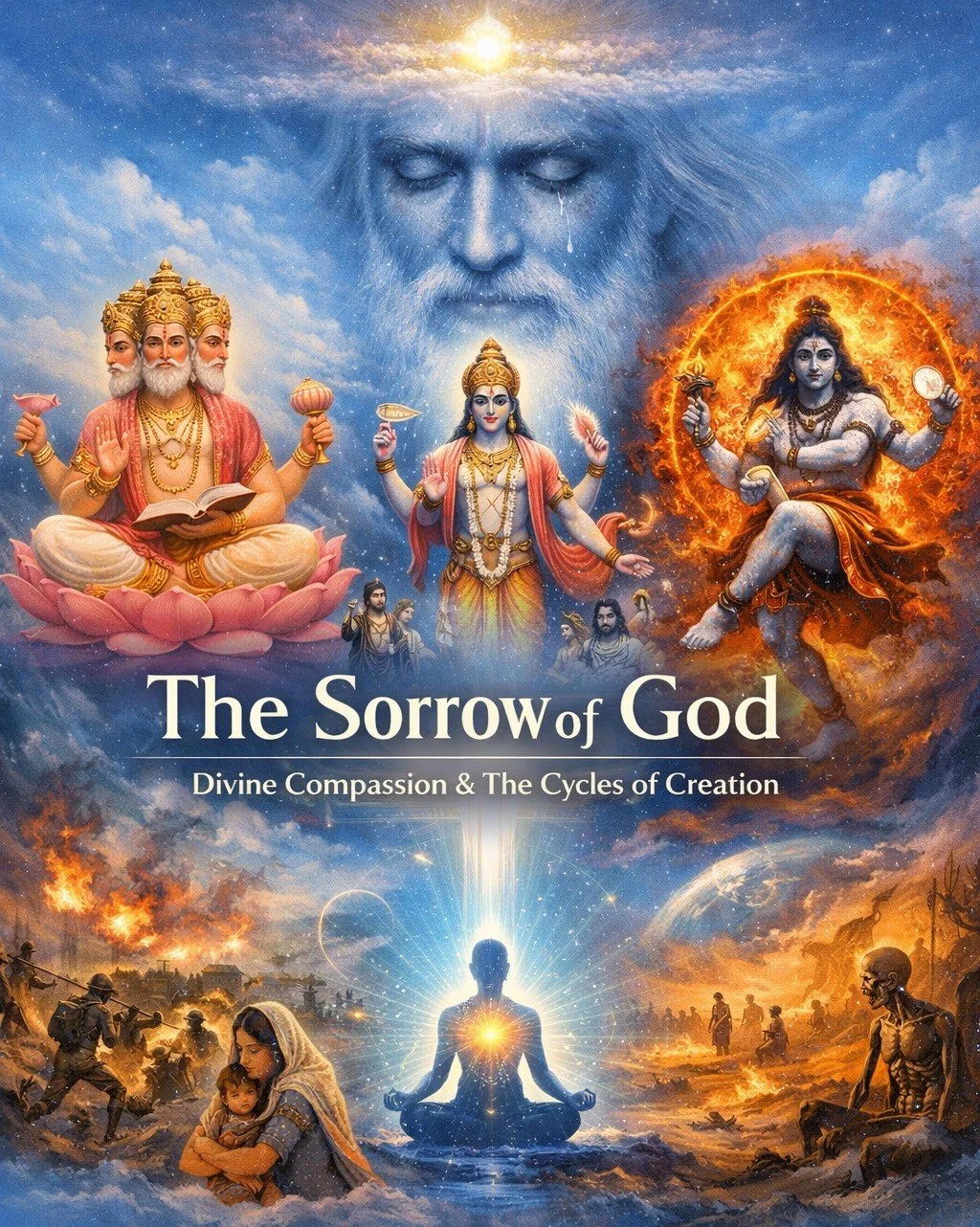
The formless Brahman is the ultimate reality, while the formed aspect appears as incarnations such as Lord Rama, Lord Krishna, and Lord Shiva. These incarnations act within time and space, fulfilling divine responsibilities and restoring balance (dharma).
Avatars and Their Divine Roles
Throughout history, divine incarnations have appeared whenever righteousness declined. Lord Parashuram eliminated tyranny, Lord Narasimha protected Prahlad, Lord Rama exemplified ideal conduct, and Lord Krishna imparted profound wisdom through the Bhagavad Gita. Saints like Buddha and Mahavir also played transformative roles by guiding humanity toward truth and liberation. These beings are remembered as Gods not merely because of miracles, but because of their knowledge, renunciation, compassion, and service to the welfare of all.
Human Potential for Divinity
A central teaching of the episode is that divinity is not exclusive. Every human soul carries the potential to awaken divine qualities. Through selfless action, virtue, knowledge, and inner realization, a person can rise above ignorance and embody godly attributes. Saints and sages are revered because they realized their true essence and worked for universal welfare. In this sense, “God” becomes a title earned through realization and service, not merely a distant figure of worship.
Brahman, Creation, and Reality
The world arises from the formless Brahman. While physical forms are temporary, the underlying essence is eternal. Just as water can freeze into ice, the formless can take form. Bapuji explains that souls themselves pass through stages—from formless existence to embodied life—mirroring this cosmic principle. Understanding this helps seekers see beyond the body and recognize the soul as the true self.
Nirguna and Saguna Worship
The Bhakti tradition recognizes two main spiritual paths:
Meditation on the formless (Nirguna): Taught by saints like Kabir and Guru Nanak.
Devotion to the formed (Saguna): Practiced by Tulsidas, Surdas, Meera, and Tukaram through worship of Rama or Krishna.
Both paths ultimately lead to liberation (moksha), emphasizing that form and formless are complementary approaches to the same truth.
Material Ignorance vs. Spiritual Knowledge
The episode cautions against excessive materialism, where life is seen as mechanical or purely physical. Such views ignore the subtle energy of the soul. Even at death, the departing life-force remains invisible, yet its absence transforms the body entirely. Scriptures urge logical inquiry and inner awareness to transcend skepticism and rediscover the divine essence.
God Across Cultures and Traditions
Different cultures recognize divine figures—Shri Ram, Krishna, Gautam Buddha, Mahavir, Guru Nanak, and others—each restoring dharma in their own way. Though names and forms differ, the sustaining divine power behind them is one. True understanding dissolves sectarian conflict and reveals unity behind diversity.
God, Lord, and Liberation
God, in essence, is infinite power—beyond birth and death. The Lord is that same power experienced in a recognizable form. Those who transcend the cycle of birth and death through realization become divine in nature. God sends incarnations and messengers to guide humanity, while remaining untouched by worldly emotions.
Conclusion and Meditation
The episode concludes with a reminder from the Mahabharata: Arjuna could see Krishna’s universal form only after receiving divine vision. Likewise, without inner awakening, the divine cannot be truly known. The session ends with meditation, guiding viewers to focus on inner light, stillness, and universal peace—encouraging every soul to move closer to self-realization and supreme harmony.
May this understanding lead all seekers toward deeper awareness, inner light, and Paramshanti (supreme peace).

Explore the deep spiritual cosmology of planetary souls, alien interference, karmic zones, and cosmic wars based on Bapuji Dasharathbhai Patel’s knowledge. Understand how Paramshanti (supreme peace) can restore universal balance and protect human consciousness from artificial and dark energies.