
Ashtavakra Gita: The Infinite Ocean of Self – The Realization of King Janaka (Part 2)
The journey continues from where we left yesterday — the sacred dialogue between Sage Ashtavakra and King Janaka, a seeker who, despite being a monarch surrounded by material riches, yearned for self-realization (Atma-Gyan). Yesterday, we understood how Ashtavakra imparted the first rays of divine knowledge, and today, we explore how King Janaka absorbed and expressed the characteristics of the Self — the foundation of all existence.
The Essence of the Self
King Janaka begins by describing the self as the eternal essence — unborn, undying, and unchanging. Even if this universe dissolves, the self remains. Just as water in countless wells originates from the same ocean, all beings arise from one consciousness. The ignorant see separation, but the realized one perceives unity.
“I neither come nor go,” says Janaka, “for I pervade the entire universe.” The self acts effortlessly, naturally — like the sun radiating light, or a magnet attracting iron — without will or strain. All activity in creation flows spontaneously from its inherent nature.
The Self Beyond Doership
King Janaka realizes: “I possess nothing, I appoint no one, for I am free from doership and enjoyership. Yet, the whole creation is my play — everything belongs to me.” Even while residing in a body, self-knowledge remains untouched. Such a soul is the knower of knowing itself, beyond the listener, beyond the speaker. Once knowledge is attained, it dissolves the need for more knowledge — just as light removes darkness, not to seek more light but to become it.
The End of Duality and the Disease of Ignorance
Janaka proclaims that all sorrows stem from duality, and duality arises from attachment — the false perception of “I” and “mine.” As long as one sees separation between oneself, others, and God, the soul remains bound by inner ailments like jealousy, greed, and ego — for which there is no medicine in the physical world.Rituals, fasting, and outer worship may inflate ego, but the divine lies within. Once ignorance is cleansed, the inner divine shines forth. The path of knowledge thus diverges from the path of devotion — both sacred, yet distinct.
The Path of Devotion and Knowledge
Devotion (Bhakti) is the resting ground for those not yet ready for the blazing fire of knowledge. When devotion matures, it blossoms into knowledge. But the path of knowledge is not easy — it demands inner renunciation, ego dissolution, and continuous self-observation. In devotion, one can offer flowers and prayers; but in knowledge, one must offer the ego itself.
The Realization of the Illusory World
Upon awakening, King Janaka declares:
“The body, heaven, hell, bondage, and liberation — all are imaginations.”
This profound statement reveals that once the self is realized, even concepts of salvation lose meaning. Heaven and hell exist only as mental constructs. Quantum physics too hints that what we believe manifests — when we believe bondage is real, it becomes real; when we believe all is the self, duality vanishes.
For the realized one, everything is imagination because they have reached the Supreme Self, beyond cause and effect, beyond fear and form.
Freedom from Tension: The Illusion of the World
Janaka’s realization frees him from all mental tension. He sees the world as a passing illusion, where desires and attachments rise like bubbles on the surface of an infinite ocean. These illusions bind the mind for a moment and vanish when recognized as unreal. “Self-realization,” he says, “is the border. Beyond it, nothing remains.” Like an ocean witnessing its waves, the realized one remains undisturbed, watching life unfold with detachment and serenity.
The Ocean and the Waves
Janaka beautifully explains that creation is like waves arising in the ocean of the soul, stirred by the winds of the mind — desires like lust, anger, greed, and attachment. Yet these waves are not separate from the ocean. When the winds of desire cease, the waves subside, and the ocean becomes still. The world, which oscillates between pleasure and pain, also ceases for such a being. This is the state of liberation while alive (Jivanmukti).
The Role of the Guru and the Test of Realization
Sage Ashtavakra knew the depth of this realization. True teachers never give incomplete knowledge, for half-truths can harm the disciple. Their divine dialogue became one of the greatest spiritual conversations in human history, teaching that real knowledge transforms perception, not reality — for the world remains the same, but the knower becomes free.
Living Self-Realization in the Modern World
Today’s world is turbulent and chaotic, just as it was in Janaka’s time — perhaps even more so. Thus, self-realization is not a luxury but a necessity. Even in our daily interactions — traffic jams, conflicts, or worldly pressures — we can practice awareness, observing the waves of emotion without drowning in them. The mind reacts through stored impressions, but when self-awareness awakens, these impressions lose their power. Every person, memory, or emotion simply becomes a reflection in the vast consciousness.
The Final Liberation
Janaka concludes with a magnificent declaration: “I am pure consciousness. I am neither this body nor this mind. I am the essence of awareness — infinite, unbounded, and free.” He sees the universe as his own reflection, the waves merging back into the ocean. All desires dissolve; only Paramshanti (Supreme Peace) remains. This realization ends the cycle of birth and death. As the discourse closes, the meditator is invited to experience this truth, to feel the supreme light (Param Jyoti) filling the physical, subtle, and causal bodies, radiating throughout the multiverse.
Conclusion
King Janaka’s realization reveals that:
· The Self is eternal, untouched by creation or destruction.
· Desires and dualities are the root of bondage.
· Devotion matures into knowledge, and knowledge leads to liberation.
· The Guru’s guidance ensures the safe unfolding of realization.
· Self-realization is the final border — beyond which only Paramshanti remains.
Let every awakened soul now radiate supreme peace to the universe.
May every being attain this divine awareness.
Paramshanti (Supreme Peace) to all souls, all elements, and all worlds.
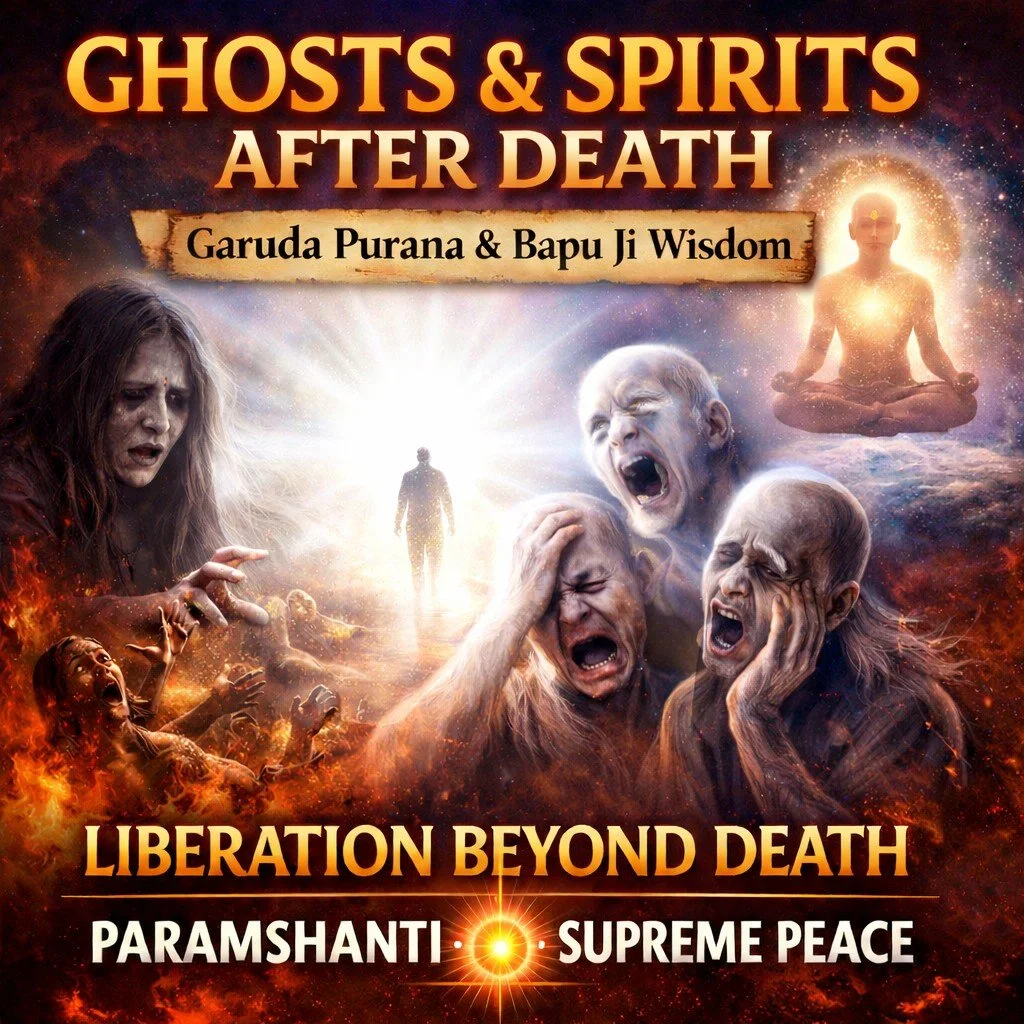
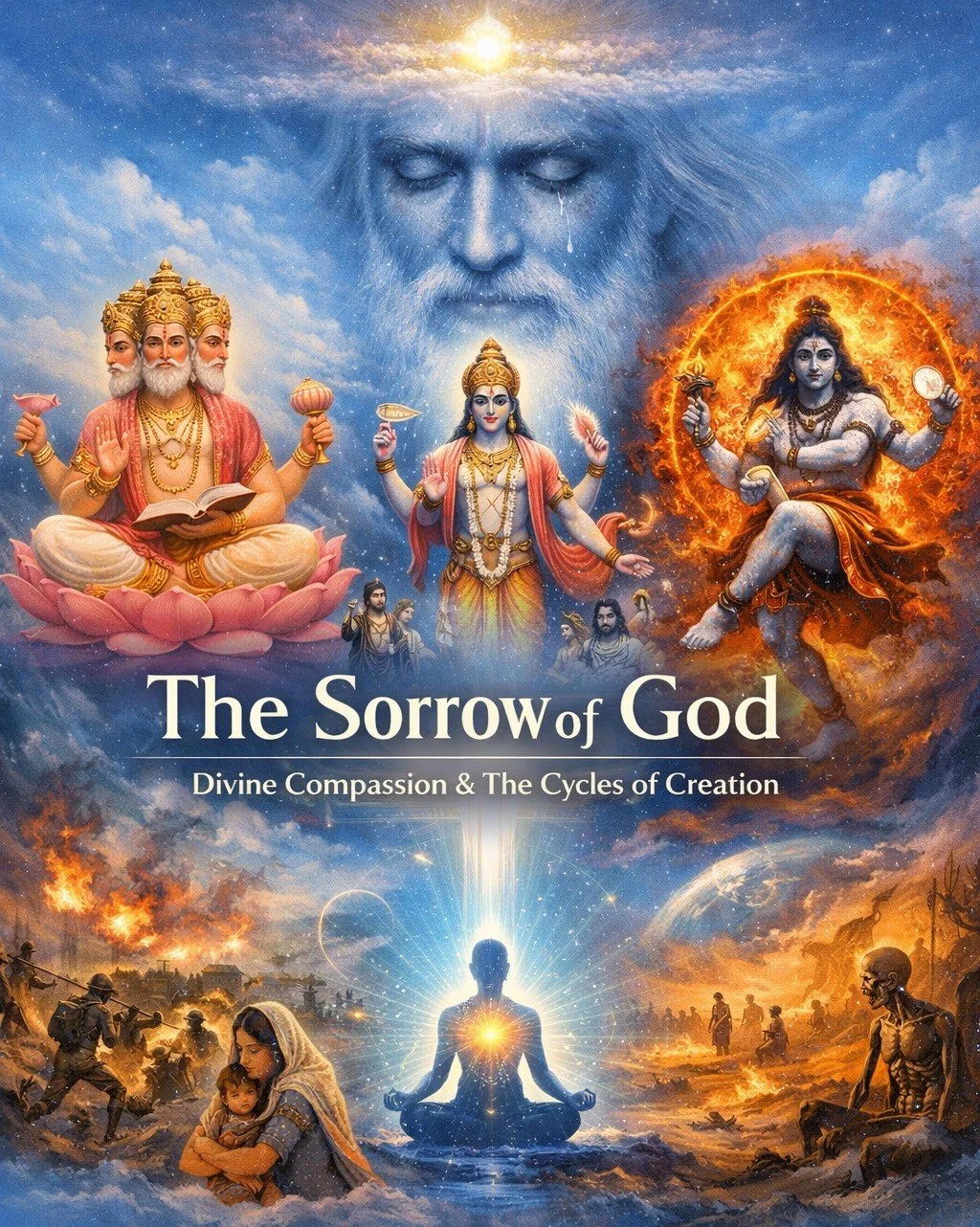

Explore the deep spiritual cosmology of planetary souls, alien interference, karmic zones, and cosmic wars based on Bapuji Dasharathbhai Patel’s knowledge. Understand how Paramshanti (supreme peace) can restore universal balance and protect human consciousness from artificial and dark energies.