
Episode 1477, Why Does a Gnani Still Experience Suffering? ज्ञानी को भी दुख क्यों होता है?
The Mystery of Liberation, Witness Consciousness, and the Nature of the Soul
A profound spiritual question often arises in the minds of seekers: If a person is truly enlightened, liberated, and established in Self-knowledge, then why does that person still experience suffering?
This is not a wrong question. Rather, it is a sign of spiritual maturity. Without understanding this mystery, the true meaning of liberation can never become clear. A true Gnani does not consider himself liberated out of ego or pride. He knows his freedom through direct inner realization and spiritual understanding. Yet even after Self-realization, bodily pain, mental sensations, hunger, thirst, heat, cold, and worldly situations continue to arise. Therefore, the first thing that must be understood is:
By What Standard Do We Measure Liberation?
Liberation is often misunderstood. Many imagine that enlightenment means the disappearance of all bodily sensations and worldly experiences. But the scriptures explain otherwise. Two traditional examples are given in the scriptures to explain how spiritual welfare or inner upliftment may sometimes happen unexpectedly:
1. Kakataliya Nyaya — The Crow and the Branch
A crow sits on a tree branch, and at that exact moment the branch breaks. People say, “The crow sat and the branch broke.” But the crow did not break the branch. It was merely an accidental coincidence. Similarly, while practicing spiritual discipline, sometimes sudden spiritual experiences, peace, meditation, or inner upliftment may happen unexpectedly. But this is not a guaranteed rule.
2. Gunakshara Nyaya — The Insect and the Letters
An insect moves through wood creating random holes, and by coincidence the holes resemble letters or shapes. The insect never intended to write anything. Likewise, sometimes spiritual benefit appears accidentally or unexpectedly. But the definite path remains:
Right understanding, Constant remembrance, Deep contemplation
The speaker emphasizes that spiritual practice should never be done with expectations of miracles, material success, or sudden blessings. The purpose of sadhana is:
mastery over the mind, awakening of the soul and remembrance of Truth.
Not miracle-seeking.
After Knowledge, Only Maintenance Remains
Once true knowledge is attained, the condition of the seeker becomes like a completed house. The construction is finished. Now only cleaning, maintenance, and upkeep remain.
Similarly, after Self-realization:
the essential spiritual work is complete and only maintenance of awareness remains.
Another example is given:
A student finishes studies and gets a job. After that, even if he occasionally wastes time playing cards, his life is not destroyed because his goal has already been achieved. But if he spent all his study years playing cards, it would have caused harm.
Likewise, after realization; sweeping the floor, serving others, feeding a child, doing household work, none of these waste the Gnani’s life, because the primary goal of liberation has already been fulfilled.
Liberation Is Not Somewhere Else
Liberation is not a separate place hidden somewhere in the universe. It is not a distant heavenly location. Liberation is simply remembrance of the Truth that has already been forgotten.
The moment one truly remembers: “I am free.” the bondage begins to dissolve. The discourse repeatedly emphasizes: Liberation is remembrance. Not acquisition. Not becoming something new. But remembering what already is.
The Most Important Work in Life
People say: “We do not have time.”
But the speaker explains: Yes, business is important. Family duties are important. Worldly responsibilities are important. But among all important things, the most important is: Self-welfare and soul awakening.
A beautiful teaching is shared: “As long as life continues, there will never be free time from work.
Therefore, take out some time for life itself.”
A traditional verse is explained:
Leave 100 tasks if necessary, but eat properly if hungry
Leave 1000 tasks, but bathe properly.
Leave 100,000 tasks, but fulfill your responsibilities and charity.
But leave millions of tasks if necessary, and remember God.
Because remembrance of Truth is the highest priority.
The Body Must Still Be Maintained
Neglecting the body and duties is also harmful. A damaged machine cannot function properly. Therefore: doctors, hospitals, medicines, bodily care, responsibilities, all remain necessary.
But above everything remains: remembrance of Truth. Remembrance Itself Is Liberation
An extraordinary example is given:
Suppose ancestral treasure is buried beneath your own house, but you wander door to door in poverty.
The treasure was never absent. Only remembrance was absent. The moment someone reminds you, your poverty disappears.
Similarly:
God does not need to be earned,
Truth does not need to be created,
the soul does not need to become divine.
The Divine already exists. Only remembrance is missing.
Therefore: Remembrance itself is liberation. Liberation is not another object, another world, another condition, or another location.
Why Does a Gnani Still Experience Pain?
Now the central question is addressed directly.
After enlightenment: horns do not grow, tails do not appear, the laws of nature do not stop.
The body continues functioning naturally.
A Gnani still: feels hunger, experiences heat and cold, notices taste, feels bodily sensations.
But the difference is: The Gnani is not disturbed internally. If the food has less salt, he notices it. If the bread is cold, he notices it. But there is no inner agitation.
This is called:
Titiksha — the power of endurance.
The mastery of the senses does not mean destruction of sensation. It means remaining undisturbed amidst sensation. Ordinary people become disturbed by:
small discomforts, harsh words, minor inconveniences, household conflicts, tiny emotional reactions.
But the Gnani remains inwardly stable.
The Teaching of the Bhagavad Gita
The Gita teaches: Heat and cold, pleasure and pain arise through contact of the senses with objects.
These experiences: come, go and are temporary. Therefore, tolerate them.
Another verse says: The one who remains undisturbed by these becomes worthy of immortality.
The scriptures never say: “A Gnani feels nothing.”
They say: “A Gnani is not shaken.” That is the difference.
Poverty of the Mind
A person may hide material poverty, but cannot always hide the poverty of the mind.
The discourse explains how many people constantly complain:
“I don’t have this.” “God did not give me that.” “I cannot tolerate this.” “I need everything perfect.”
Even inability to tolerate slightly cold food may reveal inner weakness of mind. Indian spiritual culture teaches adaptability. To remain content in: food, clothing, shelter and circumstances.
This is true strength.
The Mystery of Dream and Waking
Every day nature teaches a deep spiritual truth. When we awaken from a dream, we realize:
no real gain occurred, no real loss occurred.
In the dream:
marriage happened, children were born, suffering occurred.
But upon waking, nothing actually happened. Similarly, spiritual awakening reveals the unreality of worldly mental suffering. An important insight is shared: In dreams, you are not free to wake up whenever you wish.
But in the waking state, freedom exists. This freedom is the greatest tool of the spiritual seeker.
Witness Consciousness — Sakshi Bhava
The Mandukya Upanishad speaks of:
waking, dreaming, deep sleep and a fourth state:
Turiya — the Witness Consciousness.
The soul itself: neither sleeps, nor wakes, nor dreams. It merely witnesses.
The speaker repeatedly emphasizes:
The soul is always the witness. The mind thinks. The intellect decides. The senses act. But the soul simply observes. A humorous example is given: You cannot tell the soul: “Wake me at 5 AM.”
The soul would say: “I am only the witness. Set an alarm clock yourself.” The witness never becomes entangled in the drama. Just as a movie watcher remains safe while characters suffer inside the movie, the soul remains untouched.
Why Human Life Becomes Suffering
The soul always remains free. But: the mind becomes distorted, the intellect becomes corrupted, ignorance takes control. Then the individual forgets witness consciousness and identifies with suffering. Even ghosts and spirits are described as beings trapped in certain mental conditions and attachments. The soul itself remains unchanged.
Karma and Worldly Relationships
People often complain:
“Nobody understands me.” “I sacrificed everything.” “Even my children abandoned me.”
The discourse explains these as karmic exchanges and worldly transactions. Yet faith must remain in the Divine order. Sometimes even strangers may come to serve a person whose destiny supports it. Attachment creates suffering. Where there is no attachment, suffering loses its grip.
Becoming Established in the Self
The speaker explains why spiritual masters repeatedly ask seekers to become “Atma Swaroop” — established in soul consciousness.
This means:
“I am not the mind.”
“I am not merely the intellect.”
“I am the witness.”
When:
the mind becomes witness, the intellect becomes witness, awareness becomes witness,
then deep peace emerges.
The Final Remedy — Katha and Remembrance
When doctors give up hope, what remains? The discourse says: Like King Parikshit, spiritual discourse and remembrance become the final remedy. Not stories merely for entertainment, but remembrance of the eternal Truth. The body is temporary. No guru can make the physical body immortal.
The real work of the Guru is:
removing attachment from the perishable and stabilizing awareness in the imperishable.
Three Great Spiritual Analogies
1. Rope and Snake
A rope appears as a snake in darkness.
The rope is not the cause of fear.
Ignorance is the cause.
Similarly:
the soul appears as the limited individual because of ignorance.
2. Sun and Reflection
The sun reflected in water appears to be many suns. But the real sun never changes.
Likewise: waking states, dreams,thoughts, personalities, appear and disappear. Pure consciousness remains untouched.
3. Pot and Space
Space inside a clay pot appears separate from the vast sky. When the pot breaks, space loses nothing. Similarly: when the body dies, the soul loses nothing.
Bondage, Liberation, and the Individual Self Are Ultimately Conceptual
A very deep teaching is given:
bondage,
liberation,
individuality,
are all conceptual appearances within consciousness.
As long as Truth is not directly realized, they appear real.
But upon realization, they dissolve like the snake disappearing when the rope is clearly seen.
Final Answer
If answered in one sentence: A Gnani still experiences pain at the level of body and mind because the body continues under the laws of nature. But inwardly, the Gnani knows: birth, death, pleasure, pain, waking, sleeping, are appearances within consciousness and do not touch the true Self.
Pain touches: the senses, the mind,
but not the Self. This is the secret of the enlightened being.
Practical Exercises Given in the Discourse
The discourse concludes with practical spiritual exercises:
Daily Self-Reminder
Three times a day ask: “Am I remembering the Self, or forgetting it?”
Practice Titiksha
Increase endurance and tolerance.
Treat the Day Like a Dream
Before sleep, review the day as if it were a dream.
Reduce Mental Poverty
Sometimes deliberately accept discomfort in: food, clothing, accommodation,
to weaken attachment and mental weakness.
Reflect on the Analogies
Meditate daily on: the rope and snake, the sun and reflection.
Repeat inwardly: “I am not the reflection. I am the sun.”
Conclusion
The discourse ultimately teaches that suffering belongs to: the body, the senses, the mind.
But the soul remains eternally: pure, free, untouched, and established as the witness. The enlightened being does not become emotionless or physically invulnerable. Rather, the enlightened being ceases to identify with the changing drama of mind and body.
This is the mystery of the Gnani.

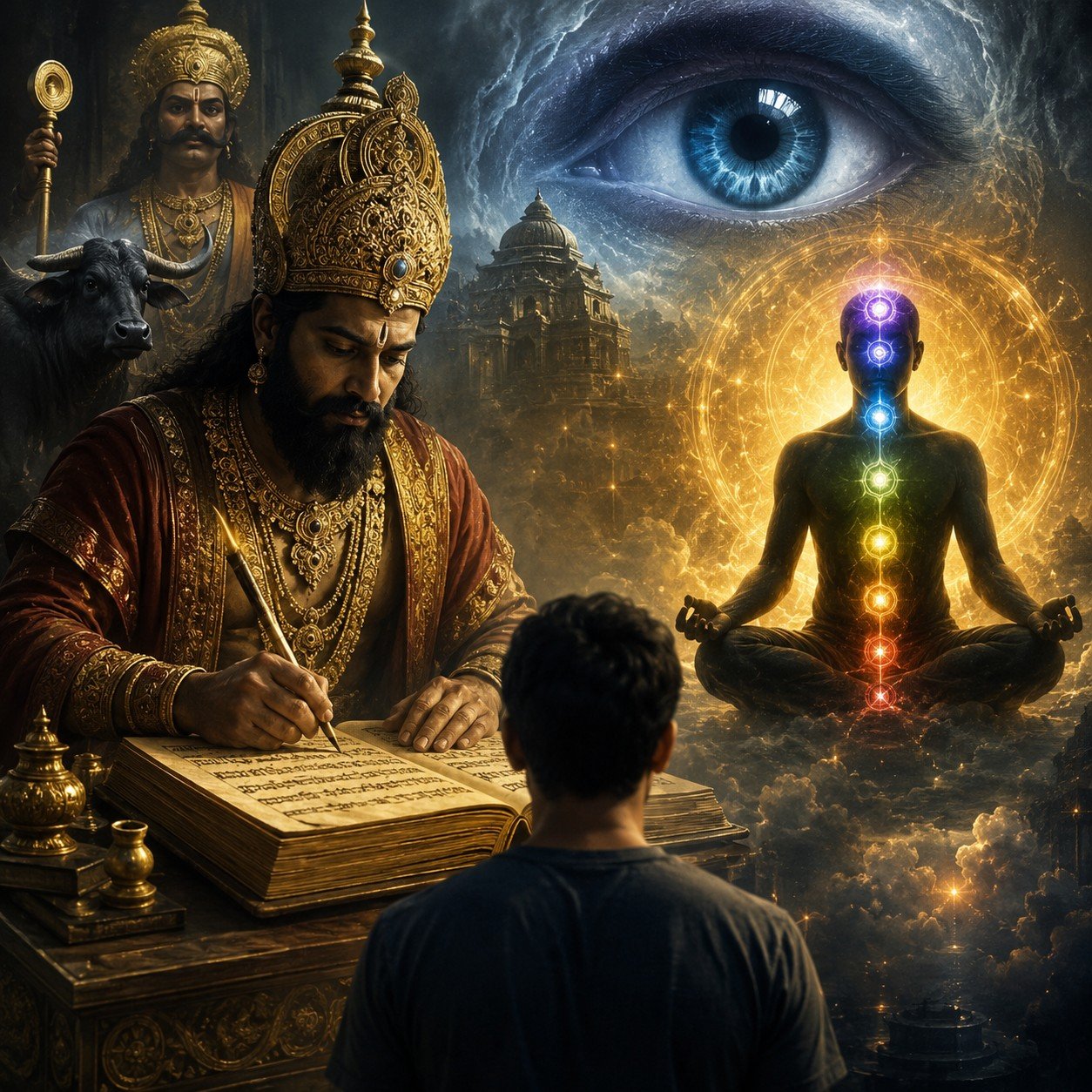

Discover the true meaning of Amrit Vela beyond the early morning hours. Learn the four types of Amrit Vela, the greatness of the Sadguru, Brahma Gyan, the symbolic meaning of Samudra Manthana, the power of the Divine Name, Guru-disciple wisdom, meditation, self-realization, and the path to Supreme Peace through Behad spiritual knowledge.