
Episode 1339, Why Do We Experience the Consequences of Others’ Karma? And How Can We Avoid It?
The Law of Karma, Collective Responsibility and the Path to Spiritual Freedom
Introduction: Why Do We Suffer Because of Others’ Actions?
Many people often wonder why innocent individuals suffer because of the actions of others. For example, when a terrorist attack occurs and innocent people lose their lives, the victims and their families may ask: “What was our fault? Why did this happen to us?”
Such incidents raise deep spiritual questions about karma, destiny, and the hidden connections between souls. According to spiritual wisdom found in scriptures such as the Bhagavad Gita, Upanishads, and Yoga Vashistha, the events of life are not random. They are connected through subtle karmic bonds that link souls across lifetimes. Understanding these karmic laws helps us see why people sometimes suffer due to the actions of others and how one can become free from these cycles.
The Concept of Collective Karma
One of the key spiritual principles is collective karma, also called shared or joint karma. When individuals are deeply connected as a family, society, or nation, the actions of one person can influence the lives of many. For example, if one member of a family commits wrongdoing, the entire family may suffer socially, financially, and emotionally. Society may judge them, authorities may investigate them, and their reputation may suffer even if they were not directly responsible. This phenomenon reflects the rule of group consciousness, where souls connected through karmic bonds experience the results of shared actions.
Why Souls Are Born in Certain Families
A common question arises: Why is someone born in a particular family or environment? According to spiritual teachings, birth is not accidental. Souls are drawn into families and communities where karmic accounts from previous lives must be settled.
For example, a child may be born into a family and immediately bring great financial burden or suffering due to illness or medical expenses. Spiritually, this can be seen as the settlement of past karmic debts between souls. Ancient epics such as the Mahabharata also describe this concept through stories like that of Abhimanyu, whose life and death were connected to deeper karmic purposes.
Karmic Bonds Across Lifetimes
The relationships we experience in this life—parents, siblings, friends, or enemies—often arise from karmic bonds formed in previous births. Souls repeatedly meet one another to settle these karmic accounts. This process is sometimes described as a “karmic ledger,” where every action, intention, and interaction is recorded. Just like a financial ledger tracks deposits and debts, the karmic ledger records spiritual accounts between souls. Over multiple lifetimes, these accounts continue until they are fully resolved.
The Principle of Silent Participation
Another important spiritual law is the principle of participation. If someone silently supports wrongdoing—either through approval, silence, or indirect assistance—they may also share part of its karmic consequences. Silence in the face of injustice can become a form of participation. History and scripture often illustrate this principle. For instance, during the humiliation of Draupadi in the Mahabharata, those who remained silent became indirectly responsible for the injustice. Therefore, spiritual teachings encourage individuals to stand with truth rather than remain neutral when confronted with wrongdoing.
Attachment and the Experience of Suffering
Suffering often arises from attachment. The deeper our emotional attachment to people or situations, the greater the pain we feel when events change. If a stranger dies, we may feel little sadness. But if someone close to us passes away, grief can be overwhelming. This shows that suffering is closely tied to attachment rather than the event itself. Spiritual wisdom teaches that recognizing the true identity of the soul helps reduce attachment and emotional suffering.
The Witness State of Consciousness
One of the most powerful spiritual practices is developing the witness state of mind. In this state, a person realizes:
I am not the body; I am the soul.
I am merely a witness to the events of life.
When someone adopts this perspective, they observe life’s events without becoming overwhelmed by joy or sorrow. The soul remains unaffected, while the mind experiences emotions related to the body and circumstances. This awareness gradually frees the individual from the drama of karma.
The Role of Meditation and Spiritual Awareness
Meditation and spiritual practices strengthen the soul’s awareness and raise the level of consciousness. When consciousness becomes powerful, a person stops absorbing the negativity of others and instead becomes a source of purification. Through practices like Raj Yoga meditation, individuals learn to connect with the Supreme Being and create a powerful spiritual aura around themselves. When the soul connects deeply with the Divine, it enters a divine protective field where the karmic actions of others cannot disturb its inner peace.
The Divine Relationship Between Soul and Supreme Soul
Spiritual scriptures emphasize that the soul ultimately has only one eternal relationship—the relationship with the Supreme Soul. The Bhagavad Gita states that by remembering the Supreme Being and acting without attachment to results, one can be freed from karmic bondage and attain liberation. When the mind becomes fully focused on the Divine, worldly attachments weaken, and the soul experiences profound inner peace and clarity.
Freedom From the Cycle of Karma
Freedom from karmic cycles can be achieved through several spiritual practices:
Developing the witness state of mind.
Maintaining good wishes and positive intentions for all beings.
Practicing meditation and connecting with the Divine.
Using discernment to avoid negative influences and harmful associations.
By practicing these principles, a person can gradually break the chains of karmic bondage and move toward spiritual liberation.
The Ultimate Spiritual Truth
The Upanishads teach a simple yet profound truth: the soul comes alone, leaves alone, and carries only its karma with it.
Nothing from the material world—wealth, possessions, or relationships—can accompany the soul after death. Only the actions and intentions performed during life travel with the soul into future experiences. Therefore, the most valuable action a person can perform is cultivating compassion, wisdom, and universal goodwill.
Conclusion: The Path to Paramshanti
The world operates through the law of karma, where every action eventually produces a corresponding result. Understanding this law helps individuals rise above confusion and suffering. By recognizing the true identity of the soul, maintaining detachment from worldly events, and establishing a deep connection with the Supreme Being, one can transcend the cycle of karmic bondage and experience . When this wisdom awakens within, life becomes a journey of awareness, compassion, and spiritual freedom, guiding the soul toward ultimate liberation.

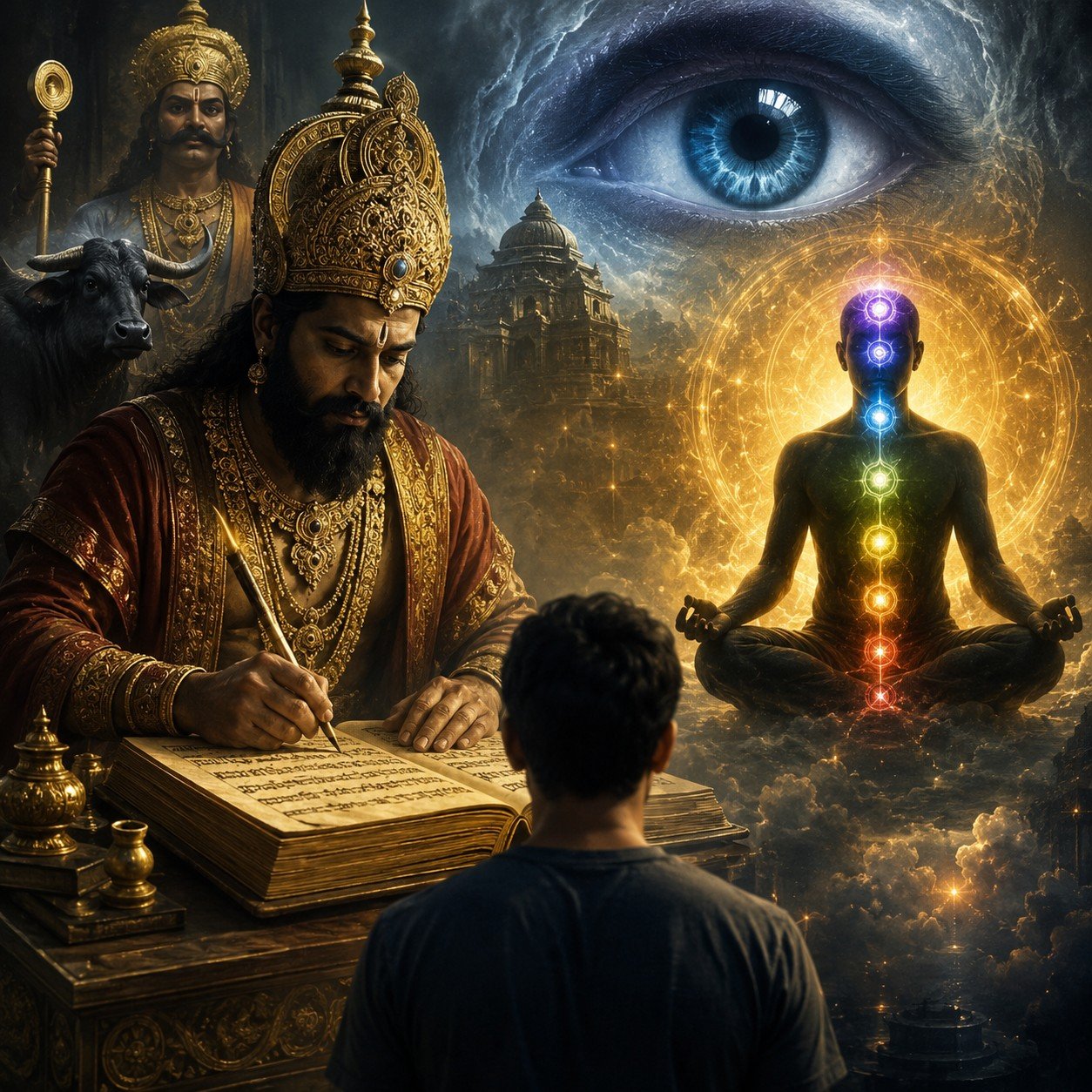

Discover the true meaning of Amrit Vela beyond the early morning hours. Learn the four types of Amrit Vela, the greatness of the Sadguru, Brahma Gyan, the symbolic meaning of Samudra Manthana, the power of the Divine Name, Guru-disciple wisdom, meditation, self-realization, and the path to Supreme Peace through Behad spiritual knowledge.