
2020, Supermassive Black Holes: Scientific Perspective and Spiritual Interpretation(Supermassive Black Hole|अंतरिक्ष के अद्भुत रहस्य |Elemental Transformation|शिव का संस्कार)
Introduction
Black holes have fascinated both scientists and spiritual thinkers for decades. Modern astrophysics describes them as extremely dense cosmic objects with gravitational forces so strong that even light cannot escape. However, in Sanatan spiritual discourses, black holes are interpreted not merely as physical phenomena but as part of a deeper cosmic and metaphysical process involving creation, dissolution, and supreme light. Bapuji observe from the state of soul-consciousness and share th true knowledge about supper massive black holes
1. Supermassive Black Holes and the Galactic Center
According to scientists, a supermassive black hole exists at the center of our galaxy. From the scientific viewpoint, telescopes detect intense gravitational effects and radiation patterns, which indicate a massive compact object.
From the spiritual perspective described in the discourse:
The central region is not merely an object of darkness.
It is described as the great supreme abode (Param Dham) associated with Mahadev.
What appears black is said to be due to supreme light of such subtle quality that ordinary instruments cannot capture it. Thus, the “blackness” is interpreted as a limitation of perception rather than absence of light. The quality of light is of 10 kalas (levels of divine luminosity).
2. Why Black Holes Appear Black
The discourse explains that cameras and telescopes cannot capture extremely subtle forms of “supreme light.”
Key idea:
Where there is extremely refined light (param light), it may appear black to physical instruments.
In this interpretation, the black appearance is not emptiness but an indication of transcendent luminosity beyond sensory detection.
3. Black Hole as a Cosmic Dissolution Process
The transcript describes black holes as part of a grand cosmic cycle of creation and dissolution Ordinary fire is not sufficient to dissolve the universe, so a supreme fire element is created.
The described process
There are said to be sixteen stages in this process.
During great cosmic cycles, a divine force (symbolically Shiva) enters the sun.
A supreme fire (param agni) is generated.
The universe gradually transforms through stages:
Supreme Fire → atomic state → Supreme air →Supreme space → Supreme subtle elements → supreme light
The entire cosmos becomes increasingly subtle and finally merges into a unified state.
In this narrative, a black hole represents the stage where the universe contracts and becomes highly condensed.
At the time of creation, Shiva had the power of 1 kala, supermassive beings had 8–12 kalas, and Paramdham had 16–20 kalas.
4. Shrinking of the Universe into Subtle States
The discourse repeatedly emphasizes conversion rather than destruction.
“Burning to ashes” is interpreted as transformation into subtler elements.
The universe becomes extremely small and condensed.
Eventually everything returns to its original luminous essence.
This resembles a spiritual version of cosmic contraction, where dissolution is a return to origin rather than annihilation. When the supreme light diminishes after the 100 years of Brahma, a phase of dissolution begins. Then the universe is drawn back and unified again.
5. Number of Black Holes
A striking idea presented is:
As many suns as exist, there are said to be as many black holes.
Infinite universes are continuously being created and dissolved.
This expresses a multiversal and cyclic cosmology, where black holes are natural by-products of constant cosmic change.
6. Why Their Gravity Is So Powerful
The transcript attributes strong gravity to the presence of “supreme fire” or condensed energy.
Conceptually: When matter converts into subtler states, density increases. Increased density results in stronger gravitational pull.
Thus, black holes attract: ----Nearby stars----Solar systems---Even other black holes with lesser power
This parallels the scientific observation that black holes grow by accretion and mergers, though the explanation here is spiritualized.
7. Growth and Transformation of Black Holes
The discourse describes black holes as evolving entities:
They absorb surrounding systems.
Their power accumulates.
Eventually this energy is refined and converted back into supreme light.
At the highest stage, the accumulated cosmic power returns to the original soul-like essence, symbolizing ultimate unity.
8. Creation After Dissolution
After total condensation and transformation:
The supreme state initiates creation again.
New universes emerge from the refined cosmic energy. This reflects a cyclical cosmology:
Creation → Expansion → Contraction → Re-creation.
9. Limits of Scientific Observation
The discourse repeatedly notes that:
Telescopes can detect disappearance of stars or gravitational effects.
But the full metaphysical process cannot be captured.
Thus, science observes outer phenomena, while spiritual insight claims to perceive inner processes.
Conclusion
Black holes can be understood through two complementary lenses:
Scientific view: Ultra-dense regions of spacetime with extreme gravity.
Spiritual view (from the discourse): Points of cosmic transformation where the universe dissolves into subtler states and eventually returns to supreme light before new creation begins.
In this synthesis, black holes are not merely destructive forces but symbols of cosmic recycling, transformation, and the return to origin.

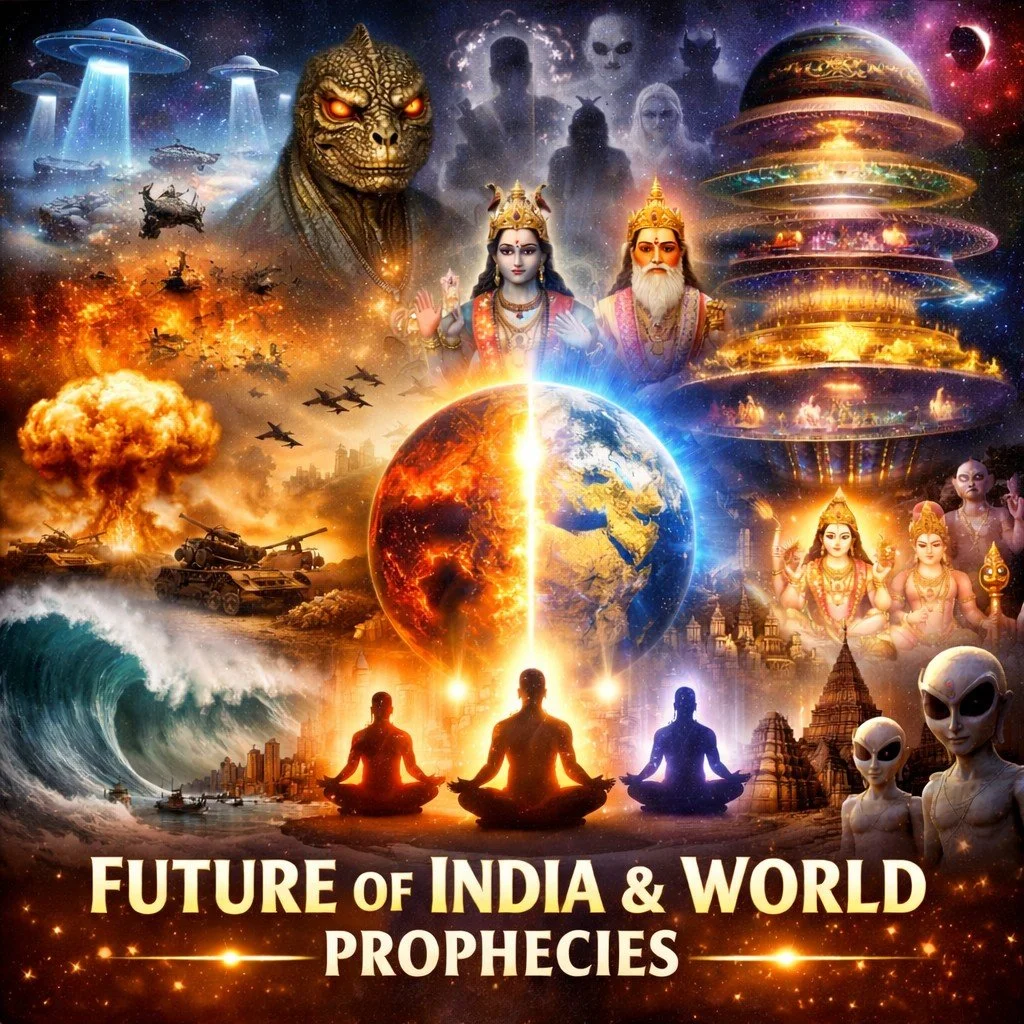

Discover Bapuji's profound spiritual explanation of the history of the universe, from Param Maha Shiva and the creation of souls to Paramdham, celestial dimensions, galaxies, solar systems, Earth, karma, 84 lakh yonis, Mahakaal Pralay, black holes, cosmic time cycles, parallel universes and the infinite multi-universe. Explore the deeper knowledge of Behad Gyan beyond science, mythology and conventional cosmology