
Who is GOD? Where is he? What Does he do? A Spiritual Exploration
The Eternal Search for the Divine
Humanity has always asked four timeless questions: Who is God? Where is He? What does He do? And what does He not do? This episode explores these questions with depth, clarity, and spiritual insight. It is said that God is pleased not with rituals, wealth, or showmanship, but with true intention. A person becomes successful not by changing the world, but by transforming himself. The path of truth is difficult, yet blessed — for only a few courageous seekers walk upon it. Many saints and gurus have proclaimed that a time of reckoning will come when God descends into creation. That era, according to sages, has arrived.
Spiritual Seeking and the Weight of Responsibility
True spiritual service is never easy. Maintaining centers, caring for people, guiding confused minds — all of it demands intense energy. Even great teachers have said that building ashrams often brings sorrow because responsibilities become heavy. The Pandavas understood this and focused not on masses but on 108 quality souls. In spiritual life, the value lies not in numbers but in purity and readiness.
Do Not Search Outside — God Resides in the Heart
A beautiful reminder echoes through the discourse: “Do not search for me in the whirlwinds of earth and sky. If I am not in your heart, I am nowhere.”
God is not found in external noise, but in inner experience and an unwavering state of remembrance. Faith — The Foundation of the Impossible To achieve the impossible, one needs faith. Even modern scientists — who call themselves atheists — unconsciously cling to rituals before critical missions. This shows that deep inside, the human heart relies on something higher. Faith brings joy, removes tension, and opens the path of divine possibility. Arjuna captured only Krishna out of an entire army because of faith. Similarly, a seeker must choose the Supreme above billions of distractions.
Paths, Religions, and the Universal Presence of God
There are endless religions, beliefs, temples, mosques, and spiritual shops in the world. Each offers a way to God, but true progress happens only when faith and intellect unite. A person becomes what he believes. If one believes, “I am divine,” the intellect begins to rise. If one believes, “I am weak,” bondage continues.
The True Goal: The Supreme Abode
Whatever the mind’s confusion, weakness, or error — if the goal is fixed, the soul will reach it. Thoughts may falter, but a determined intention cannot be stopped. Those who set their goal as the Supreme Abode (Param Dham) inevitably move toward it.
Who Is God According to Hindu Scriptures?
The Vedas declare:
Brahman is truth. The world is an illusion.
God Is Brahman — Limitless, Formless, Infinite
· God is not male or female
· Not a deity
· Not Brahma, Vishnu, or Mahesh
· Not earth, water, fire, air, or sky
· Not Durga, Ram, Krishna, or Buddha
· Not a guru or ruler
God — Brahman — is formless, timeless, spaceless, and beyond all attributes.
Avatars Are Not Brahman
Rama, Krishna, and Shiva’s physical manifestations were for the upliftment of humanity. The formless Shiva resides in the supreme abode as pure consciousness. Shivling represents that formless divine light.
Why God Seems Present Everywhere
Because creation emerges from Him, His energy pervades everything — from a grain of sand to infinite galaxies. However, the formless Brahman cannot be perceived by the senses, only experienced in deep realization. This is the cause of human sorrow: We imagine God; we do not experience Him.
The Nature of the Universe and the Supreme Abode
The universe is layered, infinite, and multidimensional. At its center is a white void, the region where higher beings dwell. Above all exists Param Dham (the Supreme Abode) where the formless Brahman eternally resides. Shankar takes form in the Himalayas, but the formless Shiva remains untouched, unmanifested, unknowable.
How the Human Mind Creates Illusion
When we decide that “God is only in the temple,” we limit our intellect. Similarly, when we assume a journey will take 10 hours, the mind prepares accordingly. The intellect functions by programming.
Therefore, sages created places of worship to help the mind focus.
But the path of knowledge requires knowing: God is everywhere — without restriction of time or space.
Every Soul Is a Fragment of Brahman: We are sparks of the Supreme, but the veil of illusion prevents us from realizing it. Self-realization destroys this veil. As the Kenopanishad teaches, even gods like Indra were not free from ignorance. They too had to learn Brahman-knowledge from a guru on earth.
Thus, becoming a deity is not the goal — becoming aware of the Brahman within is.
The True Qualities of God
God is:
· Formless
· Unchanging
· Immortal
· Fearless
· Unborn
· Without alternatives
· Without bondage
He was never bound, is never bound, and will never be bound. Imagine thinking of yourself the same way — free, unbound, eternal. How powerful would you become?Bondage is only a belief; freedom is our true nature.
The Divine Purpose: Bliss
The greatest attraction in existence is joy. Creation itself is an expression of divine joy.
But pure joy is rare because the human mind is clouded with fear, news, disease, negativity, and worldly identities.Your soul is made of joy — but illusion has hidden it.
Conclusion: The Eternal Brahman
The Rigveda declares: That which existed before creation, exists now, and will exist after the universe dissolves — that is Brahman.
We win or lose in life only by His will.
He resides beyond time, beyond space, beyond imagination.
To know God, one must know the self.
The journey is inward.
The truth is eternal.
The Divine is omnipresent.
And the soul is eternally connected to Brahman.
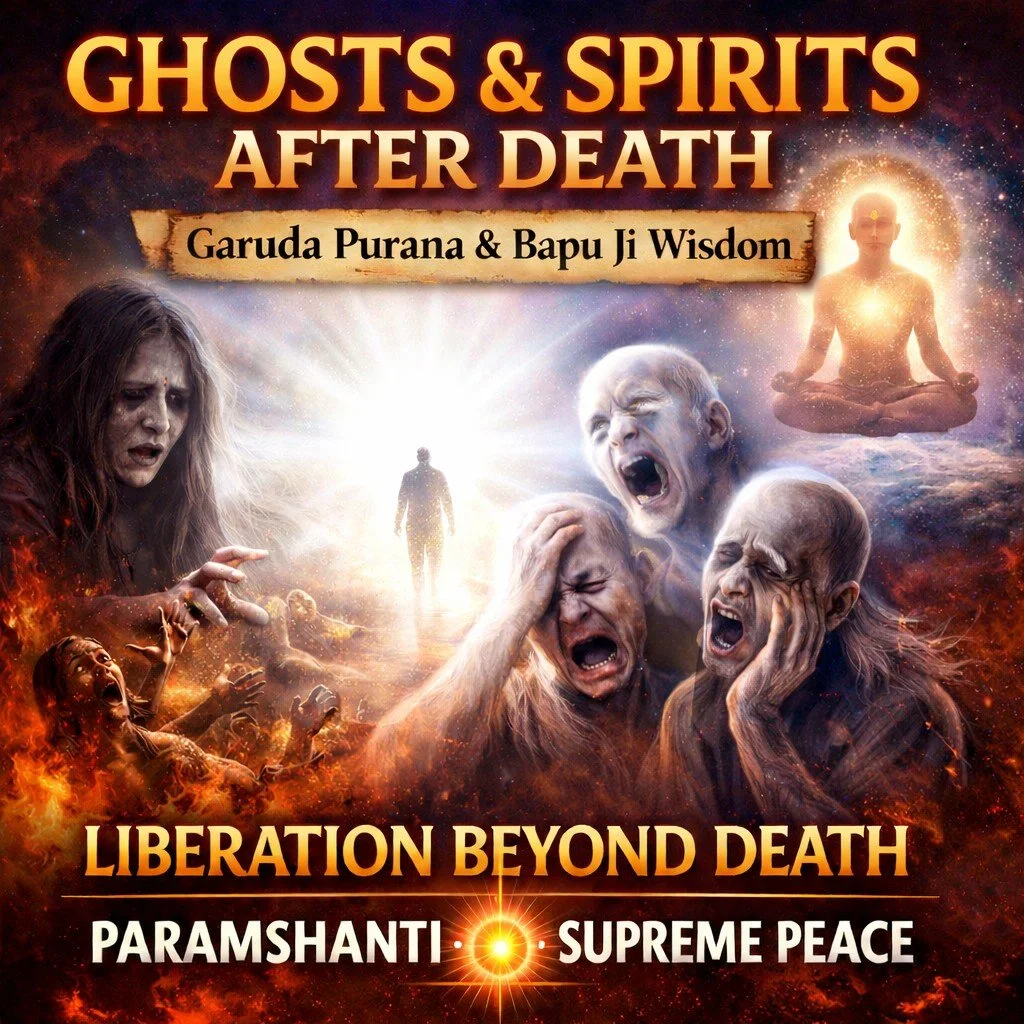
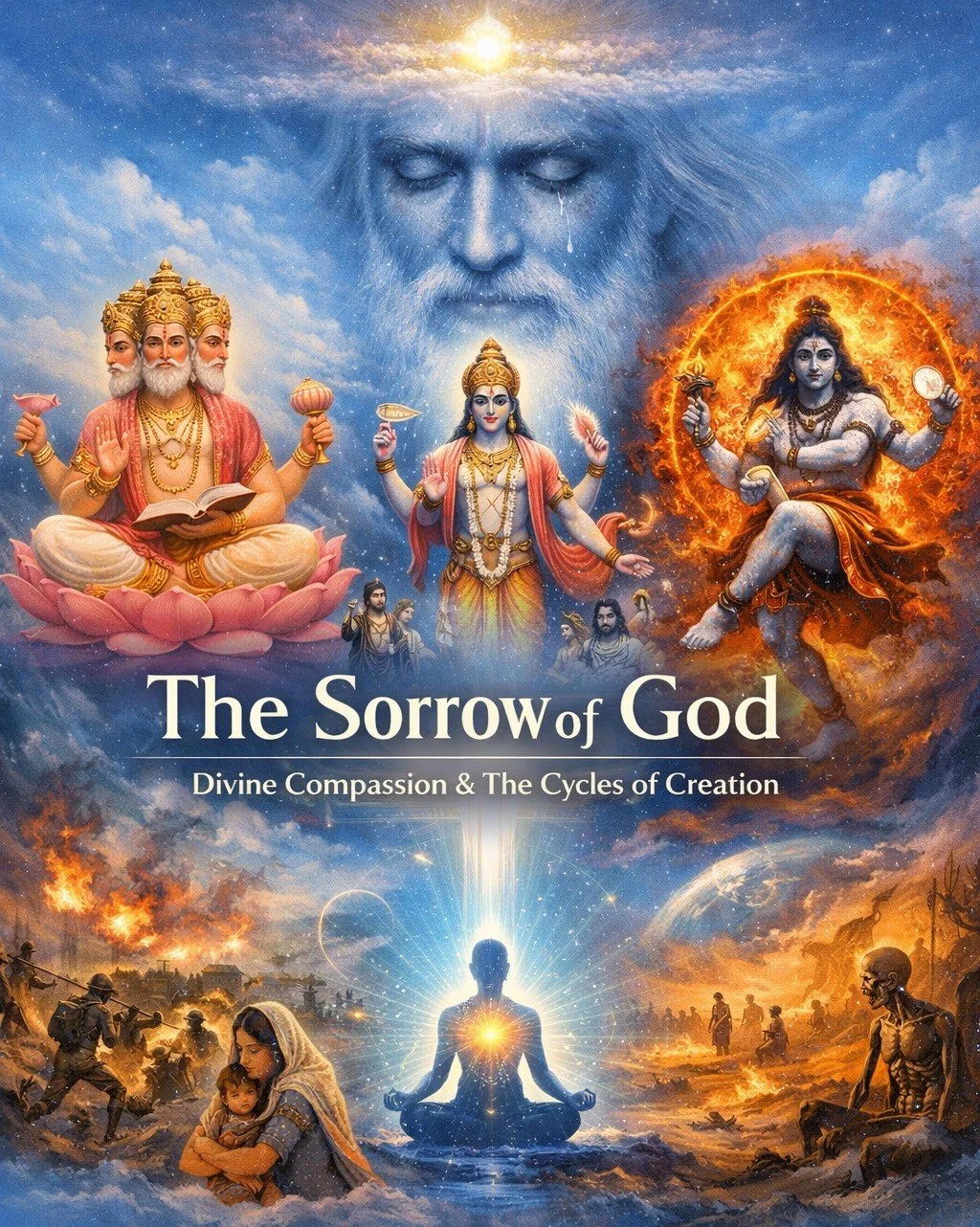

Explore the deep spiritual cosmology of planetary souls, alien interference, karmic zones, and cosmic wars based on Bapuji Dasharathbhai Patel’s knowledge. Understand how Paramshanti (supreme peace) can restore universal balance and protect human consciousness from artificial and dark energies.