
The Hidden Truth Behind Demon Worship and the Path of Self-Realization
The Rising Question: Why Worship Demons?
While the fair uplifted many souls, another question arose in society. A political leader from Nagaland recently raised concerns about the worship of demonic entities in certain regions. This provokes a deeper inquiry — why would anyone worship demons? What favor did they do that earned them reverence? To answer this, we must view the matter through multiple lenses — historical, religious, psychological, and spiritual.
1. Historical Perspective: Fear-Based Worship
In ancient civilizations, when people could not understand the forces of nature — storms, epidemics, death, or mysterious powers — they began to fear them. Out of fear, they started worshipping these forces to prevent harm. Thus began fear-based worship, not love-based devotion. This pattern continues even today — worshipping ghosts, spirits, or planetary deities to prevent misfortune rather than to gain inner peace. Such worship arises from ignorance and fear, not divine knowledge.
2. Religious and Cultural Perspective
Traditions evolved that recognized both divine and demonic powers as parts of the universal fabric. Hence, to balance these energies, rituals of Shanti (peace) and graha dosha nivaran (planetary pacification) developed. In the West, similar patterns appear — satanic groups worship demonic symbols as representations of freedom and rebellion. In truth, both are manifestations of ignorance. Earlier, humanity worshipped only Brahma, Vishnu, and Shiva — the trinity of creation, sustenance, and transformation. Today, even ghosts and spirits are given temples and revered as deities. Cigarettes, liquor, or animal offerings are made — all reflections of a fallen consciousness.
3. Psychological Perspective: Attraction to the Forbidden
The human mind is drawn not only to goodness but also to what is forbidden and dark. Some people find rebellion against divine order thrilling — seeing demonic figures as symbols of independence. This fascination with darkness arises from the ego and a false sense of power. However, these powers only tempt. They promise wealth, influence, or victory over enemies but never lead to inner peace. The gain is momentary; the loss — spiritual degradation — is immense.
4. Spiritual Perspective: Connection with Asuric Powers
As Bapuji explains, when a person becomes dominated by lust, greed, anger, or ego, their consciousness connects with asuric (demonic) vibrations. Such souls begin to worship or fear these subtle beings. The worship of demons, therefore, is not out of reverence but arises from bondage, fear, and dependence. Real worship is of the Supreme Father — the eternal source of all souls. All other forms of worship, divine or demonic, are reflections of the soul’s karmic vibration. When the soul realizes its eternal identity, worship naturally returns to its original source — the Supreme.
The Temporary Benefits and Hidden Bondage
Demon worship may yield temporary results — wealth, protection from ghosts, victory in conflicts — but the cost is heavy. These benefits are fleeting and leave behind negative karmic bonds. Like befriending a local thug for temporary safety, one may escape immediate fear but falls into deeper trouble later. Similarly, aligning with demonic forces brings short-term relief and long-term suffering.
Scriptural Insights: What the Vedas, Upanishads, and Gita Say
Vedas: The term “Asura” originally meant a being of great power. Later, it referred to those who oppose rita (cosmic order) and dharma (righteousness).
Upanishads: Asuras and Devas represent two tendencies within the human mind. The divine embodies truth, peace, and self-control; the demonic manifests as lust, greed, and ignorance. Liberation is possible only through divine tendencies.
Puranas: They narrate stories of powerful asuras — Hiranyakashipu (ego), Ravana (lust and pride), Mahishasura (arrogance). They performed penance but used their powers for selfish ends, bringing their downfall.
Bhagavad Gita, Chapter 16: Lord Krishna classifies divine wealth (fearlessness, purity, truth) and demonic wealth (pride, anger, greed, cruelty). Those filled with demonic tendencies fall into lower births, trapped in the cycle of birth and death.
Thus, every soul contains both divine and demonic tendencies. The path of self-realization requires recognizing and dissolving the demonic within — ego, anger, greed — to awaken divine consciousness.
The Divine Design: Why God Allows Demons
One may ask: why does God not destroy evil altogether? The answer lies in the law of duality and free will. The world operates on contrast — light and darkness, dharma and adharma. Without choice, experience and evolution are impossible. Demons test divine souls, keep ego in check, and create opportunities for divine incarnations. Without Ravana, there would be no Rama; without Hiranyakashipu, no Narasimha. Demons, too, are children of the same Supreme Father — their energy is merely misdirected. As Bapuji says: “Even demons will become divine when they receive the vibrations of supreme peace.”God does not destroy them by force but allows them the chance to transform through self-realization and karmic experience.
The Seven Nether Realms (Patal Lok) and Demonic Existence
According to the scriptures and Bapuji’s spiritual science, below Earth exist seven subtle realms: Atal, Vital, Sutal, Talatal, Mahatal, Rasatal, and Patal. These are planes of dense vibrations, home to demonic and ghostly entities. This is the basement of the Earth. Below us are our seven realms. Now there is the nether realm. This is the deepest, darkest realm. Here reside serpents, demons, and monstrous spirits. The energy here is the heaviest and negative
· Atal Lok: Domain of desire and illusion-where souls use magical powers to enchant humans and gods.
· Vital Lok: Realm of spirits and tantric forces, linked with the fire element.
· Sutal Lok: Abode of the generous demon king Bali, showing that even demonic souls can hold virtues.
· Talatal & Mahatal: Seats of scientific yet ego-driven energies; Nagas (serpents) here symbolize kundalini power and pride.
· Rasatal &Patal: Realms of intense darkness, indulgence, and negativity — often called hell.
Souls burdened by heavy sins and vices are naturally drawn to these regions after death. Yet, even they are part of divine creation and await transformation through light and supreme peace.
The Inner Battle: The True Meaning of Divine Victory
God’s incarnations — Narasimha, Rama, Krishna, Durga, Shiva — symbolize not outer wars but inner transformation. Each battle represents the destruction of ego, lust, and ignorance within.
Goddess Durga, yes, she ended Mahishasura and Shumbha-Nishumbha during Navaratri. Divine power always comes for balance. the power of woman is equally essential for the protection of dharma. Lord Shiva, yes, he ended Tripurasura. His terror was in all three worlds. When we put creation in crisis in the form of the demon Mahishasura, then God manifests in the form of Mahakal. So, demons are not just external beings; they are negative tendencies within humans. When Narasimha kills Hiranyakashipu, it symbolizes the destruction of ego that denies the divine. Rama’s victory over Ravana represents the triumph of righteousness over desire. Durga’s annihilation of Mahishasura portrays the victory of divine feminine energy over chaos. Thus, true victory lies in self-realization — conquering the inner demons through knowledge, purity, and remembrance of the Supreme.
The Path Forward: From Asuri to Divya (Demonic to Divine)
Every soul, no matter how fallen, carries the spark of divinity. The transformation from demonic to divine occurs when one awakens self-awareness, practices purity of thought, and vibrates with Paramshanti (supreme peace). Through the vibrations of supreme peace, all negative energies — ghosts, spirits, demons — will transform and return to light. They too are the children of the Supreme Father, created for the cosmic drama of evolution.
Conclusion: The True Worship
Real worship is not fear-based or ritualistic. It is the remembrance of the Supreme Soul within, the practice of divine qualities, and the spread of Paramshanti to every being and element. When we purify our inner world, the outer world transforms. The real demon to conquer is within — our anger, ego, greed, and ignorance. And the real divinity lies in awakening truth, love, purity, and supreme peace.

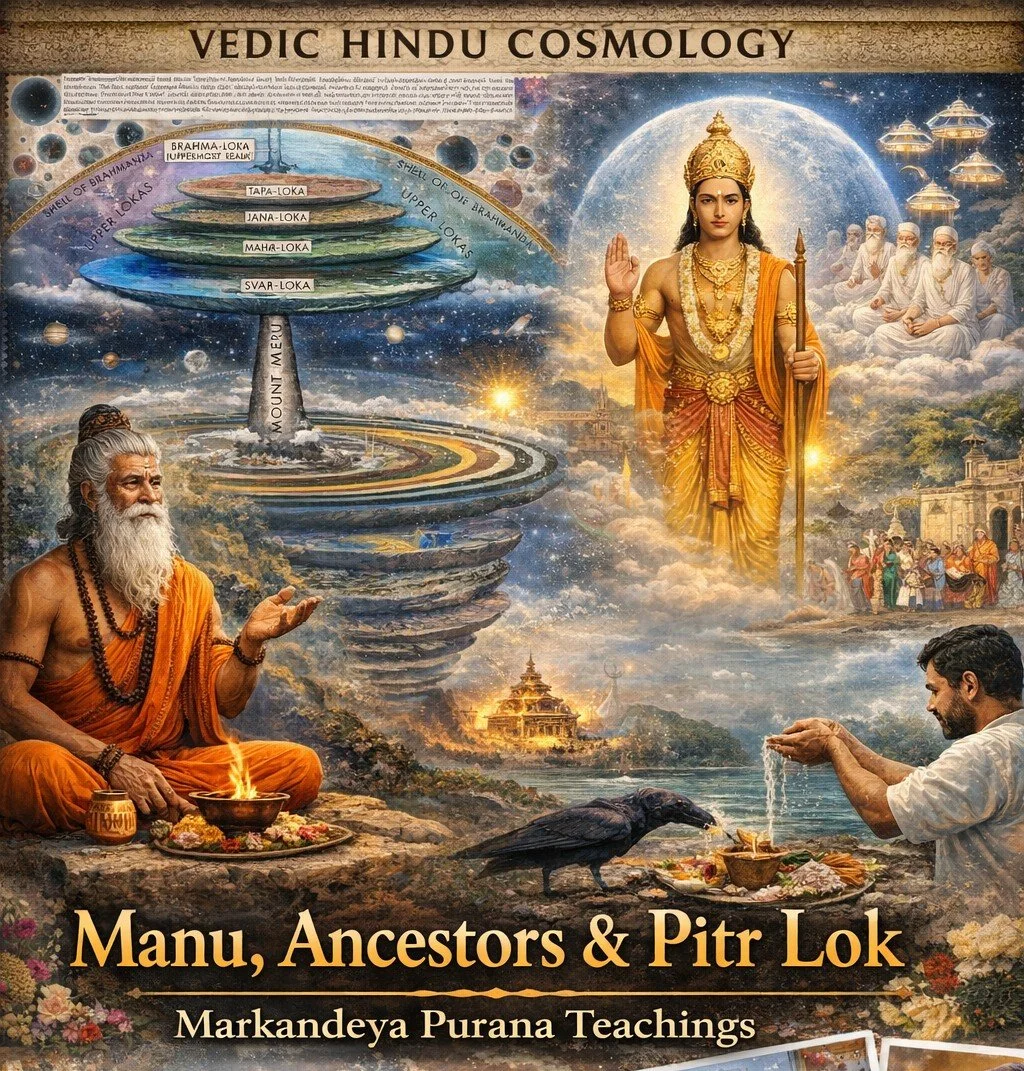

Discover the true meaning of realization, divine grace, karma, and self-knowledge. Learn how ignorance binds the soul, how true grace transforms intellect, and how awakening to Supreme Truth leads to liberation, inner freedom, and Paramshanti