The Eternal Science of Yoga and Pranayama in the Upanishads A journey from ancient wisdom to universal awakening
Yoga — the science of inner balance, the art of uniting the individual soul with the Supreme Consciousness — has been practiced since the time when the Vedas and Upanishads were composed. It is not a new concept, nor a modern physical discipline. Yoga is Sanatan — eternal — and has existed since creation itself. In today’s age, as Yoga has been recognized globally through International Yoga Day, it is time to rediscover its true, eternal meaning.
The Essence of Yoga
As beautifully said:
“The most difficult asana is assurance.
The longest breath is faith.
The most difficult yoga is separation.
And the best yoga is cooperation.”
Yoga is not limited to postures or breathing techniques. It is a state of inner union, a harmony between body, mind, and soul. Assurance, faith, and cooperation are its living forms — the true asanas of life. On this foundation, a new 10-day Paramshanti Motivation and Meditation Course has been launched to simplify and share infinite knowledge — a concise course designed for both new and advanced seekers, guiding them through topics like karma, life after death, and the soul’s journey.
The Form of Pranayam in the Upanishads
The Upanishads have given Pranayam a sacred and subtle meaning — far beyond the physical act of breath control.
In the Chandogya Upanishad, it is said:
“All living beings, all 8.4 million species, are born from Prana and ultimately merge into Prana.”
Here, Prana is not merely air. It is the vital life force, the soul energy, the divine consciousness that sustains all creation. The Taittiriya Upanishad describes Prana as the direct manifestation of Brahman — the Supreme Reality. Prana is spread throughout the human body — in the eyes, mouth, nose, and heart — and even beyond, in rivers, air, and all forms of life. Through Prana, the soul connects with divine radiance and attains liberation (Amritatva).
The Subtle Practice of Pranayam
The Shvetashvatara Upanishad teaches that Pranayam is a means of mind concentration.
By making Prana subtle, one weakens the distractions of the mind and attains inner stillness.
In the Bindu Upanishad, Pranayam is described as:
“The restraint of all tendencies and thoughts is Pranayam.”
The process of Pranayam is symbolically linked with the Trinity:
Rechak (Exhalation) – Renunciation of worldly tendencies → Mahesh
Purak (Inhalation) – Infusion of divine thought → Brahma
Kumbhak (Retention) – Stabilization in divine consciousness → Vishnu
In Sandilya Upanishad, it is said that after mastering asana, one should practice Pranayam to balance the inner energies before entering deep meditation.
The Yoga Chudamani Upanishad further explains that the three actions — Purak, Kumbhak, and Rechak — are themselves forms of Prana, and by meditating on them with twelve sacred mantras, the yogi transcends all worldly obstructions.
The Eternal Message of Vasudhaiva Kutumbakam
Yoga ultimately brings us to the realization of Vasudhaiva Kutumbakam — “The whole world is one family.”
The words Vasudha (earth) and Kutumb (family) together define the Sanatan understanding that all beings are interconnected. When a yogi reaches this stage, he sees no separation, no religion, no boundary — only oneness with the divine. This concept is beautifully reflected in Bhagwat Purana and is the essence of all Vedic philosophy.
The Modern Echo: From Patanjali to Today
Thousands of years after the Upanishads, Rishi Patanjali codified this timeless knowledge into the Yoga Sutras. He brought clarity, logic, and structure — making Yoga a systematic science. Patanjali’s definition remains unmatched: “Yoga is the cessation of the modifications of the mind.” (Yogash chitta vritti nirodhah) Through Asana, Pranayam, Pratyahara, Dharana, Dhyana, and finally Samadhi, one returns to the true Self — the pure consciousness beyond mind and matter. Yoga is not a religion. It is the universal science of the soul.
Sanatan and the Awakening of Humanity
Today, when the world faces unrest, disease, and disconnection, Yoga and Pranayam serve as the ancient cure. The World Health Organization itself acknowledges that physical inactivity is leading to chronic diseases — yet Yoga provides both physical and mental healing.
More than a fitness practice, Yoga revives Paramshanti (supreme peace) within. When practiced with understanding, it dissolves inner conflict, unites humanity beyond religion, and reconnects the soul with its divine origin. The real temple of Sanatan lies not in stone structures, but within the human heart — awakened through Yoga, discipline, and knowledge of the Self.
Conclusion: Returning to the Source
Thousands of years ago, the rishis of the Upanishads taught that: “Our senses are turned outward; therefore, man looks outside and not within.” True Yoga is the return of awareness inward — the remembrance of the soul’s eternal form. Despite the progress of science and technology, peace remains fleeting because humanity still searches outside for what lies within. Through Yoga and Pranayam, as described in the Upanishads and perfected by Patanjali, the soul can rediscover its divine essence and experience the state of Paramshanti (supreme peace).
Let every breath become sacred,
Let every thought become divine,
Let every soul awaken to the truth —
We are all one eternal family, Vasudhaiva Kutumbakam
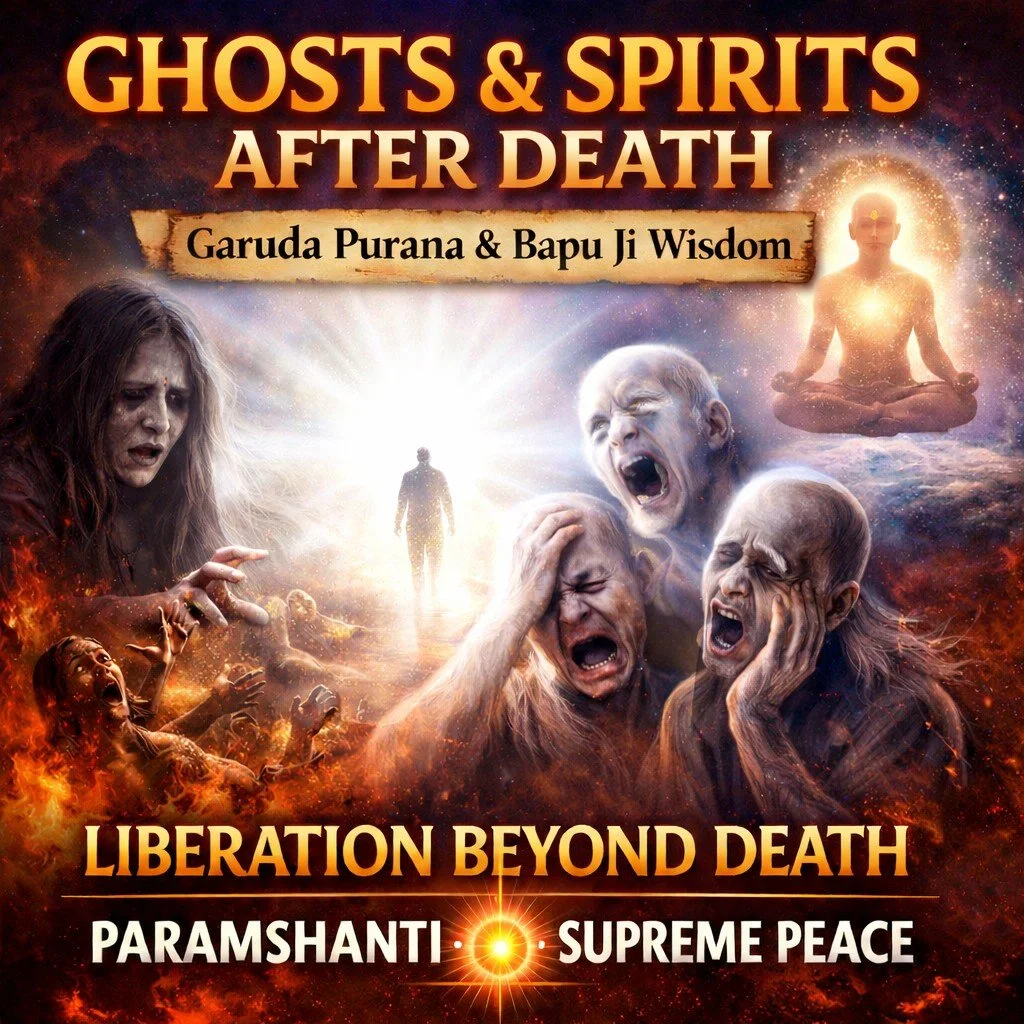
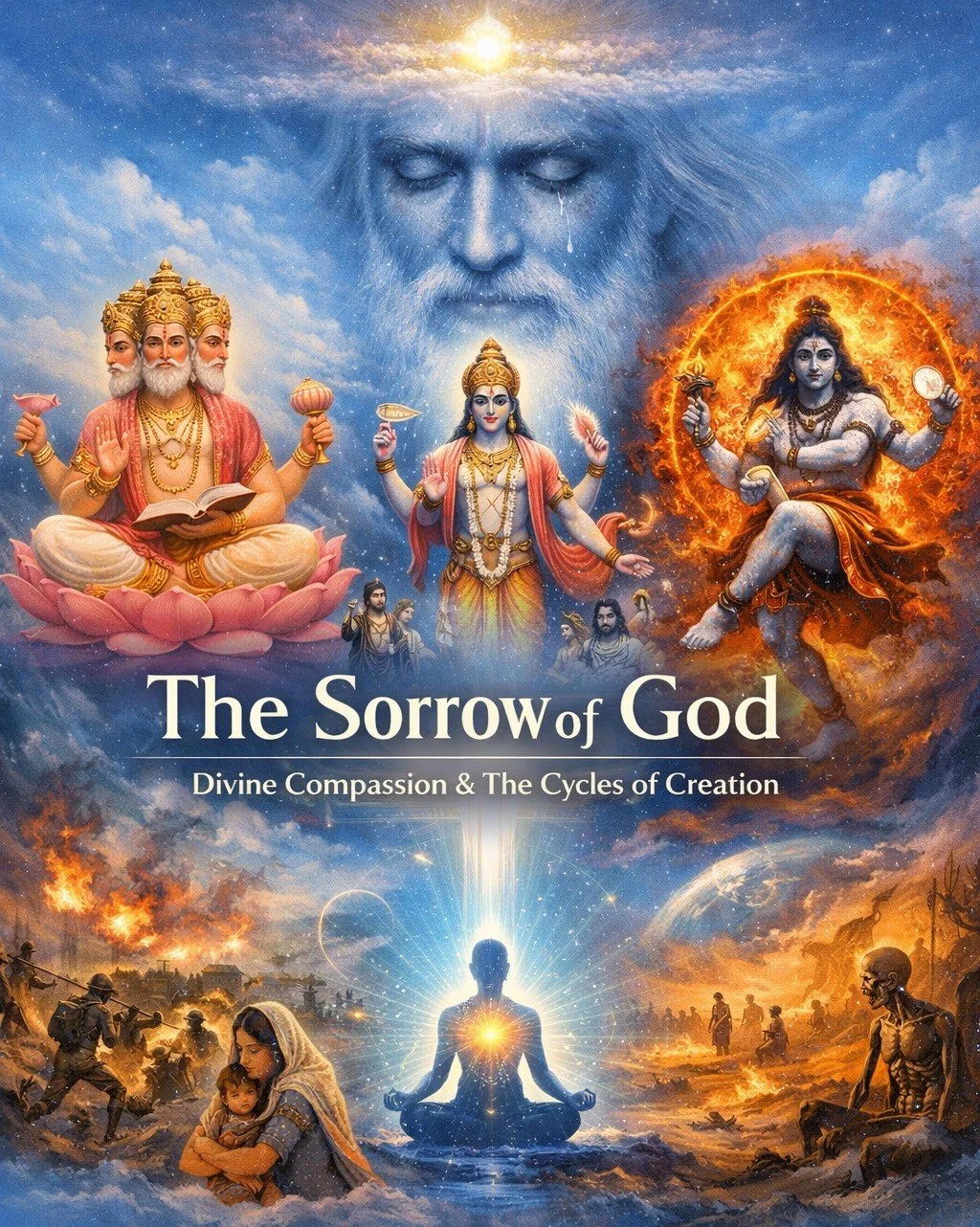

Explore the deep spiritual cosmology of planetary souls, alien interference, karmic zones, and cosmic wars based on Bapuji Dasharathbhai Patel’s knowledge. Understand how Paramshanti (supreme peace) can restore universal balance and protect human consciousness from artificial and dark energies.