
How to End the Effects of Prarabdh Karma
The question of how to escape the effects of prarabdh karma—the destiny formed by past actions—has puzzled spiritual seekers for ages. Prarabdh represents the portion of accumulated karma that has already ripened and is now shaping one’s present life: birth, family, body, circumstances, joys, and struggles. This article explains how prarabdh karma is formed, why it is considered unchangeable, and what spiritual means can diminish its effects. It offers insights into selfless action, detachment, devotion, and the grace of the Divine.
Understanding Prarabdh Karma
How Prarabdh Is Formed
Prarabdh is born from the karmic actions of many past lives. Our thoughts, intentions, actions, and emotional imprints accumulate over lifetimes and take form in the present birth.
This determines:
the environment we are born into
physical form and health
wealth or poverty
opportunities and limitations
relationships and family
Thus, two children can be born in completely different conditions due to their stored karmic results.
The Binding Power of Karma
The soul is pure, eternal, and free. But because of the influence of the mind, it performs actions that are selfish or harmful. These actions bind the soul for hundreds or thousands of years in the cycle of birth and death. The mind acts, but the soul bears the consequences. Only a truly awakened soul understands this paradox. The enlightened soul realizes: “The doer is the mind, but the sufferer is the soul. I have the free will today to change my destiny.”
The Power to Change Destiny
Free Will vs Fate
Even though prarabdh is considered fixed, the karma of the present moment has the potential to transform the intensity of prarabdh. The Supreme has given every being:
free will
the power of intention
the ability to perform selfless deeds
the capacity to transform destiny
Today’s conscious action can reduce tomorrow’s karmic burden.
Selfless Action (Nishkam Karma)
Actions done with ego or desire create bondage.
Actions done without attachment do not bind the soul.
Performing action without the sense of “I” or “mine” breaks the chain of karma. One must realize that the Divine acts through us, and we are only instruments.
The Path of Surrender
Removing the Identity of the Doer
The thought “I am doing this” is the root of ego. The moment the ego enters, karma binds. On the other hand, when actions are dedicated to the welfare of all, without any expectation of reward, the soul rises beyond bondage. Such action cleanses accumulated karma and weakens the effects of prarabdh.
Selflessness and Inner Freedom
When an individual acts without desire:
reward is irrelevant
the ego dissolves
the soul lifts itself beyond the cycle
destiny loosens its grip
The formula is simple: Do everything as an offering to the Divine, and do not demand the fruit.
Divine Grace and Destiny: A Story
To understand how divine grace interacts with karma, consider this story of a true devotee.
There was an old man who spent his entire life chanting the name of God. In his final days, he was too weak to walk, and his children often ignored his calls at night. One night, when he called, a boy appeared instantly, helped him gently, and left. Every night this continued. One night, the old man held his hand and asked, “Tell me the truth. Who are you? You are not my son.”
In that moment, the boy’s form dissolved into a radiant divine light. The Lord revealed Himself. The old man, with tears, asked: “If you are pleased with me, why don’t you remove my suffering?” The Lord replied: “Your suffering is the result of your own karma. My grace is with you, but I cannot cut your destiny directly, because then in the next birth, you will suffer again. I want to grant you complete liberation by helping you resolve your destiny now.”
This story illustrates a profound truth: The Divine assists the devotee, but does not violate the law of karma. Instead, by support and presence, the Divine makes one capable of bearing fate and ultimately rising beyond it.
Different Intensities of Karma
The scriptures speak of three types of karmic intensity:
Mild Karma (Mand)
reduced through chanting the Divine Name.
Medium Karma (Tivra)
dissolved through devotion, faith, and association with realized souls.
Heavy Karma
resolved only through intense practice:
meditation
austerity
deep surrender
unconditional devotion
When devotion becomes constant and pure, the Divine personally helps the devotee bear their destiny without suffering its full force.
Destiny Cannot Be Avoided—It Must Be Transcended
Prarabdh cannot be escaped simply through desire. No one—not even gods or sages—can avoid the fruits of past actions. But while destiny will unfold, your inner state while experiencing destiny determines the future. Thus, destiny happens outside, but liberation happens inside.
Two people may face similar events:
1. One collapses in grief. 2. The other remains calm, surrendered, and detached.
The difference is in:
1. Mindset 2. faith 3. awareness 4. spiritual maturity
The Role of Scripture and Wisdom
The power to face destiny comes from:
study of sacred knowledge
deep reflection
spiritual company
meditation
self-observation
Even enlightened beings endure their prarabdh, but they remain detached witnesses to their experience.
This transforms suffering into growth.
Destiny and Free Action
Life consists of two parts:
Destiny Karma (Prarabdh): 1. not in our control 2. reflects past actions
Kriya Karma (Present Action): 1. in our control 2. shapes the future
Destiny decides: birth, family, environment, certain key events
But kriya karma decides: how you respond, what you become, your spiritual growth
Responding to Destiny
When hardship arises: do not blame luck, do not insult yourself, do not collapse mentally
Instead:
turn inward, adopt positive thoughts, choose uplifting company, listen to wisdom, move forward with dignity Pain often reveals the intensity of past karma, but the response creates new karma that can liberate the soul.
Why Even the Greatest Souls Suffer
History shows that even divine incarnations faced suffering:
Rama suffered exile and loss
Krishna endured hostility, slander, and war
Jesus was crucified for truth
Truth is like walking on the edge of a sword. Those who choose spirituality often face disbelief, rejection, and ridicule from the world. Society rarely accepts those who rise above illusions. But those who persist are lifted beyond life and death.
The Highest Path: Constant Remembrance
If one can feel the presence of the Supreme in every breath, thought, and action, this is the highest blessing. When the mind refuses to separate from the Divine, karma dissolves naturally. Spiritual maturity is this: Remain in the world, but stay rooted in the Divine.
Conclusion
Prarabdh karma may be unavoidable, but its impact on the soul can be greatly reduced through:
selfless action
surrender of ego
constant remembrance
devotion
association with truth
spiritual wisdom
Destiny delivers circumstances. But your awareness in those circumstances determines liberation. In the end, the Divine does not destroy karma—but teaches the soul how to outgrow it. When destiny concludes and ego dissolves, the soul enters freedom beyond birth and death.
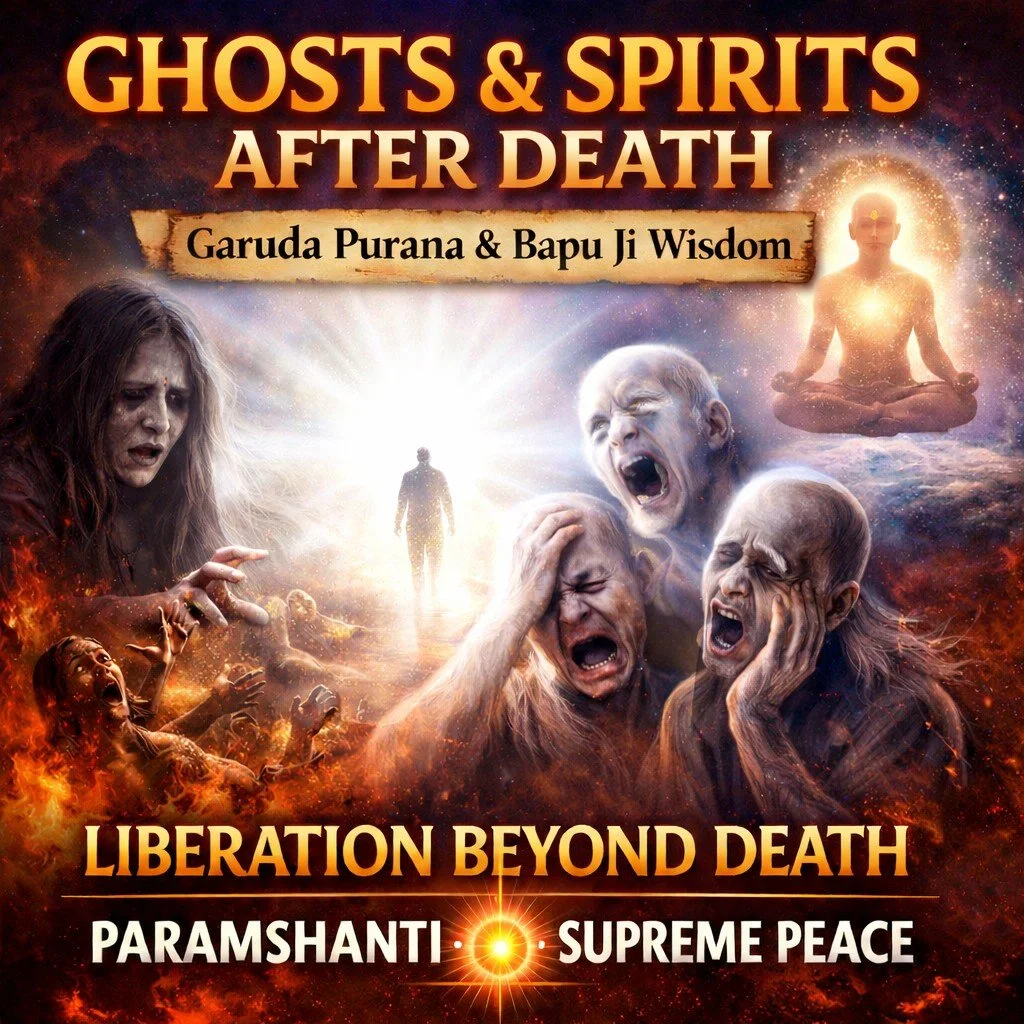
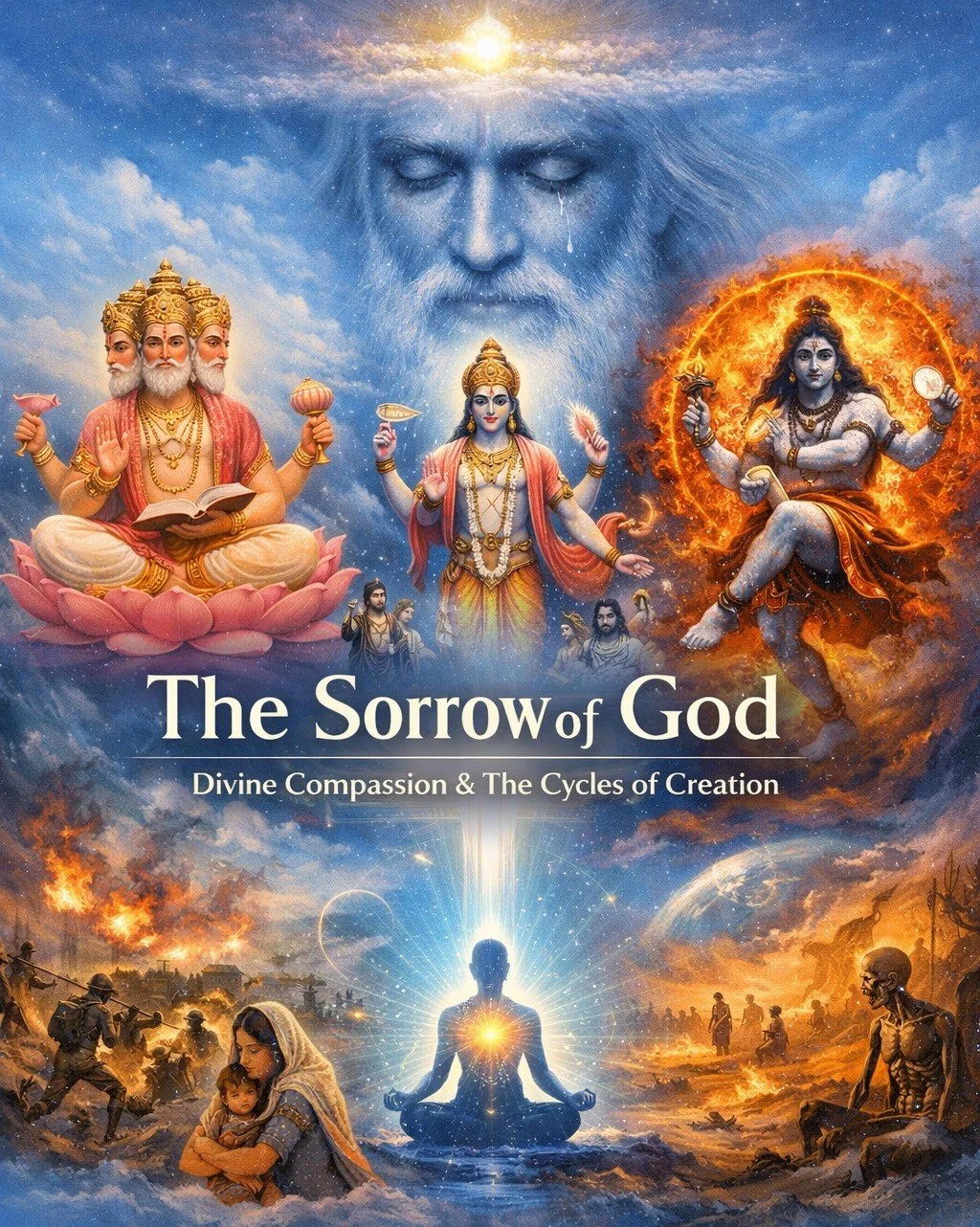

Explore the deep spiritual cosmology of planetary souls, alien interference, karmic zones, and cosmic wars based on Bapuji Dasharathbhai Patel’s knowledge. Understand how Paramshanti (supreme peace) can restore universal balance and protect human consciousness from artificial and dark energies.