The Difference Between the Mind and the Brain
Discussion on Human Consciousness and Intelligence: What is the difference between the human mind and the human brain? Although the two terms are often used interchangeably, they represent two completely different dimensions of human existence.
Mind and Brain: Two Separate Realities
In English, the topic is described as the “difference between mind and brain.” A common doubt arises:
Are the mind, brain, and heart the same? The answer is no. Even though in daily language we use “mind” and “brain” as complementary terms, they are fundamentally different.
The Brain
The brain is a physical organ, a part of the human body.
It is composed of biological gray matter and millions of neurons.
It functions like hardware.
It receives and sends information to the body through the nervous system.
Memory, sensory information, reflexes, and physical responses are processed in the brain.
In simple terms, the brain is a biological device that processes information and executes bodily functions.
The Mind
The mind is not a physical organ.
It is related to thoughts, awareness, knowledge, desires, emotions, and experiences.
It is a subtle power rather than a physical mass.
In spiritual language, the mind is connected with the soul, along with intellect (buddhi) and values (sanskars).
In scientific language, it is understood as the software of consciousness.
Thoughts arise in the mind; the brain interprets them and triggers physical responses.
How Thought Becomes Action
When a thought appears in the mind—joy, fear, anger, desire—
the brain immediately begins processing:
The mind creates a thought.
The brain compares this thought with stored experiences (sanskars).
The intellect decides whether the thought is real, false, or meaningful.
The brain sends signals throughout the body via neurons.
The body reacts chemically and physically.
For example, when fear arises:
If childhood experience supports fear, the brain confirms it.
The body releases stress chemicals.
The nervous system becomes alert.
Physical sensations such as panic, sweating, or trembling begin.
Thus, the mind triggers thoughts, and the brain executes physical reactions.
Mind–Body Relationship
Just as there is a difference between the soul and the body, there is a similar difference between the mind and the brain.
The mind is part of the subtle body, through which the soul expresses itself.
The brain is part of the physical body, the mechanism through which the soul acts in the world.
In this relationship:
The mind directs
The brain performs
Consciousness connects both
This consciousness is often called life-force, pranic power, chi energy, or soul power in spiritual traditions.
The Two Hearts: A Metaphor
Some traditions describe humans as having two hearts:
Physical Heart – pumps blood throughout the body.
Spiritual Heart – the emotional center generating compassion, love, anger, and sentiment.
This “second heart” is symbolic of the mind and emotions.
When uncontrolled, emotions can overwhelm the rational mind, leading to depression, stress, or even physical illness.
The Bhagavad Gita and spiritual teachings emphasize: Knowledge strengthens the mind and helps control emotions. By increasing knowledge and awareness, individuals can achieve emotional balance.
The Brain and Intelligence
The largest functional part of the brain is the frontal lobe, also called the prefrontal cortex.
This region:
Supports decision-making,
Analytical thinking,
Memory processing,
Behavioral control.
Scientists often measure intelligence based on the number and activity of neurons in this region.
More active neurons generally indicate higher cognitive ability. However, intelligence is not purely biological. The power of the soul, past experiences, and karmic impressions (sanskars) also influence intellectual capacity.
Activating Dormant Neurons
Spiritual traditions believe that pranic energy entering the brain through the subtle channels (chakras) can activate dormant neurons, resulting in:
Higher intelligence, Intuition, Creativity, Mental clarity, Inner bliss.
Practices such as:
Meditation, Pranayama, Tai Chi, Chakra awakening, Yogic concentration, are believed to stimulate mental powers and open the inner potential of the mind.
In Vedic tradition, the shikha (tuft of hair) symbolizes the gateway of cosmic energy at the crown chakra.
Childhood: The Seed of Greatness
Children have highly active neurons, which is why they learn rapidly. Their mind quickly absorbs experiences from the environment.
Therefore:
The seed of greatness must be sown in childhood, not old age.
Teaching, nurturing, and guiding children with positive values can create intelligent, fearless, and capable individuals.
Conclusion
In essence:
The mind is the subtle, conscious power related to the soul.
The brain is the physical mechanism controlling the body.
Consciousness is the bridge between mind and brain.
Knowledge, values, and spiritual energy shape the mind, while neurons, memory, and biology shape the brain.
Understanding this difference helps us:
control emotions,
enhance intelligence,
manage mental health,
and unlock deeper levels of human potential through knowledge and spiritual practice.
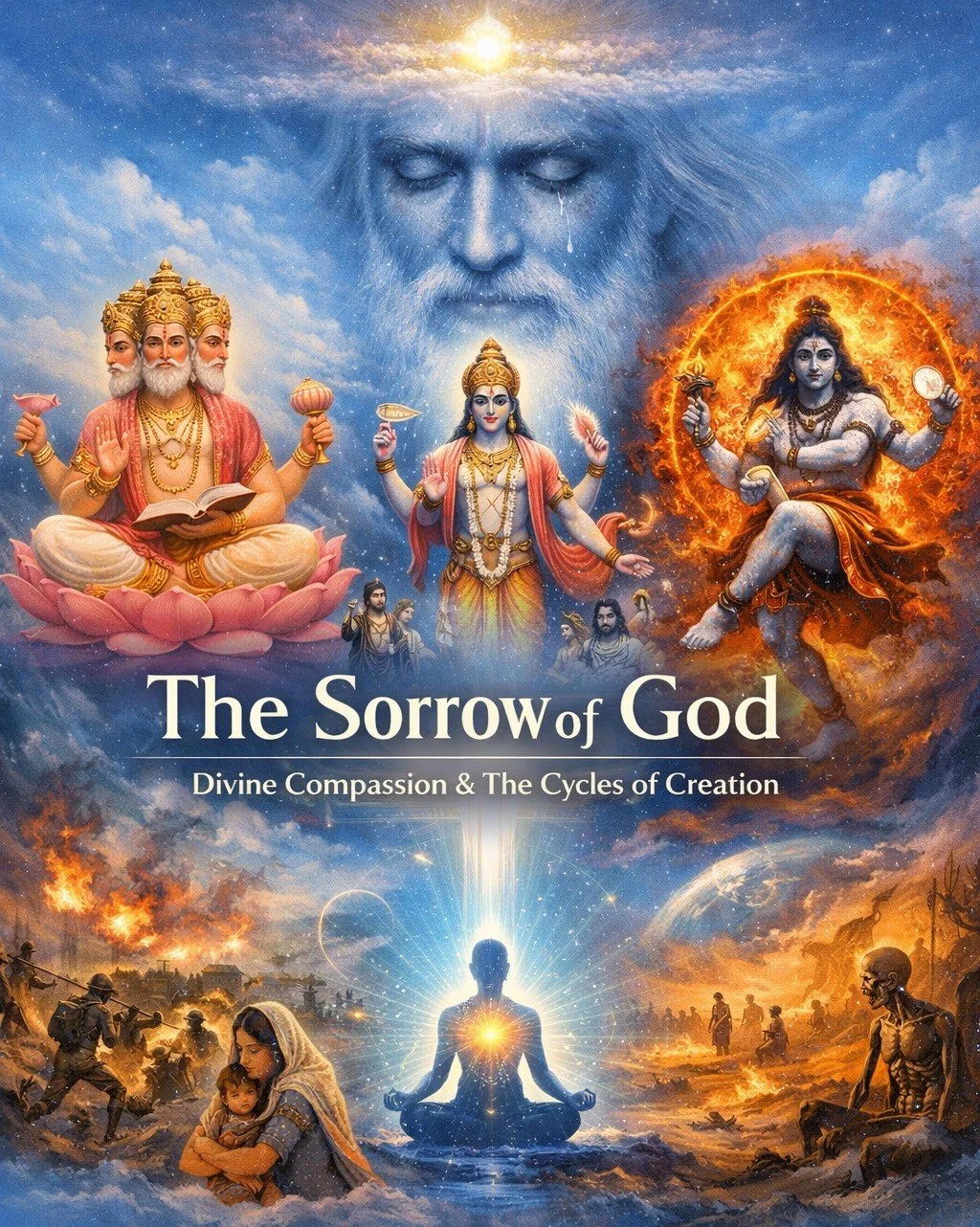

Explore the deep spiritual cosmology of planetary souls, alien interference, karmic zones, and cosmic wars based on Bapuji Dasharathbhai Patel’s knowledge. Understand how Paramshanti (supreme peace) can restore universal balance and protect human consciousness from artificial and dark energies.