
Episode 268, Self-Realization, Nature and Inner Peace
Introduction
In a recent spiritual discourse inspired by ancient scriptures and deep self-reflection, profound insights were shared on the nature of the soul, karma, self-realization, and inner peace. Drawing references from the Shvetashvatara Upanishad and the Mahabharata, the speaker explored how human beings can rise above suffering, pride, and illusion through true knowledge and awareness of the soul. This article presents a structured and analytical interpretation of those teachings, focusing on how self-realization transforms life and leads to lasting peace.
The Upanishadic Vision: Multiple Universes and Divine Governance
The Shvetashvatara Upanishad speaks about the existence of multiple universes and divine rulers who govern creation under the Supreme Being. These higher beings are described as masters of the cosmos and worthy of worship even by other gods. They operate under universal law and divine order. This perspective reminds seekers that creation is vast, multidimensional, and governed by higher intelligence. Human life is only a small part of this grand design, and understanding this reduces ego and attachment.
Accessing Spiritual Knowledge in the Modern Age
The discourse also emphasized the importance of using technology wisely. When technical difficulties arise, seekers are encouraged to remain patient and search directly for authentic sources of knowledge. This reflects a deeper message: spiritual pursuit requires perseverance, adaptability, and sincerity, regardless of external obstacles.
Dialogue Between Indra and Prahlad
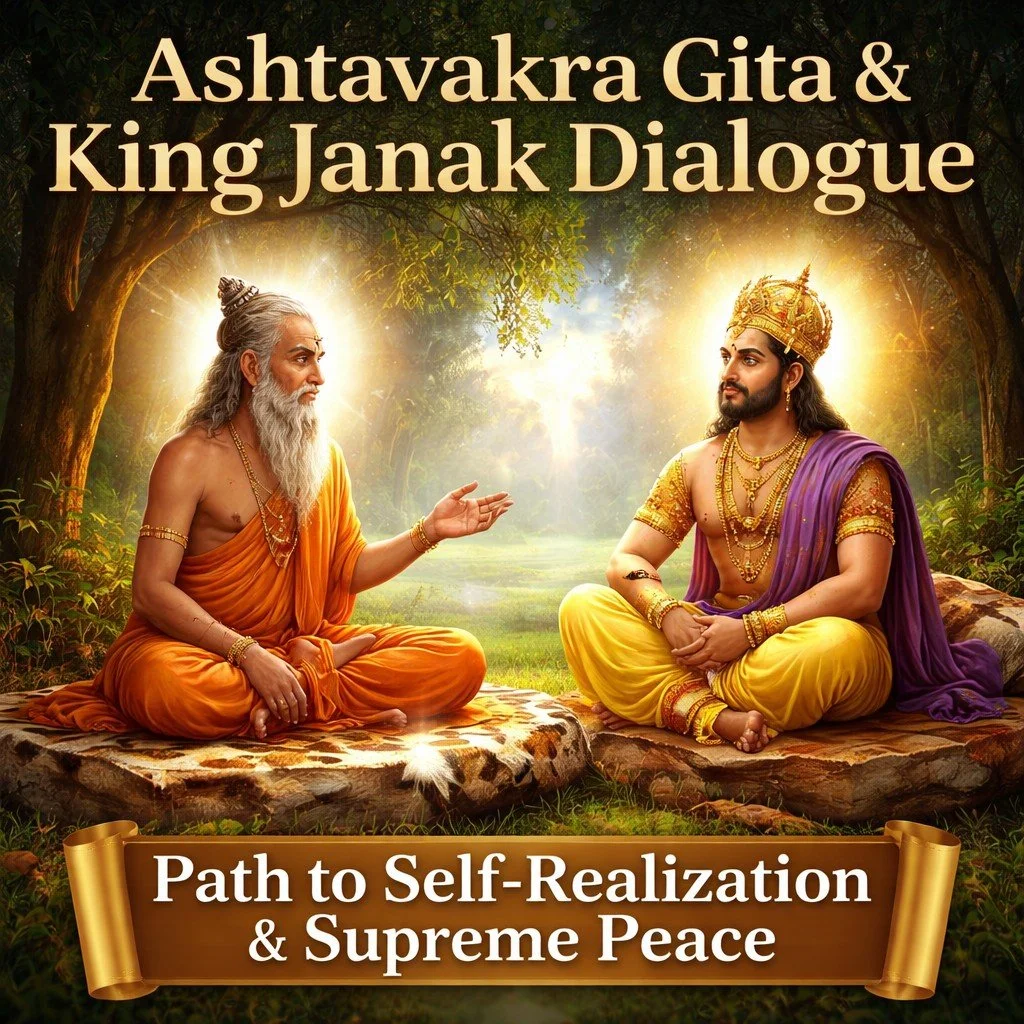
A central theme of the discourse was based on a dialogue from the Mahabharata between Indra and Prahlad.
Yudhishthira once questioned how good and bad deeds produce pleasure and suffering. This led to a philosophical discussion about karma, destiny, and self-knowledge.
Indra, impressed by Prahlad’s serenity, asked him:
How can you remain peaceful despite loss and hardship?
Is this state achieved through knowledge or patience?
Who is the greatest practitioner of self-realization?
This inquiry reflects the universal human quest for inner stability.
Prahlad’s Teaching: Knowledge of the Soul
Prahlad explained that ignorance arises when people fail to understand the tendencies and nature of living beings. Those who have not realized the soul remain trapped in illusion.
According to him:
One who realizes the soul never remains deluded.
Such a person firmly knows, “I am not the body, I am the soul.”
This awareness becomes the foundation of life.
Self-realization strengthens the belief system so deeply that external disturbances lose their power.
The Process of Self-Realization
Self-realization is not a sudden mystical event. It is a gradual inner transformation achieved through continuous awareness and practice.
It involves:
Repeated remembrance of one’s true nature
Observing thoughts and emotions
Letting go of identification with the body and ego
Cultivating inner discipline
Whenever the mind drifts into distraction or hopelessness, illusion returns. When attention returns to the soul, clarity is restored.
Understanding Karma and the Sense of Doership
Prahlad clarified that the soul itself is not the true doer of actions. Actions are performed through:
Mind
Intellect
Conditioning
Past impressions
Those who believe, “I am the doer,” remain trapped in doubt and confusion. True wisdom arises when one understands that actions occur through nature and circumstances. A realized person remains detached from both success and failure.
Nature, Destiny, and Pride
The discourse emphasized that many qualities—beauty, intelligence, wealth, or misfortune—arise naturally due to past karma and inherent tendencies.
Therefore:
Pride has no real foundation
No one should feel superior or inferior
All attributes are temporary
When everything is seen as arising from nature, arrogance disappears.
The Law of Action
Actions reveal their own nature, just as fallen grains in a village reveal their presence by sound.
People who focus only on defects in actions fail to understand their pure essence. Such people become deluded. Those who understand the deeper nature of karma remain free from attachment and suffering.
The State of the Wise Person
Prahlad described his own state as:
Free from attachment and desire
Detached from praise and blame
Observing birth and death calmly
Controlling mind and senses
Established in inner awareness
He compared life’s events to watching nature documentaries—without emotional entanglement. Everything follows its own law.
Freedom from Duality
A realized person does not see anyone as an enemy or friend. They understand that:
Human thoughts constantly change
Everyone has good and bad tendencies
Judging others creates unnecessary suffering
Trying to read others’ minds is pointless. Inner peace comes from acceptance.
Detachment from Heaven and Hell
Prahlad stated that he had no desire for:-----Heaven----Hell----Pleasure---Fame---Even life or death
He performed good actions without expecting reward. This is the highest form of spirituality.
Means to Attain Inner Peace
According to Prahlad, peace is attained through:
Simplicity
Clarity of intellect
Stability of mind
Service to elders
Ethical conduct
Self-discipline
By cultivating these qualities, knowledge and peace naturally arise.
Importance of Improving One’s Nature
The speaker stressed that transformation must begin in childhood. Without conscious improvement, negative traits grow stronger over time. True strength lies in the ability to revise one’s views with wisdom and changing circumstances. Rigid stubbornness leads to suffering.
Uncertainty of Life
Life is unpredictable. Accidents, illness, and death can occur suddenly. Recognizing this uncertainty brings humility and simplicity. Arrogance collapses when one understands the fragile nature of existence.
Managing Time and Mental Clutter
Time is precious and irreplaceable. Wasting one’s own time or others’ time is a moral failure.
Similarly, unnecessary mental clutter must be removed:
Avoid negative content, Release harmful memories, Complete pending tasks, Let go of useless worries
A clean mind creates space for wisdom.
Living Positively
Positive thinking generates inner energy. A pure mind attracts inspiration and creative power. When the intellect is clean and focused, higher guidance becomes accessible. Negativity blocks spiritual progress.
Personal Responsibility and Completion of Duties
The speaker shared a personal story to emphasize the importance of completing pending responsibilities. Unfinished tasks burden the mind and disturb peace. Completing duties on time brings mental freedom.
The Power of Good Nature
Goodness attracts goodness. When one’s behavior is kind and sincere:
Relationships improve
Opportunities increase
Social harmony develops
Inner happiness grows
A good nature becomes the foundation of a meaningful life.
Prahlad as an Ideal Role Model
Indra, the king of heaven, approached Prahlad to learn from him. This shows that wisdom transcends status and power. True greatness lies in humility, clarity, and compassion.
Conclusion: The Path to Lasting Peace
The teachings emphasize that:
Self-realization is the foundation of peace
Nature governs outcomes
Ego causes suffering
Simplicity brings freedom
Awareness dissolves illusion
By focusing on the eternal soul, improving one’s nature, respecting time, and living ethically, human beings can transcend anxiety and conflict. True spirituality is not escape from life, but conscious participation in it with wisdom, humility, and inner stability. Through continuous practice and self-observation, every individual can move toward a life of balance, clarity, and supreme peace.

Discover the spiritual teachings of Rishi Kundu, divine illusion, karma, meditation, and soul awakening. Learn how to attain Supreme Peace through self-realization, devotion, and inner transformation.